






























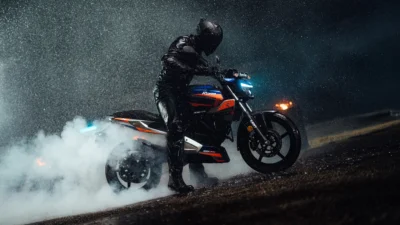
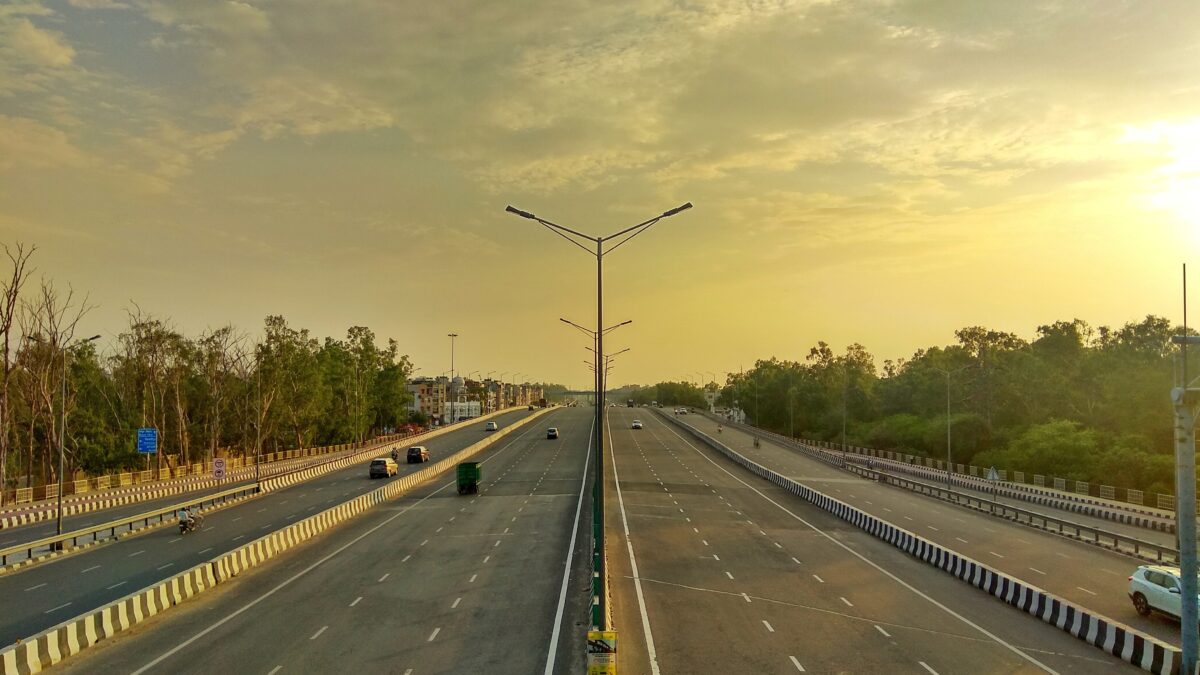
NHAI just added the Bengaluru-Mysuru Expressway to a list that already excludes two-wheelers from almost every fast road in the country.
India built a record 6,000-plus km of expressway in the last decade, and if you ride a motorcycle, you are legally locked out of nearly all of it. The Bengaluru-Mysuru Expressway banned two-wheelers on August 1, 2026. The Delhi-Mumbai Expressway bans them on its high-speed stretches with automatic camera challans. Only two of India’s expressways, Yamuna and Purvanchal, let a bike on at all, and both charge toll to do it.

Why NHAI Keeps Banning Bikes From New Expressways
The National Highways Authority of India (NHAI) issued a gazette notification banning two-wheelers, autos, tractors, non-motorised vehicles, multi-axle trailers and quadricycles from the Bengaluru-Mysuru Expressway starting August 1, 2026, according to reports in Outlook India, Deccan Herald and Swarajya. NHAI chairman Santosh Kumar Yadav signed off on the order after a rise in accidents on the corridor. The stated reasoning, repeated almost word for word across every ban NHAI has issued: high design speeds of 100-120 kmph create a dangerous speed differential with slower, more vulnerable vehicles.
This is not a one-off. Union minister Nitin Gadkari has separately pushed Delhi Police to enforce existing two- and three-wheeler bans on the Badarpur, Delhi-Meerut, UER-II, Delhi-Gurgaon and Dwarka expressways, some of which have carried the restriction since 2021. The Delhi-Mumbai Expressway carries the same ban with an automated number-plate camera system that mails a challan straight to the registered owner.
Which Expressways Actually Let You Ride
Two exceptions exist, and they are the two oldest fully access-controlled expressways in the country. The Yamuna Expressway (Greater Noida to Agra) and the Purvanchal Expressway (Lucknow to Ghazipur) both permit two-wheelers, at a toll. That is the whole list. Every expressway built to full access-controlled spec since then, including the newest stretches like Ahmedabad-Dholera and the Awadh Expressway between Kanpur and Lucknow, defaults to the same ban NHAI applied at Bengaluru-Mysuru.
| Expressway | Two-wheelers allowed? | What it costs a rider instead |
| Yamuna Expressway | Yes, tolled | ₹3.25/km for a motorcycle |
| Purvanchal Expressway | Yes, tolled | ₹1.10/km for a motorcycle |
| Bengaluru-Mysuru Expressway | No, since Aug 1, 2026 | Detour via old NH275, roughly 30-40 minutes longer |
| Delhi-Mumbai Expressway | No, automated challan enforcement | Camera-issued fine on the registered owner |
Is the Safety Argument Actually Fair to Riders?
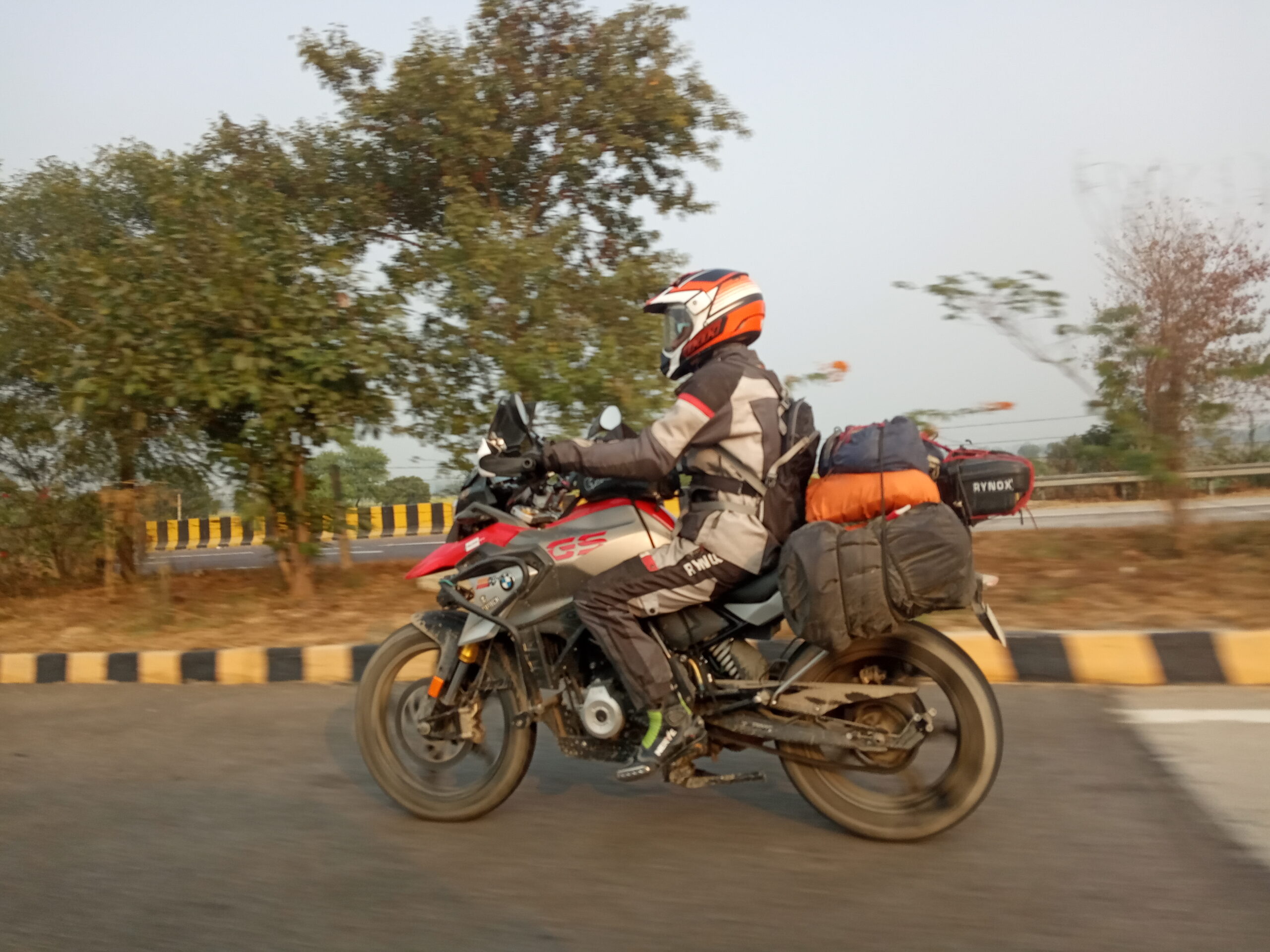
A 250cc-plus motorcycle can hold 100-120 kmph as comfortably as most hatchbacks on these roads. The blanket ban treats a Royal Enfield Himalayan the same as a 100cc runabout doing 55 kmph, and that is the part riders are actually angry about.
NHAI’s safety logic is not baseless. A big chunk of two-wheeler traffic on Indian roads is small-capacity commuter bikes and scooters that genuinely cannot hold expressway speeds, and mixing that with 120 kmph car and truck traffic is a real risk. But the policy makes no distinction between a 100cc scooter and a 450cc adventure tourer built for exactly this kind of riding. Riders on Team-BHP’s forums have been petitioning NHAI to review the exclusion and permit motorcycles above a defined displacement, roughly 250cc and up, an ask that has picked up around 1,800 signatures so far. It has not moved policy yet.
Countries with far larger fast-road networks, including Germany’s autobahns, do not ban motorcycles outright; they manage the speed gap through lane discipline and licensing instead of a blanket exclusion. India has not tried that route. The two exceptions it does allow, Yamuna and Purvanchal, prove the infrastructure and toll systems already exist to let bikes in when NHAI decides to.
What This Actually Costs You on a Real Road Trip
Picture a Bengaluru to Mysuru weekend ride. Before August 1, a capable tourer could cover the expressway stretch in under two hours. Now, the same ride routes back onto the older NH275, adding real time in traffic and at least one more set of town crossings you would have skipped. On the Delhi-NCR expressway cluster, a rider unaware of camera enforcement risks a fine simply for taking what looks like the obvious route on a map or navigation app.
The practical fix for anyone planning intercity motorcycle travel: check the specific expressway’s rules before you route through it, not after. Google Maps and most navigation apps will still route a bike onto a banned expressway because the ban is not baked into their routing logic, so it is on the rider to know which stretch of the corridor is off-limits.

The Bikes That Would Actually Benefit
This restriction stings most for exactly the motorcycles India’s touring culture has built around in the last few years. A Royal Enfield Himalayan 450 and a TVS Apache RTR 310, run a side-by-side comparison here, are both engineered to sit at 100-120 kmph all day. Both are currently barred from the country’s fastest, safest-surfaced roads, while a 15-year-old hatchback with no ADAS gets a free pass. If NHAI’s own displacement-based logic for cars (nothing stops a 800cc Alto from using these roads) applied consistently to two-wheelers, most modern touring and sports motorcycles would already qualify.
Frequently Asked Questions
Can I ride a Royal Enfield Himalayan on the Delhi-Mumbai Expressway?
No. The Delhi-Mumbai Expressway bans all two-wheelers regardless of engine capacity, and enforces it through automated number-plate cameras that issue a challan directly to the vehicle owner.
Which Indian expressways allow motorcycles?
Only the Yamuna Expressway (Greater Noida-Agra) and the Purvanchal Expressway (Lucknow-Ghazipur) currently permit two-wheelers, and both charge a per-kilometre toll to do so.
Is there a fine for riding a bike on a banned expressway?
Yes. Enforcement varies by expressway, from physical checkpoints turning vehicles back to automated camera systems, like on the Delhi-Mumbai Expressway, that issue a challan by post after the fact.


