


























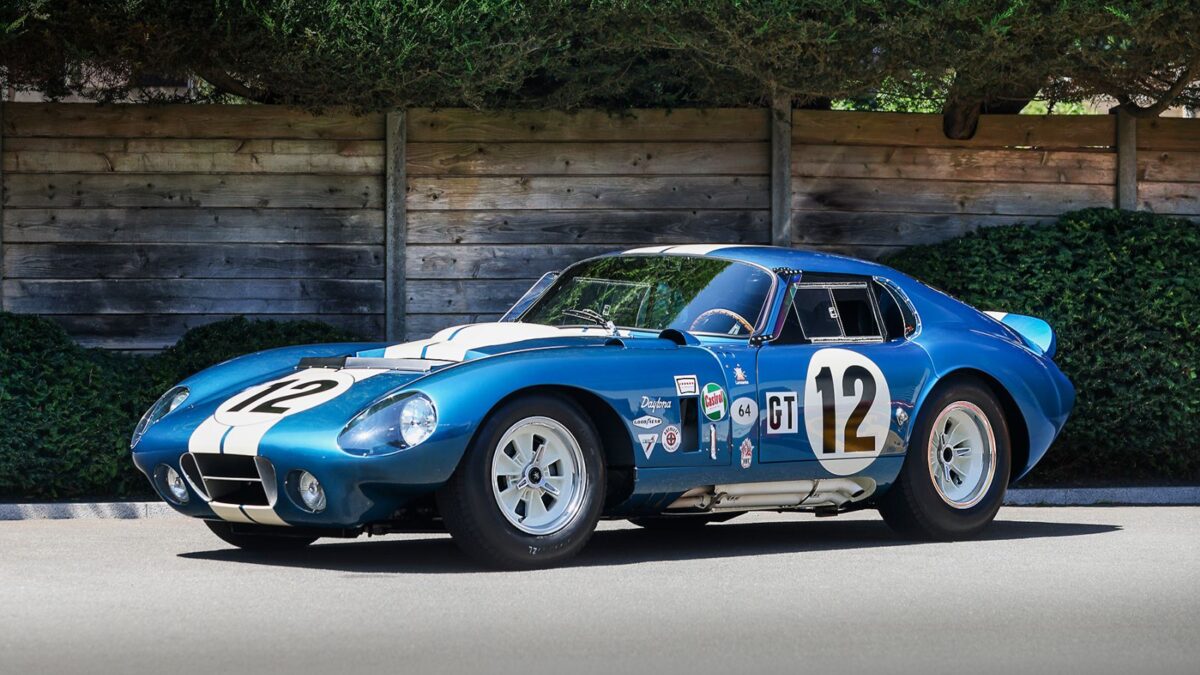
We told you Monterey Car Week could hit $500 million and that Pebble Beach was turning 75. Now the week is actually over, and the real numbers went even further than the preview suggested. A 1964 Shelby Cobra Daytona Coupe just sold for $42.9 million (roughly ₹410 crore), making it the most expensive American car ever sold at auction, and a Cincinnati-owned Duesenberg took home the top trophy at the 75th Pebble Beach Concours d’Elegance. Here’s what actually happened once the gavels came down.
The Cobra that beat Ferrari, then beat every American car at auction
The star of the week was chassis CSX2300, one of just six Shelby Cobra Daytona Coupes ever built, and the only one Carroll Shelby personally kept for himself. This wasn’t a garage queen built for a stage. It raced through Shelby American’s legendary 1965 season, the year Shelby actually beat Ferrari to the FIA GT manufacturers’ championship. That’s the entire reason the Daytona Coupe exists: Shelby built it specifically to out-run Ferrari’s 250 GTO on track, and it worked.
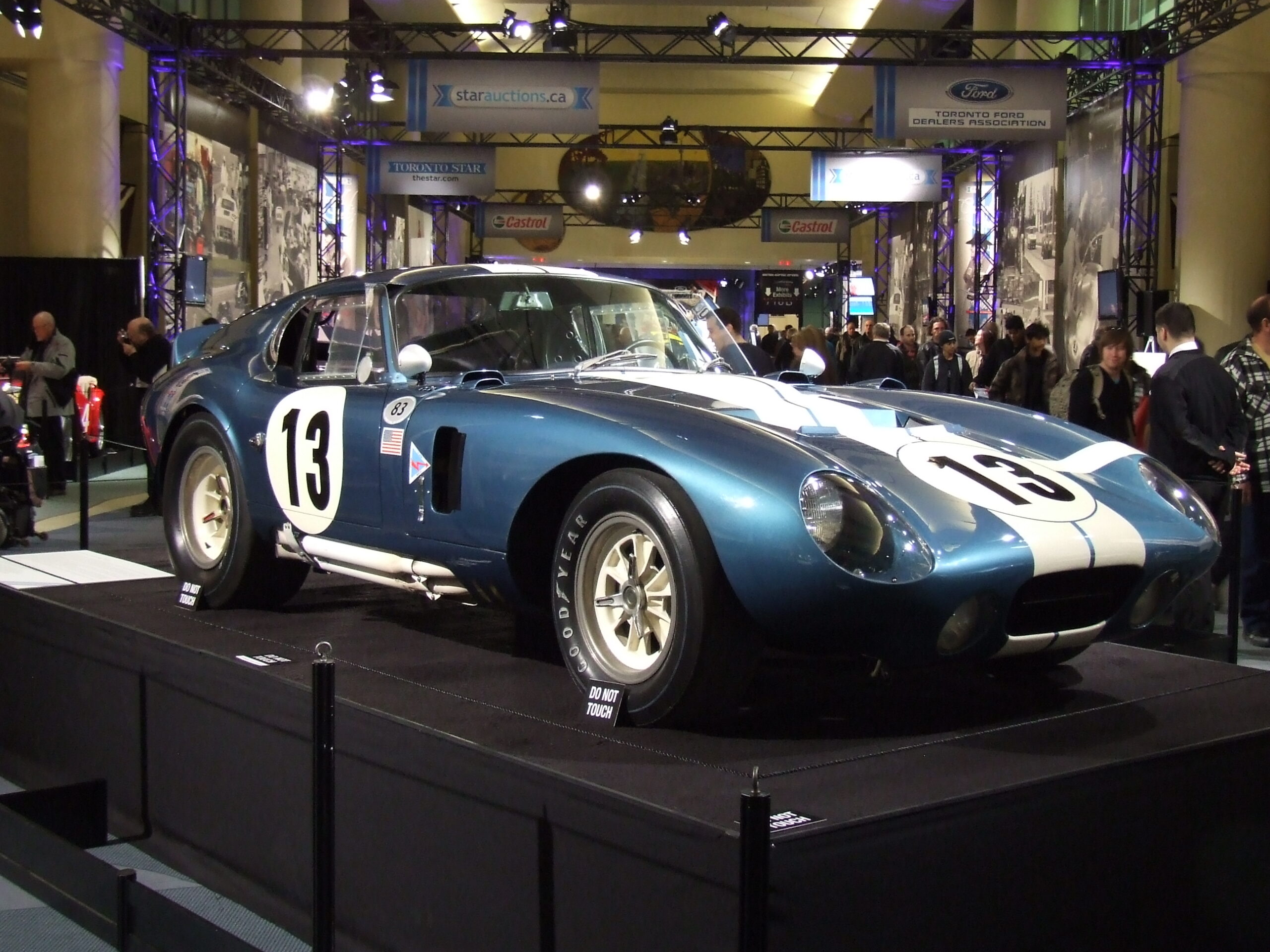
Gooding Christie’s listed the car with a pre-sale estimate of “in excess of $25 million.” Bidding blew straight past that, hammering at $39 million and closing at $42,905,000 with the buyer’s premium (the auction house’s commission on top of the hammer price) included. That smashes the old American car auction record by a wide margin.
| Record holder | Final price | Year set |
| 1964 Shelby Cobra Daytona Coupe (CSX2300) | $42,905,000 (~₹410 crore) | 2026 |
| 1935 Duesenberg SSJ | $22,000,000 (~₹210 crore) | 2018 |
Best of Show goes to a Cincinnati-owned Duesenberg
A day later at the actual Concours, on the lawn overlooking Pebble Beach’s 18th hole, judges handed the 75th Best of Show trophy to a 1935 Duesenberg SSJ Special Speedster owned by Harry Yeaggy of Cincinnati, Ohio. Only two SSJs were ever built, on a shortened chassis with a supercharged straight-eight engine making around 400 horsepower, a huge number for 1935. Yeaggy has stood on this podium before: he won Best of Show back in 2007 too, with a different Duesenberg.
“I appreciate the hard work it took and the time it took to get here,” Yeaggy said after the win.
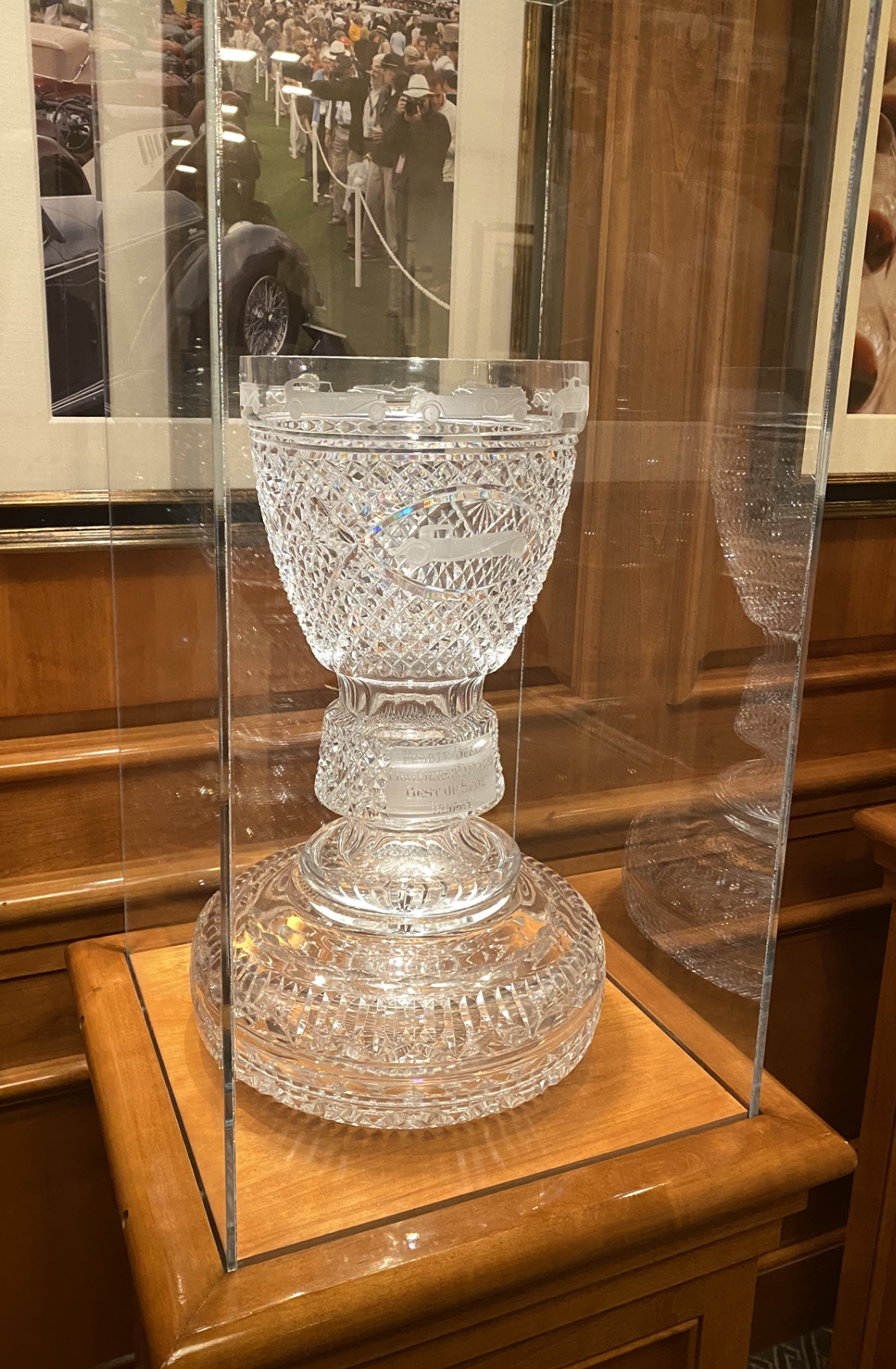
The numbers around the show itself are just as telling. 218 cars competed this year, including 33 international entries from 14 countries, and the week’s events raised over $4.3 million for Monterey County nonprofits, pushing Pebble Beach’s 75-year charitable total past ₹479 crore ($50.15 million). Duesenberg, as a marque, now has eight Best of Show wins at Pebble Beach, more than any other American brand.
Did Car Week actually hit $500 million?
Five auction houses brought roughly 1,200 cars to Monterey this year. Gooding Christie’s alone crossed $159 million with a 94 per cent sell-through rate (the share of cars on offer that actually found a buyer), and RM Sotheby’s reported early results north of $370 million. Add Bonhams and the smaller sales, and the week is tracking very close to the $500 million mark we flagged before the auctions even opened. The final combined total takes a few more days to firm up, but the direction is clear: younger buyers chasing 2000s supercars alongside the traditional pre-war crowd pushed this into one of the biggest Car Weeks on record.
Why this matters even if you’re not bidding in millions
None of us are buying a ₹410 crore race car anytime soon, but Car Week results matter beyond the lawn at Pebble Beach. A record sale like this resets what collectors expect classic performance cars to be worth, and that trickles down over time. Values on everything from old air-cooled Porsches to 90s Japanese icons tend to firm up when a headline sale like this makes global news. It’s a reminder that the ordinary-looking performance cars enthusiasts obsess over today are exactly what this same auction culture will be chasing decades from now.

