

























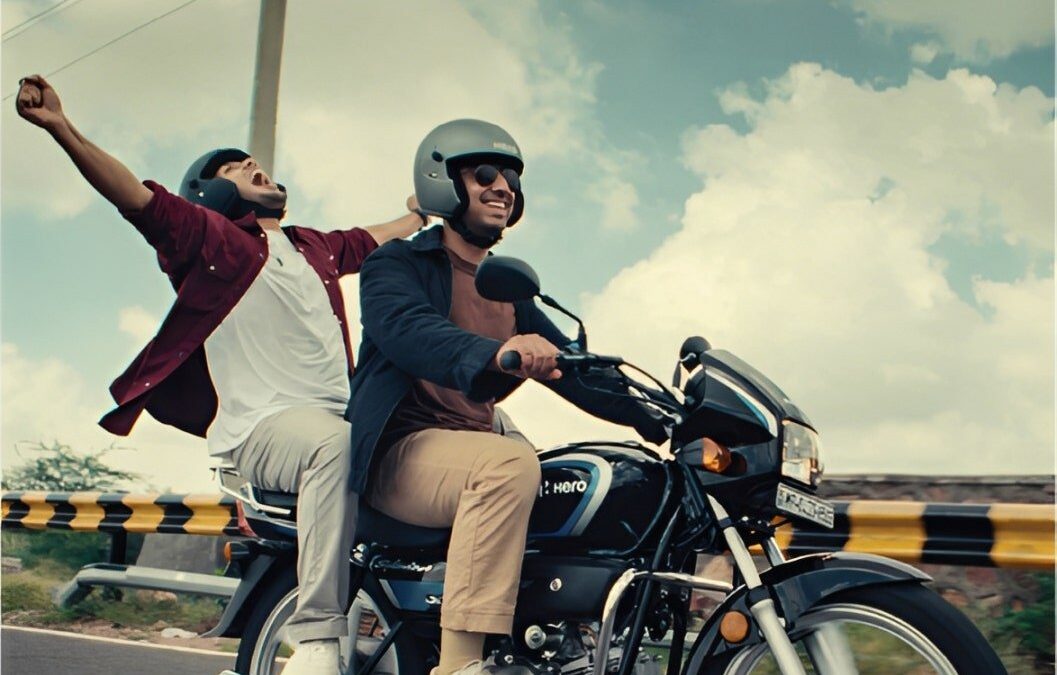
The Hero HF Deluxe’s self-start i3S variant costs ₹66,000 to ₹68,000, undercuts the segment-leading Splendor Plus by over ₹10,000, and gives up barely 2-3 kmpl to it in real-world mileage data. That makes it the one worth booking among the five commuter motorcycles still sold under ₹1 lakh in India: the Hero Splendor Plus, Hero HF Deluxe, Bajaj Platina 110, TVS Radeon and Honda Shine 100. All five claim ARAI figures between 65 and 74 kmpl. None of them hand that number back in Mumbai or Bengaluru traffic, and owner-reported data on BikeWale shows exactly how much each one actually gives up.
These prices already carry the GST 2.0 cut from September 2025, when motorcycles under 350cc moved from the 28% slab to 18%. That is the real reason a 100-125cc commuter costs what it does today, not a fresh festive discount. What has moved since is variant pricing: Hero revised Splendor Plus prices for OBD2B emissions compliance, and HF Deluxe’s Canvas Black trim got a region-specific cut of up to ₹7,635 in UP, MP, Rajasthan and Chhattisgarh.

What ₹1 Lakh Actually Buys You Right Now
Ex-showroom prices move by city thanks to local RTO tax, so treat these as the base to budget around, then add 8-10% for registration and insurance.
| Bike | Price range (ex-showroom) | Engine | Self-start |
| Hero Splendor Plus | ₹77,777 – ₹80,531 | 97.2cc | Top 2 of 4 variants |
| Hero HF Deluxe | ₹59,477 – ₹72,620 | 97.2cc | i3S Cast and Pro only |
| Bajaj Platina 110 | ₹75,155 | 115.45cc | Yes, single trim |
| TVS Radeon | ₹55,400 – ₹78,200 | 109.7cc | Digi Drum and Digi Disc only |
| Honda Shine 100 | ₹68,862 – ₹75,950 | 98.98cc | DX trim only |
Claimed vs Real: Whose Mileage Number Can You Trust
ARAI figures come from a lab test at a fixed speed with no pillion and no AC-equivalent load. BikeWale’s owner-reported mileage, pulled from thousands of individual fill-up logs, is the closest thing to an independent real-world number any of these bikes have.
| Bike | ARAI claimed | BikeWale owner-reported real-world |
| TVS Radeon | 73.68 kmpl | ~62 kmpl in mixed city riding |
| Bajaj Platina 110 | 70 kmpl | Wide spread: high-40s in heavy traffic, up to 70 kmpl on open roads |
| Hero Splendor Plus | 70 kmpl | ~62 kmpl, with long-term owners averaging closer to 55-60 kmpl |
| Hero HF Deluxe | 70 kmpl | 65-70 kmpl, the smallest claimed-to-real gap of the five |
| Honda Shine 100 | 65 kmpl | ~68 kmpl, rare case of owners beating the claim |
No independent instrumented test (the kind Autocar India or Team-BHP run with a fuel-flow meter rather than owner self-reporting) has been published for any of these five this year, so treat even the BikeWale numbers as a large, self-reported sample rather than a lab result.

Which Variant Is Actually Worth Buying
Buy the Hero HF Deluxe i3S Cast, priced around ₹66,000-68,000. It is the only bike in this group that pairs self-start with a sub-₹70,000 price and a mileage gap under 5 kmpl against its own claim. The plain Kick-start All Black trim at ₹59,477 saves money but makes you kick-start a bike in Delhi traffic every single red light, a real daily cost the sticker price hides.
Skip the TVS Radeon Digi Disc at ₹78,200. It adds a front disc brake that is genuinely worth having, but it prices the Radeon within ₹2,500 of the Splendor Plus while giving up roughly 8 kmpl of owner-reported mileage to it, so the one real advantage (braking) comes at the cost of the one thing buyers in this segment actually chase.
If you only care about rupee-per-kilometre and nothing else, the Platina 110’s single trim is hard to beat on paper. If you ride in actual city traffic every day, its owner-reported mileage is the least predictable of the five, and that unpredictability is worth more to most commuters than a few extra kmpl on a good day.

The Real Deal-Breakers
None of these five gets a disc brake as standard on its cheapest variant, only as a costlier add-on trim, so the base price you see in every ad is never the price of the safer bike. The Splendor Plus’s two cheapest variants are still kick-start only, which matters more than Hero’s marketing lets on once you are stuck restarting it at a flooded Bengaluru signal in June. The Platina 110 comes in exactly one trim, which means no option to skip features you do not want, and the Shine 100’s base variant has no self-start at all, pushing you to the pricier DX if that matters to you.

For a direct head-to-head on numbers, the Splendor Plus vs TVS Radeon comparison breaks down variant-by-variant pricing further. Buyers cross-shopping this segment with slightly bigger budgets should also see every option in the full list of bikes under ₹1 lakh before booking, since a handful of 125cc bikes sneak in just under the limit too.
Which bike under ₹1 lakh gives the best real-world mileage in India?
ARAI puts the TVS Radeon on top at 73.68 kmpl, but BikeWale owner data shows the Hero HF Deluxe and Honda Shine 100 losing the least ground to their claimed figures in actual city riding, which matters more than the lab number once you are commuting daily.
Is self-start worth paying extra for on a budget commuter bike?
Yes, for daily city use. Kick-starting a cold engine at every signal in heavy traffic is a genuine, repeated annoyance, and the self-start variants here cost only ₹3,000-7,000 more than their kick-only siblings, a small premium against years of ownership.
Will prices in this segment rise again after the GST 2.0 cut?
The 18% slab for sub-350cc two-wheelers took effect in September 2025 and remains in force. Manufacturers can still raise prices for other reasons, such as emissions compliance, as Hero did with the Splendor Plus for OBD2B, but that is a company decision, not a tax change.