



























Detroit just posted its worst quarter ever, by market share, and the car that beat it isn’t even an EV. GM, Ford and Stellantis closed America’s third quarter of 2026 with just over 36% of new-car sales between them, the lowest combined share any of the three has recorded since the data started being tracked this way. GM still sold more cars than anyone else in the country. It just won by a lot less than it used to, and the car closing the gap runs on a battery and a gas engine at the same time, not a battery alone.
Here’s why that matters even if you’ve never set foot in a Chevrolet dealership: this is the clearest sign yet that the next phase of the car industry isn’t EV versus petrol. It’s hybrid versus everything else, and the brands that bet on hybrids three years ago are the ones eating Detroit’s lunch right now.

The numbers that tell the story
General Motors sold 670,974 vehicles in the US in Q3 2026, according to its own reported figures, down 5.5% from a year earlier. That was still enough to keep the sales crown. But Toyota sold 633,223 vehicles in the same quarter (a 0.6% rise), which puts it under 38,000 vehicles behind GM. A year ago that gap was far wider. At this rate of closing, Toyota doesn’t need a blowout quarter to take the top spot. It just needs GM to have an average one.
The reason is hybrids. Toyota’s own numbers, reported straight from its North American pressroom, show that electrified vehicles (hybrids, plug-in hybrids and EVs combined) made up 57.4% of everything the brand sold in Q3, up 28.5% year over year. More than half of Toyota’s showroom traffic in America is now walking out with a car that sips fuel instead of one that needs a plug or one that burns it outright.
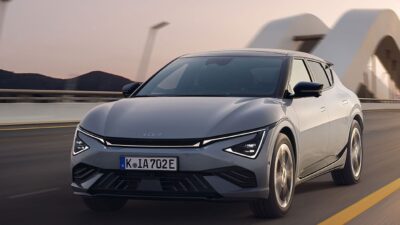
Behind GM and Toyota, the closest race in the entire US market just played out between Ford and Hyundai. Ford held the number three spot with 509,764 vehicles sold, but Hyundai Motor Group, which bundles Hyundai, Kia and Genesis together, finished at 506,200, a gain of 5.4%. That’s a margin of under 1,200 vehicles separating America’s most storied truck brand from a Korean group that didn’t even sell cars here at scale two decades ago. Hyundai’s own badge alone had its best third quarter ever, at 246,896 units.

The part that should worry GM the most
GM kept the crown, but its own electric vehicles are the ones falling apart fastest. The Chevrolet Equinox EV dropped 92.4% year over year to just 1,905 units sold. The Blazer EV fell 84.4%. The Hummer EV, GM’s loudest electric statement of the past three years, dropped 72.9%. GM is still America’s top seller, but it is winning with trucks and gas-powered SUVs, not with the electric lineup it spent billions building. That’s the uncomfortable split inside one company’s own numbers: the brand leading the sales chart is also the brand whose EV bet is cratering domestically, in the same quarter that Toyota’s hybrid bet is paying off.
Stellantis, the third member of the Detroit Three, finished almost exactly where it did a year ago, at 324,277 units, essentially flat. Honda’s combined Honda and Acura sales came in at 356,848 for the quarter. Add it all up and Asian brands, Toyota, Honda, Hyundai and Kia chief among them, cleared 50% of the entire US new-car market for a second straight quarter, something that would have sounded unlikely even three years ago.
Why it’s happening now
The trigger is at the pump. The US national average for a gallon of petrol hit $4.43 in September 2026, according to AAA, up from roughly $3.20 a year earlier, as the Iran war kept disrupting oil shipping through the Strait of Hormuz and crude traded near $100 a barrel. When fuel gets that expensive that fast, buyers don’t wait around for an 800-volt EV platform and a charging network to catch up. They want something that solves the problem the day they drive it home, and a hybrid does that without asking them to change how they live. Detroit, which leaned harder into pure EVs than hybrids over the past few years, simply doesn’t have enough hybrid metal on the lot to catch the wave. Toyota, Honda and Hyundai spent that same stretch building exactly that.
Cox Automotive, the industry’s own data house, didn’t see this as a one-off wobble. It actually raised its full-year 2026 US sales forecast to 16.1 million vehicles, up from an earlier 15.8 million, because overall demand held up fine. It’s just flowing to different brands than it used to.

What it means from here
This isn’t a quarter Detroit can shrug off as noise. A record-low combined share, a GM EV lineup down as much as 92% on individual models, and a legacy Ford brand barely holding off a Korean group for third place all point the same way: the hybrid-first playbook that Toyota, Honda and Hyundai committed to years ago is the one working right now, and switching playbooks mid-cycle takes years, not months. If gas prices stay elevated into 2027, this gap has more room to widen before it narrows.
There’s a genuine India echo here too. The same hybrid-over-EV playbook that just helped Toyota and Hyundai close in on Detroit is the one both companies already run in Indian showrooms, where strong-hybrid models routinely outsell their electric counterparts. What played out in America’s Q3 numbers is the same bet these brands have been making in India all along.
The lesson from this quarter isn’t that EVs failed. It’s that when buyers are nervous about the pump, they want a car that fixes the problem today, not one that needs a charging network to fix it eventually. That’s the car Toyota, Honda and Hyundai had ready. It’s the car Detroit didn’t.