





























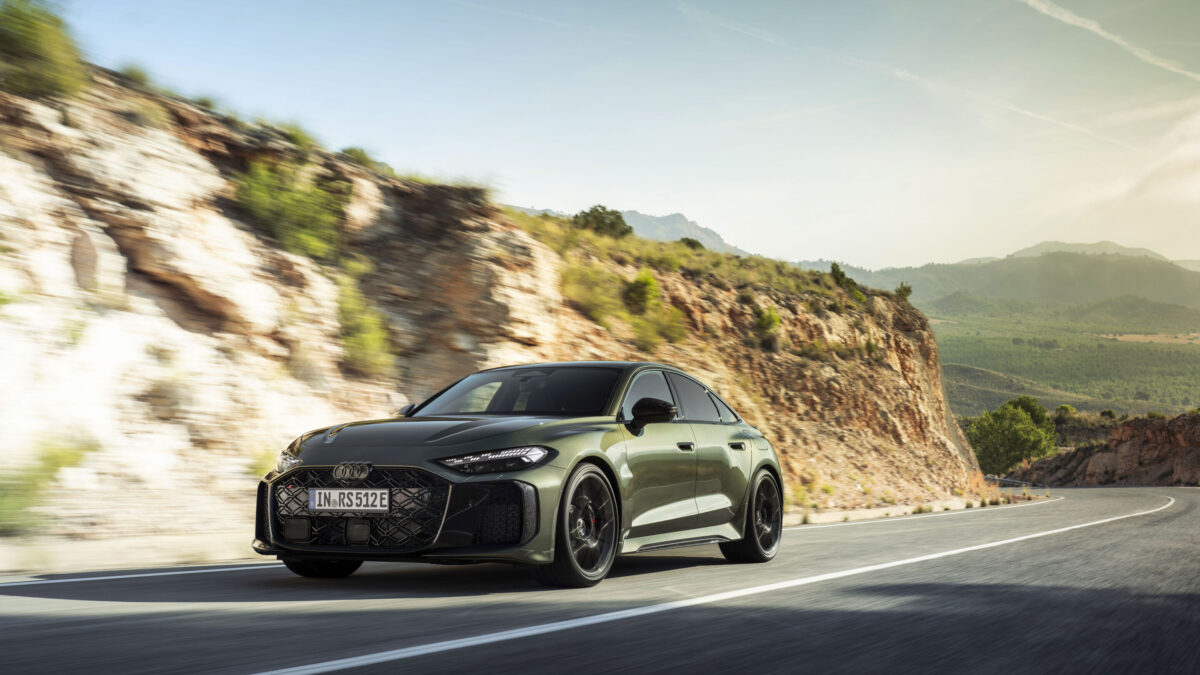
Audi just built the most powerful RS5 it has ever made, and the way it got there is going to split opinion. For the first time, the fast version of Audi’s A5 has gone plug-in hybrid: a turbo V6 paired with an electric motor and a battery you charge from a wall socket. Global reviewers have spent the last few weeks putting it through everything from city traffic to race tracks, and the verdict so far is fascinating, because almost nobody agrees on whether the trade-off is worth it.
The Numbers That Matter
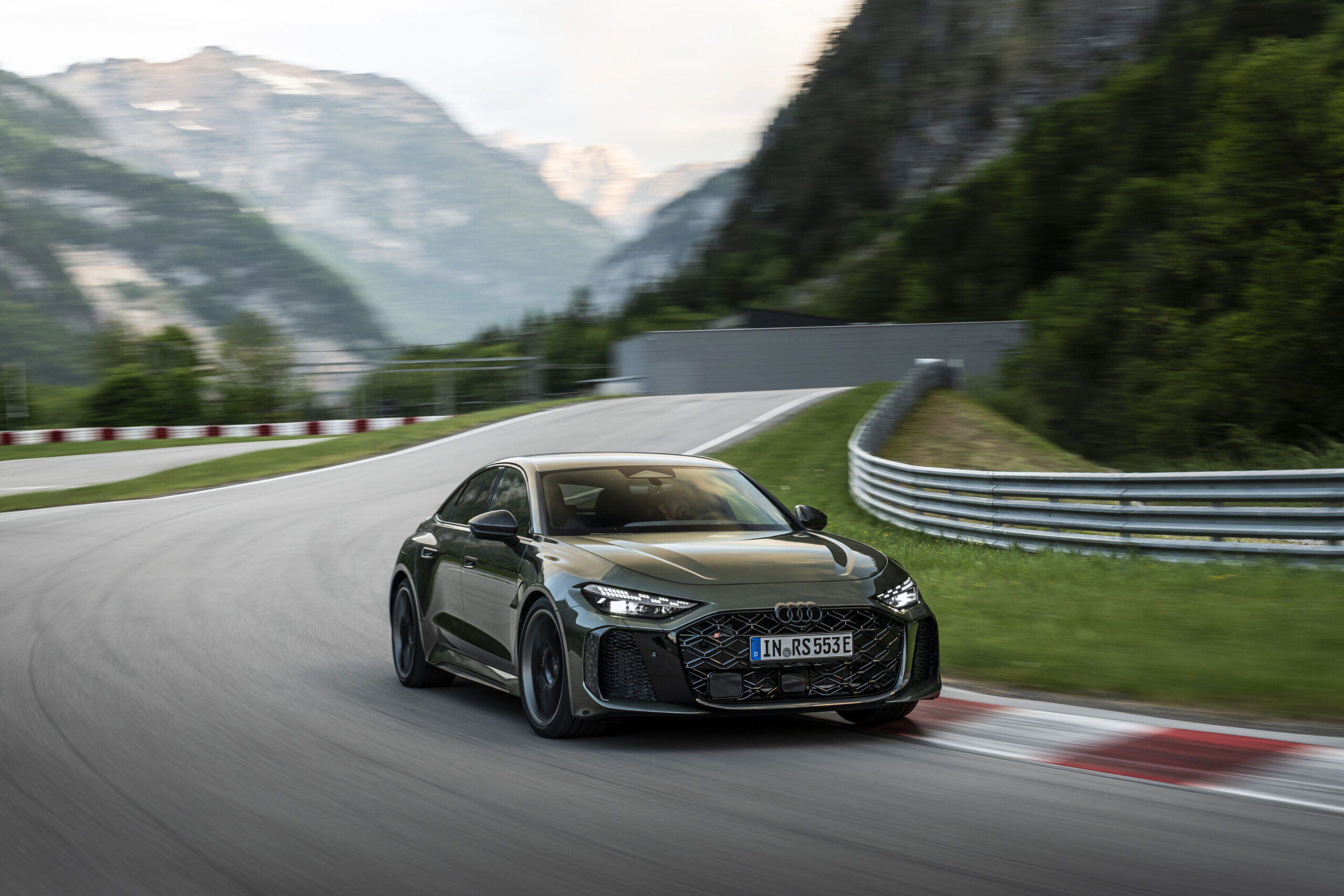
Audi paired a 2.9-litre twin-turbo V6 (510 PS on its own) with a 177 PS electric motor tucked inside the gearbox. Combined, that’s a system output of 639 PS, or 630 horsepower in the way most of us count it, with 825 Nm of torque. That’s enough to hit 100 km/h from a standstill in 3.6 seconds. The 25.9 kWh battery is big enough for an official electric-only range of up to 84 km, so short commutes could genuinely be done on electric power alone.
| System output | 630 hp (639 PS) / 825 Nm |
| 0-100 km/h | 3.6 seconds |
| Battery | 25.9 kWh, up to 84 km electric range |
| Kerb weight | ~2,355 kg (Sedan) / 2,370 kg (Avant) |
| Germany starting price | €106,200 (Sedan) |
What It’s Actually Like to Drive
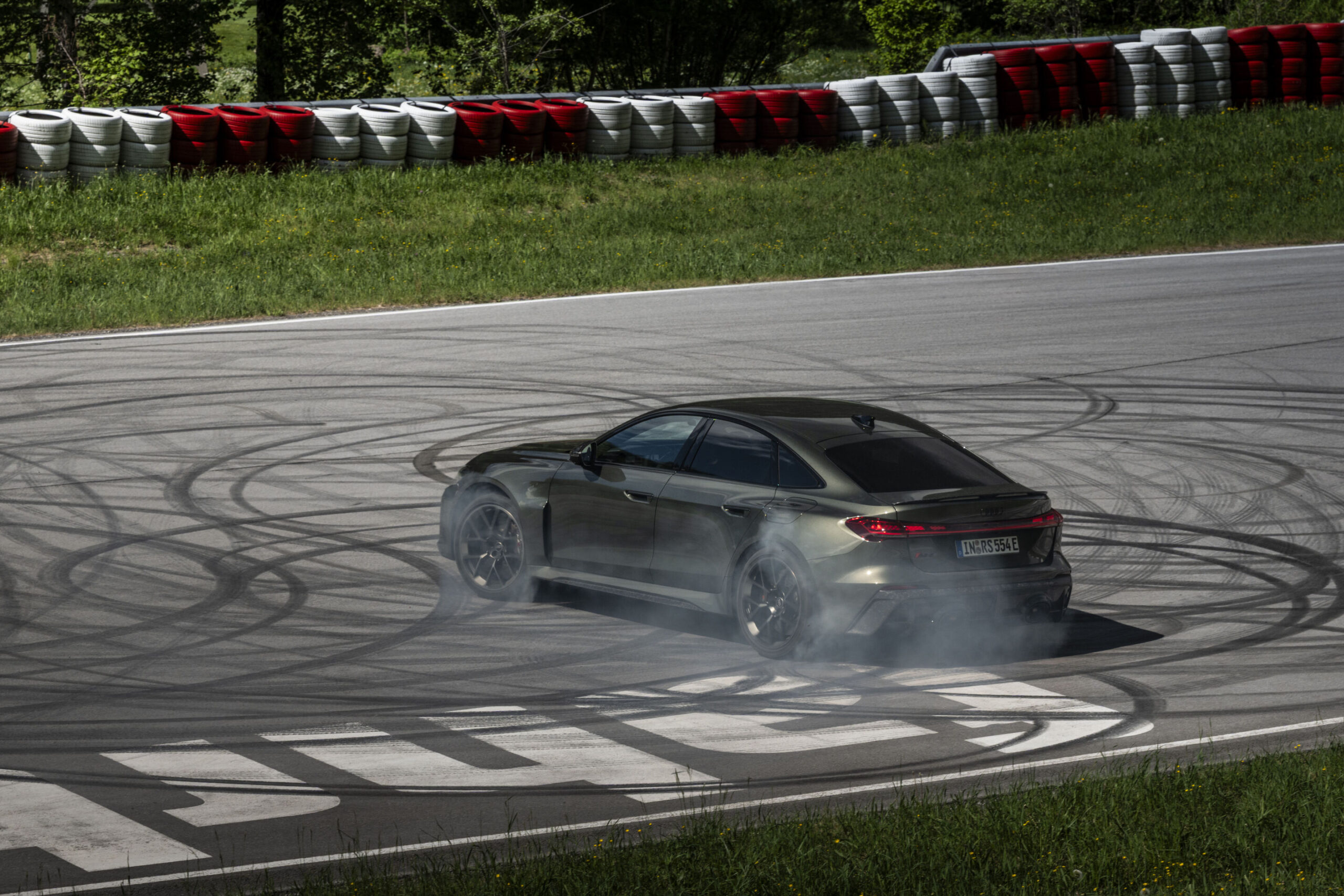
Here’s the part that matters more than the spec sheet: does it feel like an RS car should? Autocar and Auto Express both came away impressed that a 2.3-tonne car can hide its weight this well, crediting Audi’s new quattro system, which now sends power between the front and rear axles in a much wider range (as much as 85 percent to the rear) using electromechanical torque vectoring. In plain terms, that means the car can push more power to whichever wheel has the most grip, individually, in real time, which is what lets something this heavy still turn in sharply. The Drive, which tested it on city streets, mountain roads and a track, scored it 8.5 out of 10 and called the whole experience “eye-opening, magical, shockingly fun, and also flawed.”
The Catch
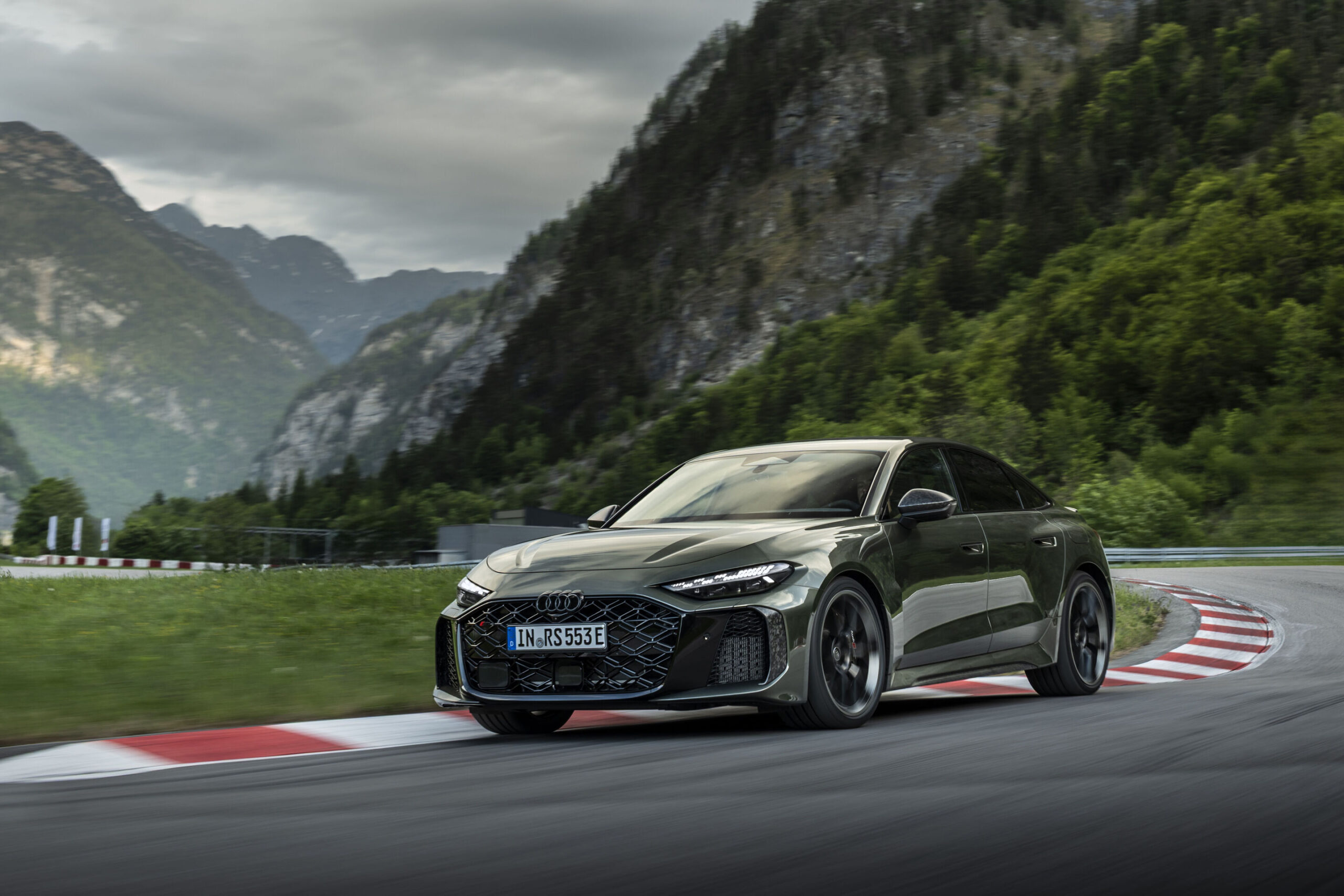
Every reviewer flags the same problem: this is a heavy car for what it is, roughly 625 kg heavier than the outgoing RS5, almost entirely down to the battery pack. Auto Express found the claimed 50-mile electric range drops to a realistic 30 miles on the motorway, there’s no fast (DC) charging, and the fuel tank shrinks to just 46 litres to make room for the battery. Auto Express also rated it 4.5 out of 5 but was blunt that it “lacks the edge and excitement of a BMW M3 Competition,” even with more power on tap.
“Almost supernatural capabilities” through its suspension and steering, but sure, “it lacks the edge and excitement of a BMW M3 Competition.” That’s Auto Express, reviewing the 2026 Audi RS5.
Why This Matters if You’re in India
Audi India’s fast-car lineup currently tops out with the S5 Sportback, so the RS5 sits a rung above anything Indian buyers can walk into a showroom and order today. Nothing official has been said yet about an India launch or timeline, so treat that as a “when,” not an “if,” for now. But this is exactly the kind of car that shapes what enthusiasts expect from every fast Audi that does arrive here: hybrid power is no longer just for eco models, it’s coming for the performance cars too, and the RS5 is the clearest sign yet of where that road leads.

