































Here is a sentence that would have sounded insane five years ago: for the first six months of 2026, more new cars sold around the world ran partly or fully on a battery than ran purely on petrol or diesel. Pure combustion-engine cars slipped to 49% of global sales, the lowest share since the car became a mass-market product roughly a century ago. Hybrids and electric cars together outsold the engine that built the entire industry.
This is not a projection or a target. It is what actually happened on showroom floors from January to June 2026, based on registration data tracked by the automotive research platform MarkLines and reported by Japan’s Nikkei. We should care about this because it is the clearest sign yet that the switch away from petrol is no longer being forced by subsidies or government mandates. It is happening because of simple economics: fuel got expensive, and batteries got cheap.
The numbers behind the headline
Globally, pure internal combustion engine, or ICE, cars (the ones with no electric motor at all) sold 20.25 million units in H1 2026, down 10% from the same period last year. Their market share dropped three percentage points to 49%, a huge fall from 73% as recently as 2021.
Meanwhile, battery electric vehicles (BEVs, the fully electric ones with no engine at all) sold 6.87 million units, up 12%, for a 17% share. Hybrids (cars with both a small engine and an electric motor working together to save fuel) sold 7.27 million units, up 10%, for an 18% share. Add it up and ICE cars are now a minority on the world’s roads of new sales, something that has never happened before.

Why it happened now, not two years ago
The direct trigger is oil. After US and Israeli strikes on Iran rattled the Middle East this year, crude prices jumped and pump prices followed. Petrol in the US, for context, averaged $4.43 a gallon in September, against $3.20 a year earlier. That kind of jump at the pump changes buying decisions fast, especially for anyone cross-shopping a petrol car against a hybrid with similar running costs.
The second trigger has been building for longer: batteries have simply gotten cheap. Battery cell costs now average around $99 per kWh (kilowatt-hour, the unit used to measure how much energy a battery pack can store), down more than 28% from 2022. That is the single biggest reason EVs no longer need a fat subsidy to compete with a petrol car on sticker price.
“Few EV buyers return to gasoline vehicles or hybrids, and as prices continue to fall, demand driven by genuine consumer needs rather than subsidies is likely to expand,” said Yoshiaki Kawano, associate director at Mobility Global, the research arm behind the data.
That line matters more than it looks. The EV transition’s biggest fear has always been that buyers would quietly drift back to petrol the moment a subsidy ended or a tax credit expired. Kawano’s point, backed by the actual sales numbers, is that this is not happening at scale. Once people switch, they tend to stay switched.
Where the shift is happening, and where it isn’t
The picture is wildly uneven by region, and that unevenness is the real story.
China, the world’s biggest car market, saw ICE sales crash 26% in H1 2026. Chinese buyers alone account for roughly half of all BEVs sold on the planet, 3.44 million units in six months, led by brands like BYD, which has overtaken Tesla as the world’s biggest EV seller by a widening margin.
Europe crossed its own version of this tipping point: electrified vehicles (EVs and hybrids combined) outsold pure ICE cars across 31 major European countries for the first time ever on a half-year basis, with electrified sales up 32% to 1.81 million units as ICE sales fell 13%.
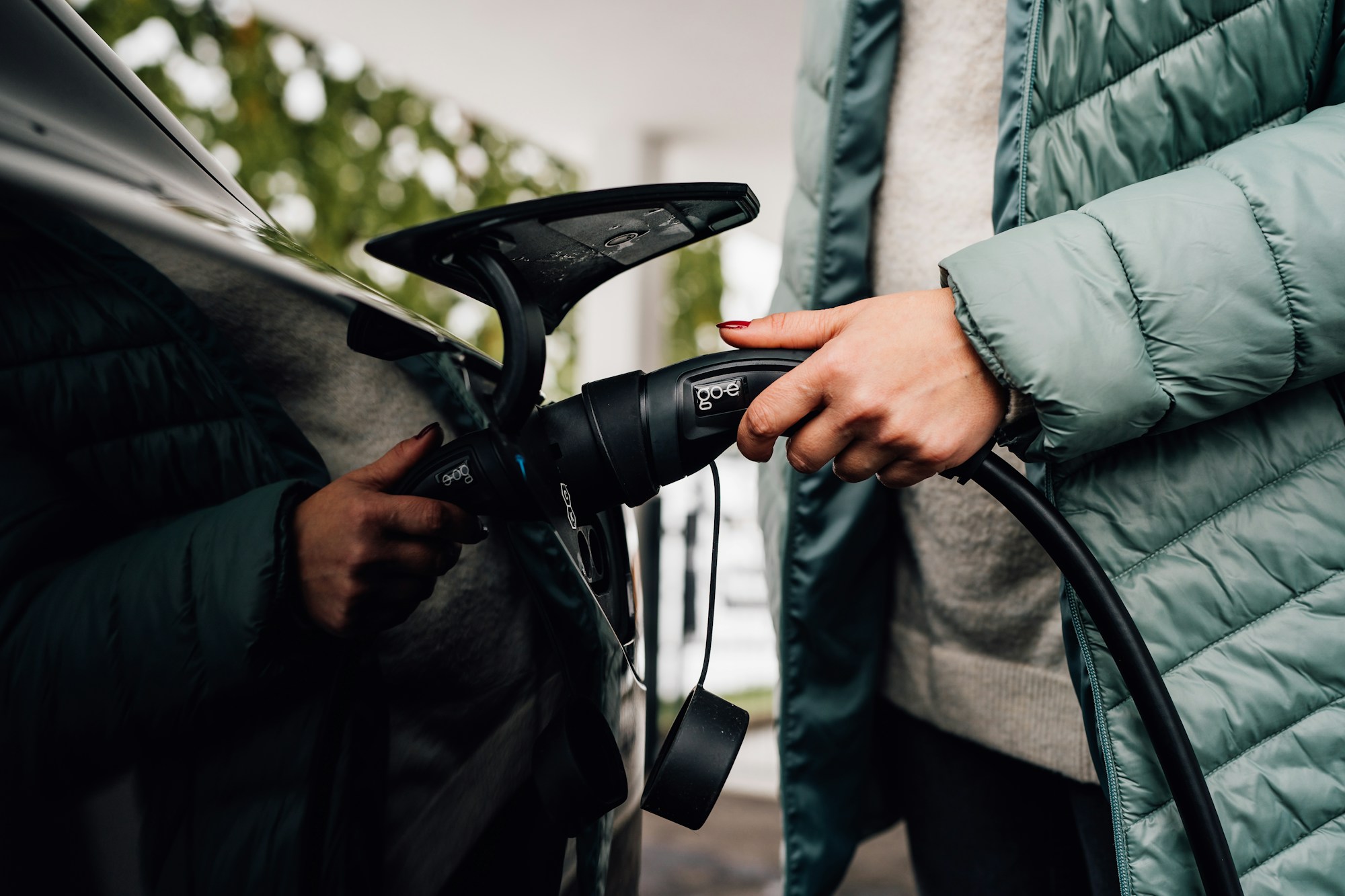
North America tells almost the opposite story. BEV sales there fell 15% in the same period, largely because the expired US federal EV tax credit pulled demand forward into 2025 and left a hole behind it. This global tipping point is not one smooth worldwide curve. It is China and Europe pulling the average down hard, while the US pulls the other way.
Where this leaves Indian buyers
If you’re shopping for a car in India right now, this global headline won’t match your local dealership floor.
India’s electric passenger vehicle penetration is forecast at just 7 to 8% of the passenger EV market for the whole of 2026, according to CyberMedia Research, up from 4.2% in FY2025. That is real, fast growth off a small base, nowhere close to a 49-51 tipping point. Petrol, diesel, and CNG still dominate Indian showrooms by a huge margin, and will keep doing so for years.

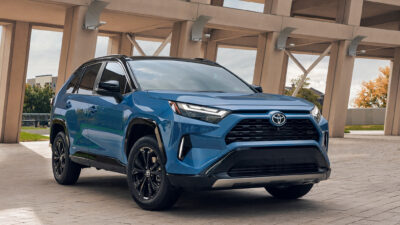
The reasons are specific to India: charging infrastructure outside the top metros is still thin, EV sticker prices remain high relative to average incomes, and India hasn’t seen the pump-price shock that hit Europe and the US this year. Hybrids are where India actually tracks the global story closely. Toyota, Maruti, and others have leaned hard into strong-hybrid technology here precisely because it saves fuel without demanding a home charger.
What happens from here
Nobody can be certain this line keeps moving in one direction. If oil prices cool and Middle East tensions ease, some of the urgency pushing petrol buyers toward hybrids could fade. The US, where EV demand has already slowed post-subsidy, is the live test case for how much of this shift was genuine preference versus tax-credit timing.
But the structural trend, cheaper batteries plus more EV models at more price points, doesn’t reverse easily once it gets this far along. Analysts covering this data expect EVs to reach 30% of global vehicle production by 2030, with hybrids and EVs only growing their combined lead over petrol and diesel from here.
For now, the number that matters is simple: 49%. That’s the share pure combustion engines hold of the world’s new cars. It has never been below half before. It likely never will be again.


