























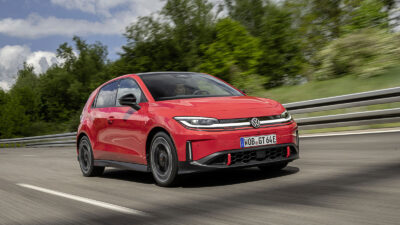
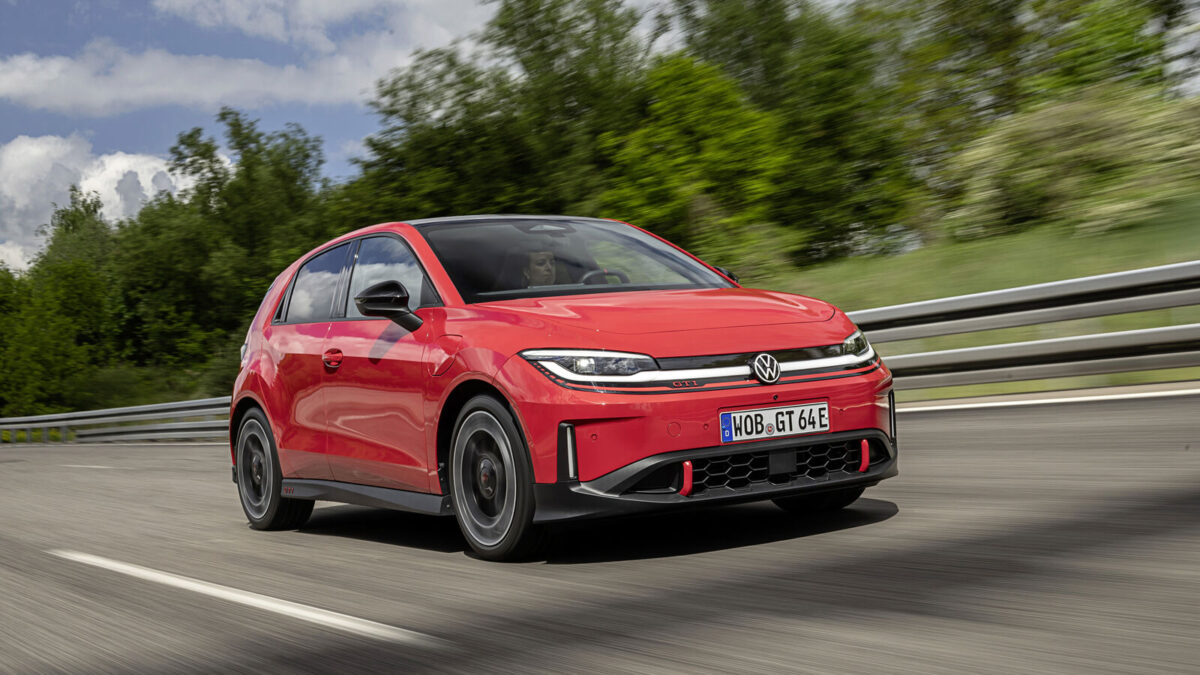
Fifty years ago, Volkswagen bolted a bigger carburettor and some red trim onto a Golf and accidentally invented the hot hatch. On October 7, it opened the order books on the first GTI that has never seen a drop of petrol. The ID. Polo GTI starts at €39,995 in Germany, and it is, by Volkswagen’s own count, the first car in the badge’s half-century history to be fully electric.
That matters beyond the spec sheet. GTI is not just a trim level to VW fans, it is the badge that defines what an affordable fast car should feel like. Putting it on a battery-powered supermini is Volkswagen betting that the formula still works without an engine note, and the way it has gone about proving that is more interesting than the numbers alone.
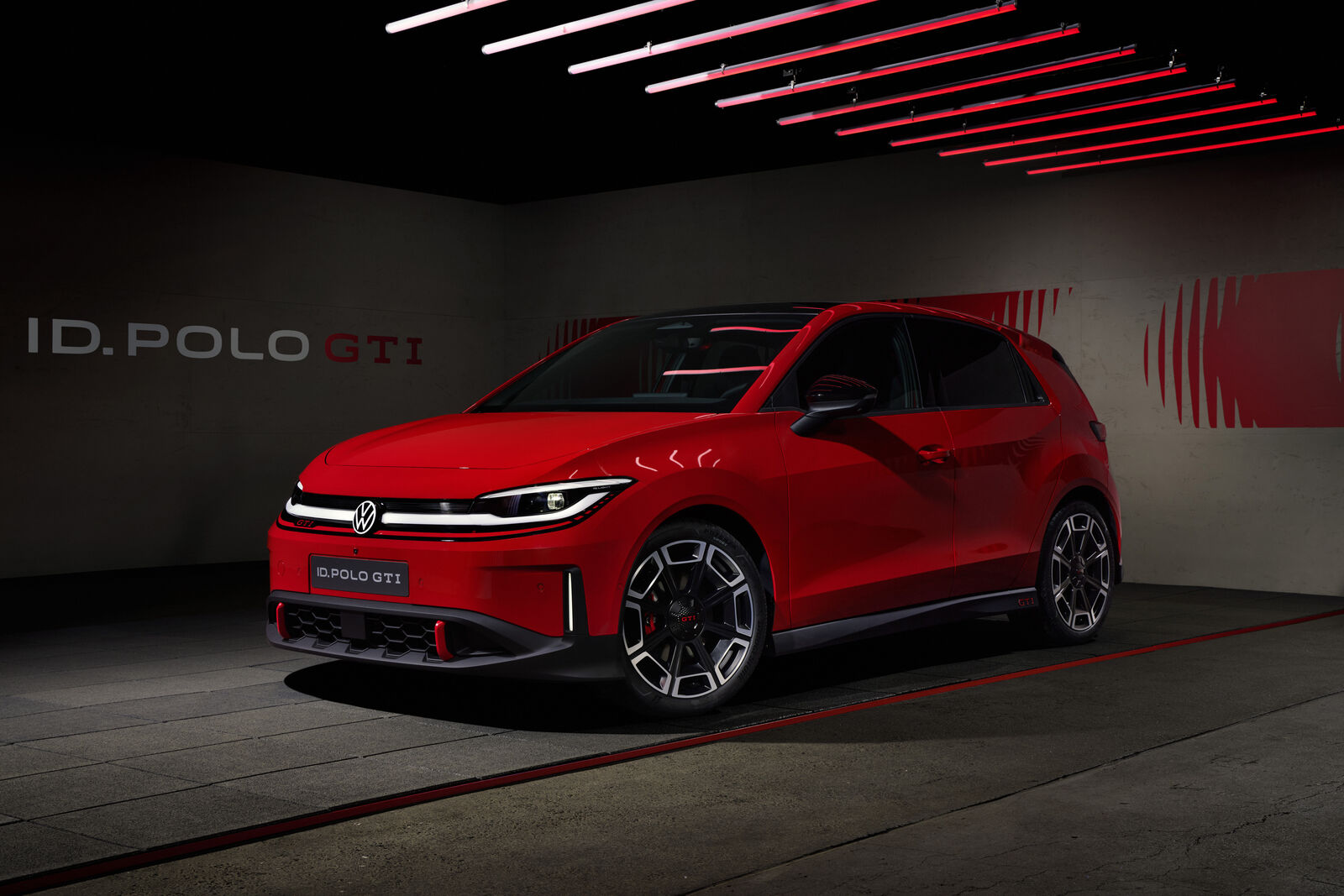
What €39,995 Actually Buys
The motor makes 166 kW, which Volkswagen still quotes the old-fashioned way as 226 PS (horsepower, roughly). It drives the front wheels only, through an electronically controlled limited-slip differential that is meant to stop the car from scrabbling for grip out of a corner, something front-wheel-drive hot hatches have always had to fight. Torque, the twisting force that actually gets you off the line, is 290 Nm, and all of it is available the instant you touch the accelerator since there is no turbo lag or gear to wait for. Volkswagen claims 0 to 100 kmph in 6.8 seconds and a 190 kmph top speed, deliberately capped there based on customer feedback rather than pushed for a bigger number.
The battery is a 52 kWh pack, good for a claimed 431 km on the WLTP test cycle, the standardised lab test European manufacturers use so different cars’ ranges can be compared on paper. Real-world range on a hot hatch you are actually enjoying will be lower, as it always is. DC fast charging tops out at 105 kW, enough to go from 10 to 80 percent in about 24 minutes, and the car’s built-in route planner will automatically slot in charging stops on longer drives.
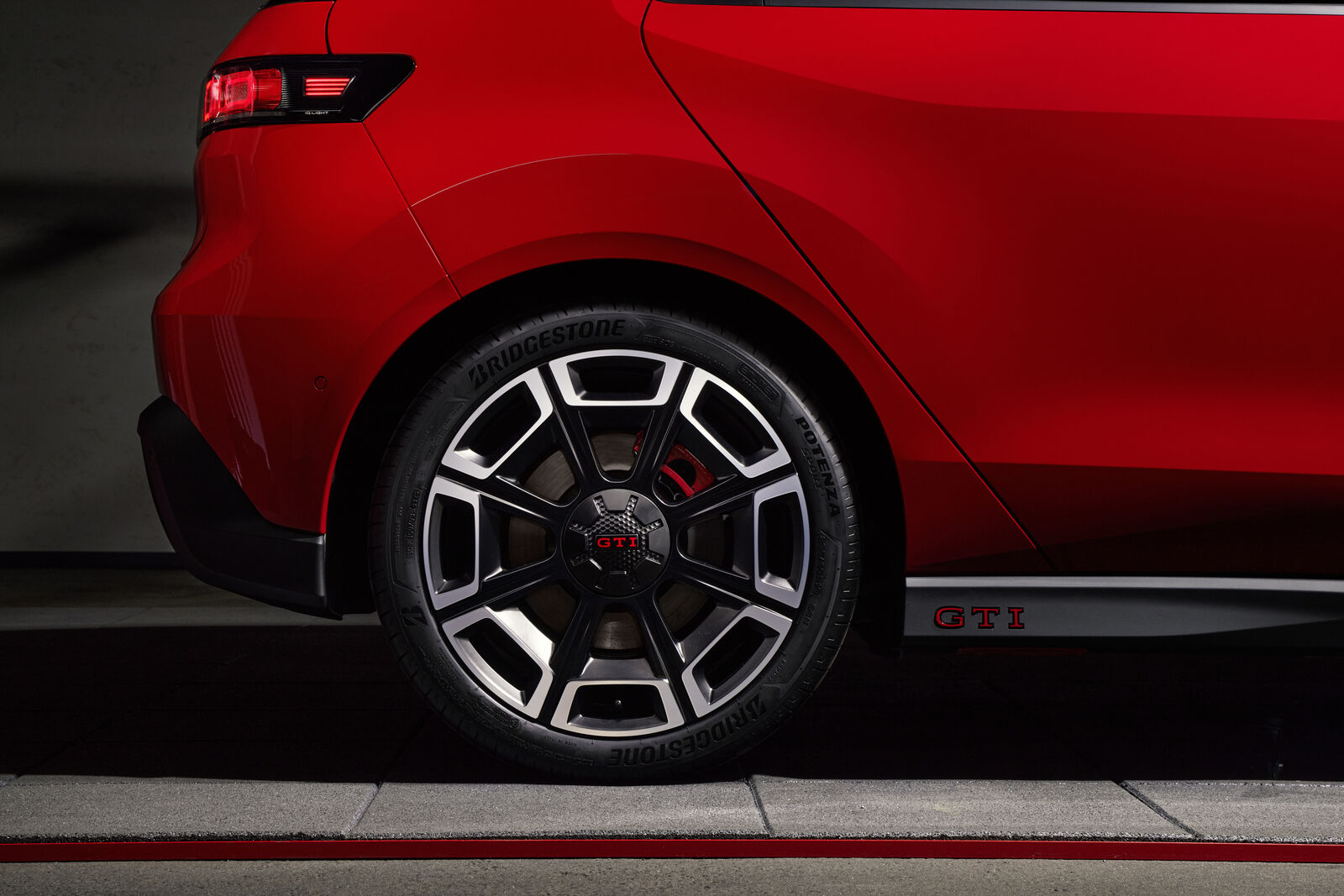
Volkswagen’s Answer to “But Where’s the Drama?”
The obvious objection to an electric GTI is that half the appeal of the original was the noise and the manual gearbox, neither of which an EV has. Volkswagen’s fix is a dedicated “GTI” driving profile, triggered by a red button on the steering wheel, that retunes the throttle response, steering weight and adaptive suspension all at once, and pipes in a synthetic engine note through the speakers. It is a trick plenty of enthusiasts will roll their eyes at. It is also, realistically, the only trick available to any electric performance car right now, and Volkswagen is at least being upfront that this is a different kind of fast rather than pretending it drives like the old one.
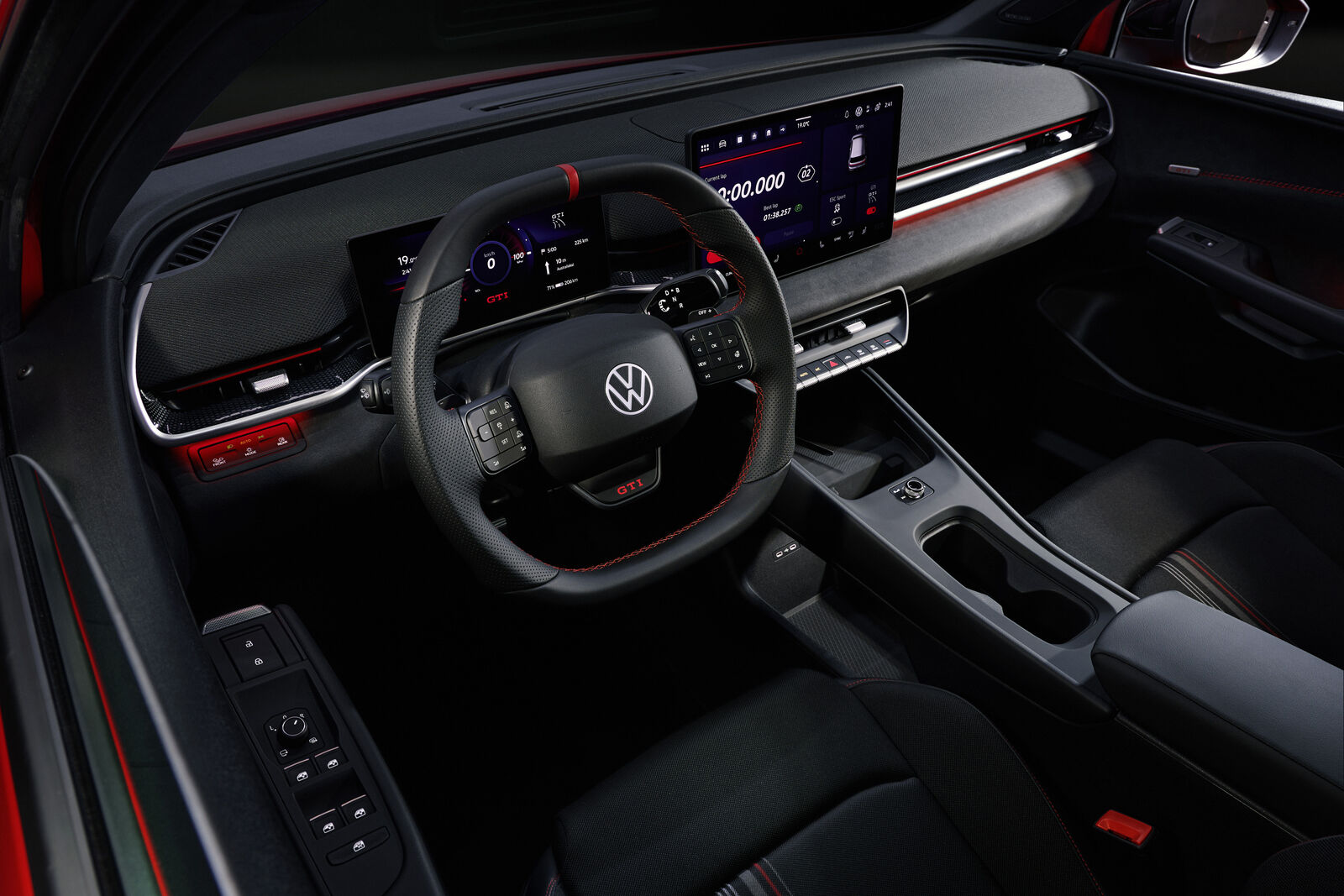
The rest of the design leans hard on nostalgia to cover the gap. Standard top sports seats come with the traditional GTI check pattern and red stitching, a 12 o’clock mark sits on the steering wheel like a racing car’s, and an optional “retro display” mode styles the digital instruments to look like a late-1970s Golf I. The infotainment screen will even show the currently playing track as a spinning cassette tape. It is a car selling its badge’s history as hard as its spec sheet.
How It Stacks Up Against Other Electric Hot Hatches
The ID. Polo GTI is not the only small electric car chasing driving enjoyment over badge prestige. The Mini Cooper JCW Electric and the Alpine A290 are its closest rivals in Europe, and the comparison is not flattering to Volkswagen on outright pace, only on price.
| Model | Price (Germany/EU) | Power | 0-100 kmph | WLTP Range |
| VW ID. Polo GTI | €39,995 | 226 PS | 6.8s | 431 km |
| Mini Cooper JCW Electric | ~€42,550 | 258 PS | 5.9s | 372 km |
| Alpine A290 (220hp) | €41,900 | 220 PS | 6.4s | 364 km |
Both rivals are quicker in a straight line and both cost more. Volkswagen’s pitch is less about winning a drag race and more about undercutting the segment while still claiming the longest official range of the three. For a brand that built GTI’s reputation on being the fast car a normal person could actually afford, that trade-off is consistent with the badge’s history, even if the on-paper performance numbers aren’t class-leading.
The ID. Polo GTI doesn’t need to out-drama a combustion GTI to matter. It just needs to be the GTI you can still buy once the combustion ones are gone, and at €39,995, it undercuts every electric rival wearing a hot-hatch badge today.
What’s Next, and Why India Isn’t in the Picture
Pre-sales are open in Germany now, with other European markets expected to follow through the rest of 2026 and into early 2027; Volkswagen has not published UK pricing yet. There is no India launch on the table. Volkswagen does not currently sell any of its ID electric range in India, and the petrol-powered Polo GTI that briefly went on sale there years ago was discontinued, so this GTI remains a European car for now. Buyers here keen to track Volkswagen’s India lineup in the meantime can do that on the brand’s model page.
What the ID. Polo GTI really signals is timing. Volkswagen has spent the past year cutting German jobs, writing down billions on its Porsche stake and slashing profit guidance to keep the group afloat through an expensive EV transition. Putting its most emotionally loaded badge on an electric car right now is a statement that the GTI nameplate is not getting retired alongside the combustion engine, it is being carried over as proof the fun doesn’t have to die with the tailpipe.


