



































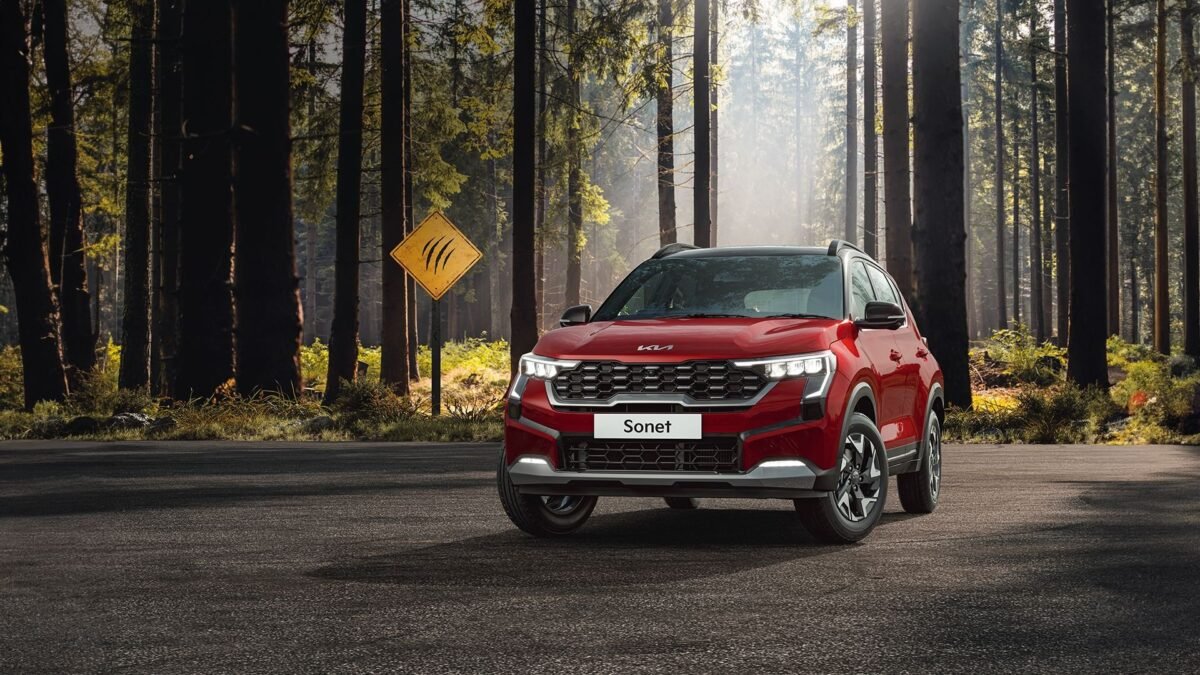
The Kia Sonet’s 1.5-litre diesel costs ₹1.41 lakh more than the equivalent petrol manual at the same HTE(O) trim: ₹9.29 lakh against ₹7.88 lakh, ex-showroom. Add Mumbai’s road tax and insurance and the gap widens to ₹1.81 lakh on the road. The diesel does burn less fuel, but on The Spec’d’s own numbers, you would need to drive it about 89,000 km before those savings cover the premium you paid at the showroom, and well over a lakh kilometres to cover what you actually paid on the road.
What the Diesel Actually Costs Over the Petrol
Kia sells the Sonet with three engines: a 1.2-litre naturally aspirated petrol, a 1.0-litre turbo-petrol, and a 1.5-litre diesel. The cleanest like-for-like comparison is at the HTE(O) trim, the cheapest version that gets a diesel option at all.
| Version | Ex-Showroom | On-Road, Mumbai | Mileage (Claimed) |
| HTE(O) Petrol MT | ₹7.88 Lakh | ₹9.17 Lakh | 18.8 kmpl |
| HTE(O) Diesel MT | ₹9.29 Lakh | ₹10.98 Lakh | 24.1 kmpl |
| Difference | +₹1.41 Lakh | +₹1.81 Lakh | +5.3 kmpl |
Ex-showroom prices, Mumbai on-road figures and claimed mileage from The Spec’d’s Kia Sonet page and its Mumbai on-road price page, last price-checked against Kia India on 21 October. On-road figures are estimates: actual RTO tax and insurance vary by dealer and city, so confirm the final number before booking. Independent listing sites report a similar diesel premium for the Sonet, generally ₹1 lakh or more over the comparable petrol, so this is not an outlier month.
The gap grows on the road, not just at the showroom: Maharashtra taxes diesel cars at a steeper slab than petrol cars at the same price, turning the ₹1.41 lakh ex-showroom premium into ₹1.81 lakh by the time you drive away in Mumbai. A lower-tax city narrows that on-road gap, but never closes it.
The Running-Cost Math That Decides It
The diesel is genuinely more efficient: 24.1 kmpl claimed against 18.8 kmpl for the petrol manual. Worked out at ₹90 a litre for diesel and ₹100 a litre for petrol, from The Spec’d’s Sonet mileage page, that is a real saving every time you fill up.
| Version | Cost per 1,000 km (Claimed) | Saving vs Petrol |
| Petrol MT (18.8 kmpl) | ₹5,320 | Baseline |
| Diesel MT (24.1 kmpl) | ₹3,730 | ₹1,590 per 1,000 km |
These are claimed ARAI figures, not a real-world test, so expect a smaller gap once traffic, air-conditioning and load are factored in. Nobody has published an independent real-world mileage test of this generation Sonet yet.
Divide the premium by the saving and you get the distance the diesel needs to cover before it is actually cheaper to own: ₹1.41 lakh ÷ ₹1,590 per 1,000 km works out to about 89,000 km on the ex-showroom price alone. Using the ₹1.81 lakh on-road premium in Mumbai, the diesel needs to cover about 1.14 lakh km before it breaks even.
A study of driving patterns in Delhi put the average private car at roughly 12,000 km a year. At that pace, the Sonet diesel takes more than seven years just to earn back its showroom premium in fuel, and closer to nine and a half years to earn back what you actually paid on the road. Most owners sell long before that.
Who the Diesel Actually Makes Sense For
The math changes for a genuinely high-mileage driver. Someone covering 25,000 to 30,000 km a year, a sales job with heavy highway driving, or a car doing double duty as a cab, reaches the 89,000 km break-even inside three to four years, well before resale. For a typical 10,000 to 12,000 km a year of mostly city driving, the extra ₹1.41 lakh to ₹1.81 lakh will not come back from the fuel pump.
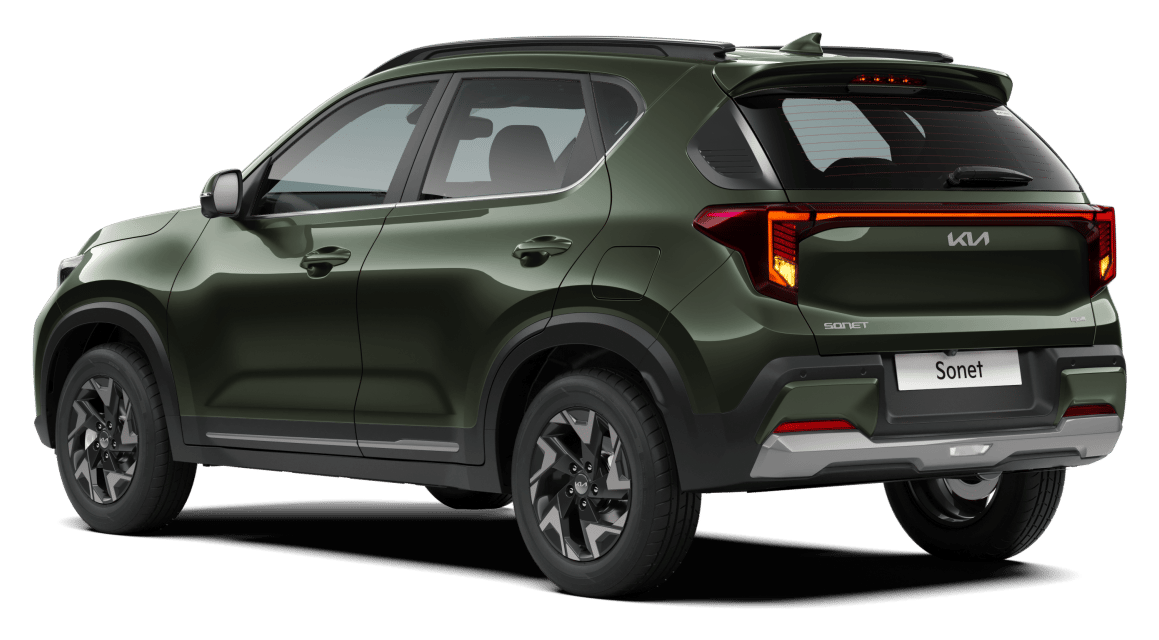
There is a non-financial case too: the 1.5-litre diesel makes 116 PS and 250 Nm, well up on the 83 PS petrol, and that torque is welcome with a full car and the air-conditioning on. Buyers planning to keep the car eight-plus years can defend the diesel on that alone. Buyers chasing the better mileage number on paper should look at the turbo-petrol DCT instead, which closes most of the gap for a far smaller premium.
On a 20 percent down payment and a 5-year loan at 9.5 percent, the cheapest Sonet (the base HTE Petrol MT, ₹8.68 lakh on the road in Mumbai) works out to about ₹14,584 a month, per The Spec’d’s EMI calculator. Run the HTE(O) Diesel MT’s ₹10.98 lakh on-road price through the same 20 percent down, 5-year, 9.5 percent terms and the EMI comes to about ₹18,448, roughly ₹3,860 a month more, money that is gone every month whether or not the fuel savings ever catch up.
How the Sonet Diesel Stacks Up Against Rivals
The Sonet is not alone in offering a diesel at this price. The Tata Nexon, cross-shopped by nearly every Sonet buyer, is sold with its own diesel option and a different road-tax and running-cost picture city to city; see the full Sonet vs Nexon comparison before deciding between the two. Buyers who want to see every other diesel option in this price band, not just these two, can browse every diesel car under ₹15 lakh on sale in India right now.
Is the Kia Sonet diesel worth buying over the petrol?
Only if you drive a lot. At a typical 10,000 to 12,000 km a year, the ₹1.41 lakh ex-showroom premium takes over seven years of fuel savings to earn back. Above about 25,000 km a year, it pays for itself well inside a normal ownership period.
How much more does the Kia Sonet diesel cost than the petrol?
At the HTE(O) trim, the diesel costs ₹1.41 lakh more ex-showroom and about ₹1.81 lakh more on the road in Mumbai, mostly because Maharashtra taxes diesel cars at a higher slab than petrol cars at the same price.
What is the running cost difference between the Sonet diesel and petrol?
On claimed ARAI figures, the diesel costs about ₹3,730 per 1,000 km against ₹5,320 for the petrol manual, a saving of ₹1,590 per 1,000 km. Real-world figures will be lower for both, with the gap likely to shrink a little in heavy traffic.