




























A US battery startup and a Korean cell giant just agreed to explore building solid-state batteries on existing factory lines, a shortcut that could get this next-gen tech into real cars years sooner than expected.
Solid-state batteries have been the “next big thing” in EVs for what feels like forever, always a few years away from actually showing up in a showroom. That timeline just got a bit more real. On July 29, 2026, Factorial Energy, a US battery technology company, and SK On, the South Korean cell giant that already supplies batteries to Hyundai, Ford, Volkswagen and even Ferrari, signed a memorandum of understanding (MOU, basically a formal agreement to seriously explore a partnership before anything binding gets signed). The goal is simple to state and hard to pull off: figure out whether Factorial’s solid-state battery tech can be built inside SK On’s existing lithium-ion factories, instead of needing brand new ones built from scratch.
Why swapping the electrolyte is such a big deal
Every EV battery today uses a liquid electrolyte, the material that lets charged particles move between the battery’s two electrodes so it can charge and discharge. Solid-state batteries replace that liquid with a solid material instead. Do that successfully and you can pack more energy into the same size pack, charge faster, and cut down on fire risk. The catch is that solid-state cells have been brutally hard to manufacture at the scale a car factory actually needs, which is exactly why this deal matters more than it might sound at first.
Skipping the multi-billion dollar new factory problem
Building a new battery gigafactory from the ground up costs billions of dollars and takes years before a single usable cell rolls off the line. SK On already runs over 200 GWh (gigawatt-hours, a measure of how many batteries a factory can churn out in a year) of production capacity worldwide, including roughly 100 GWh across its Georgia and Tennessee plants in the US. If Factorial’s FEST (Factorial Electrolyte System Technology) cells can be adapted to run on that existing line instead of a purpose-built one, solid-state batteries could reach real production years earlier than the industry has been assuming.
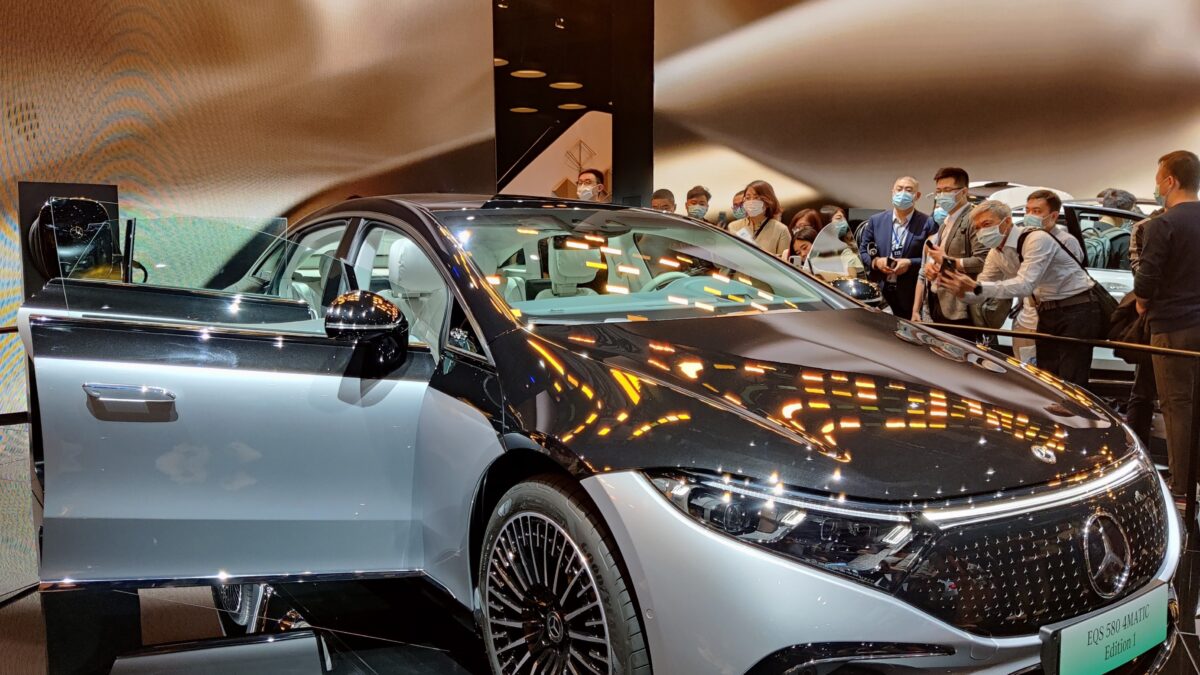
Factorial isn’t showing up empty-handed either. A modified Mercedes-Benz EQS fitted with its solid-state cells covered 1,205 km (749 miles) on a single charge in a widely reported test run, with the pack holding 25 percent more energy than a regular battery of the same size and weight. Its automotive-grade cells are also rated at 375 Wh/kg (watt-hours per kilogram, a measure of how much energy is packed per kilogram of battery weight, higher means a lighter pack for the same range), survive over 600 charge cycles, fast charge from 15 to 90 percent in 18 minutes, and keep working from minus 30 to 45 degrees Celsius, a range that covers everywhere in India from a Ladakh winter to a Rajasthan summer.
“A battery breakthrough only matters if it can be manufactured at scale,” Factorial’s leadership said in announcing the tie-up.
What this doesn’t mean yet
Don’t go expecting solid-state cars on Indian roads next year. This is an MOU, not a signed factory deal, so there’s no confirmed production line, no announced car, and no date attached. SK On is separately chasing 2029 for its own sulfide-based cells with a different partner, Solid Power, and Factorial is already road testing its cells in Stellantis vehicles. This is Factorial’s first manufacturing partnership with a global battery producer, and feasibility studies like this usually take months to years before turning into an actual production commitment.
Why it’s still worth watching from India
SK On’s biggest customer relationships include Hyundai and Ford, both of whom sell heavily in India, and Hyundai in particular has been steadily expanding its EV lineup here. A cheaper, faster route to solid-state batteries doesn’t just mean better range numbers on a spec sheet, it means the tech could realistically show up in mass-market EVs sooner rather than staying a flagship-only party trick. Nothing is locked in yet, but this is exactly the kind of unglamorous manufacturing deal that ends up mattering more than another flashy concept car reveal.


