





























China just told its carmakers that the flush door handle was only the beginning. A new draft rule from four government agencies would also ban foldable dashboard screens and swivel seats, and force physical buttons back onto cars that had started hiding everything behind glass.
If you have shopped for an EV in the last two years, you have seen the trend this rule is aimed at: handles that pop out only when you touch them, dashboards that are basically one giant tablet, and seats that rotate or recline flat at the press of a button. China, the world’s biggest car market by a wide margin, just said enough is enough, and the rest of the industry is watching closely because what China bans today, global design teams usually stop doing tomorrow.
What the new draft actually bans
On Saturday, October 10, China’s Ministry of Industry and Information Technology (MIIT), along with the Ministry of Public Security, the Ministry of Ecology and Environment, and the State Administration for Market Regulation, released a draft of sweeping new vehicle design and testing rules. It is open for public comment until November 10, so nothing here is final yet, but the direction is unmistakable.
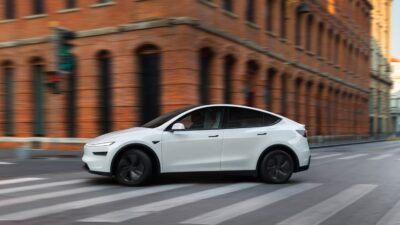
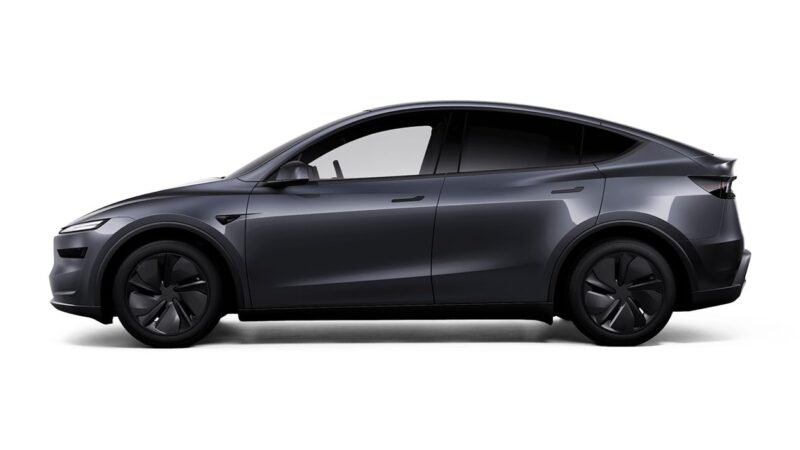
The headline item reiterates a rule MIIT already finalised back in February: every car door, except the tailgate, needs a handle with a mechanical release, not just an electronic one. Fully concealed, press-to-pop-out handles like the ones on the Tesla Model 3 and Model Y are the direct target. That rule takes effect January 1, 2027, with cars already on sale getting until 2029 to be redesigned. The new draft adds detail: handles must have mechanical redundancy, enough space for a hand to grip them in an emergency, and real testing in extreme heat and cold.
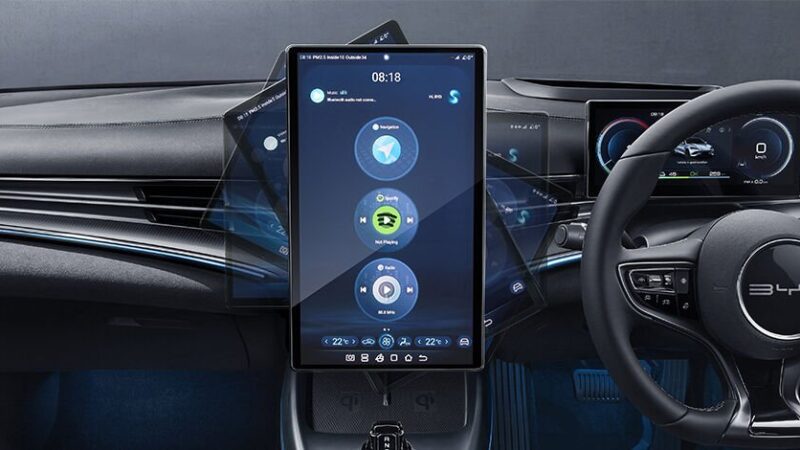
What is genuinely new this time is everything else. Foldable and flexible displays, the kind of bendable dashboard screen several Chinese brands have shown off as a party trick, would be banned outright. “Zero-gravity” recliner seats and swivel seats that rotate while the car is moving would also be barred, along with any seat-to-bed function usable on the move. And critically, safety-relevant functions, like lights, wipers, defrosters, emergency braking, and the power cut-off for the drive system, would be required to keep a physical, clearly labelled control alongside any touchscreen version. Soft-closing doors would need anti-pinch protection and a guaranteed manual override if the power fails.
Why this is happening now
None of this is coming out of nowhere. China has had a rough year watching its own EV design trends collide with real-world safety. The original door handle rule followed fatal crashes where occupants could not get doors open after a power failure, and electric, flush handles became a flashpoint in Chinese media as a result. In August, MIIT Vice Minister Xin Guobin publicly criticised automakers for shipping “aggressive” new designs without enough validation testing, and the ministry followed up the very next day by launching a year-long vehicle quality campaign.
There is also a market backdrop here. China’s passenger vehicle retail sales fell 24 percent year-on-year in September to 1.7 million units, and new-energy vehicle sales were down 12 percent from a year earlier, even with a one-month bounce from August. Nine months into 2026, overall sales are down 21 percent. A slowing, brutally competitive market is exactly the environment where regulators start asking whether design gimmicks have been substituting for real engineering.
What it means for the industry next
The timeline matters as much as the content. From January 1, 2027, any automaker applying to get a new model approved in China will need to submit detailed technical documentation proving its “innovative” designs were actually tested, not just styled. Models that fail testing, were inadequately validated, or rely on falsified data can simply be rejected. Even models already on sale are not grandfathered forever: they have to submit the same supporting paperwork by July 1, 2027. The draft also raises the bar on testing itself, demanding at least 30,000 km of reliability testing for passenger cars and a full year of environmental testing covering two winters and a summer across multiple climate zones.
That is a real cost and a real delay for brands like Xiaomi, NIO, Zeekr, and BYD, all of whom have leaned hard into exactly the design language this draft targets, alongside Tesla, which sells the flush-handled Model Y and Model 3 in China in huge volumes. An Omdia analyst quoted in the coverage expects European regulators to watch China’s approach closely, since China got there first on a ban this specific. If that happens, the flush handle and the fold-out screen could end up looking like a mid-2020s design fad that aged badly, the way giant touchscreen-only climate controls already have in several markets.
The verdict: this is not a ban on EVs or on touchscreens. It is China telling its fastest-growing industry that a cool-looking demo is not the same thing as a tested, safe product, and that the bill for skipping that step is about to come due.
Does this touch India?
Not directly, and MoRTH has no equivalent proposal on the table right now. But the design feature at the centre of this story is not hypothetical here either. The Tesla Model Y, sold in India from ₹50.89 Lakh, carries the exact same flush, retractable door handles China is now writing mechanical-redundancy rules around. No Indian regulator has raised a concern about it, and nothing requires you to think twice about buying one. It is simply worth knowing that the handle your Model Y came with is the same design the world’s largest car market just decided needed a safety net.

The bigger story for Indian buyers is indirect. Global design teams, including ones that style cars sold here, pay close attention to what China allows. If flush handles, foldable screens, and touchscreen-only controls become legally risky in the world’s largest car market, expect the next generation of EVs everywhere, India included, to quietly bring back a few buttons.