


























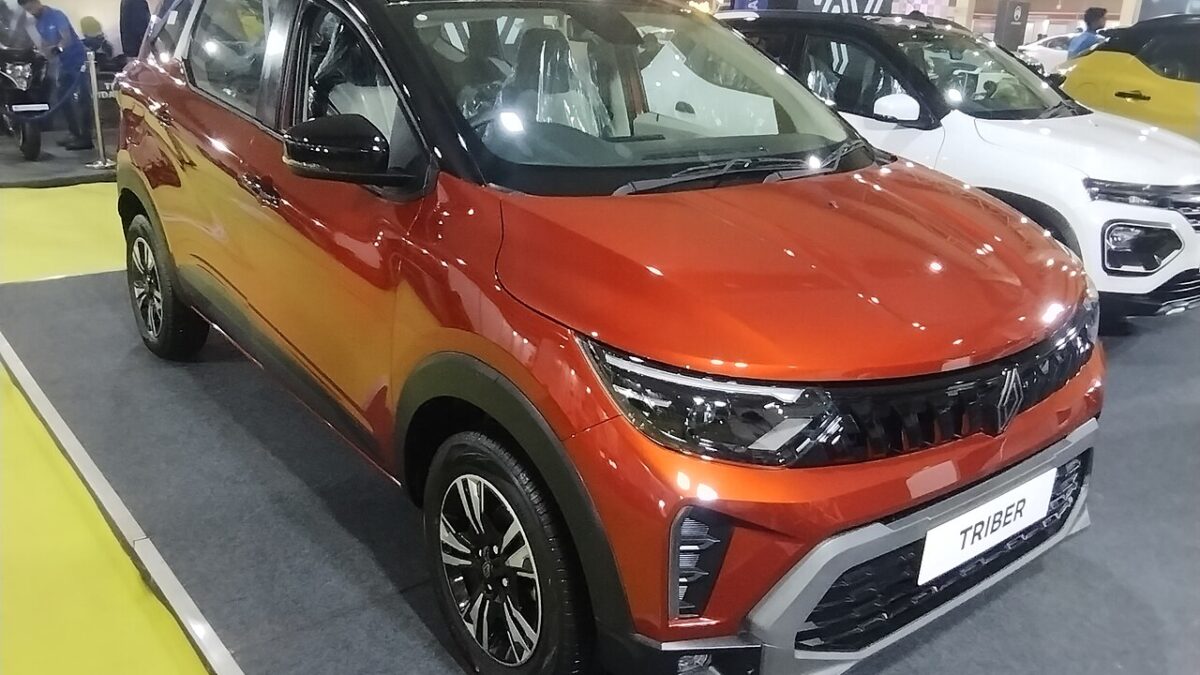
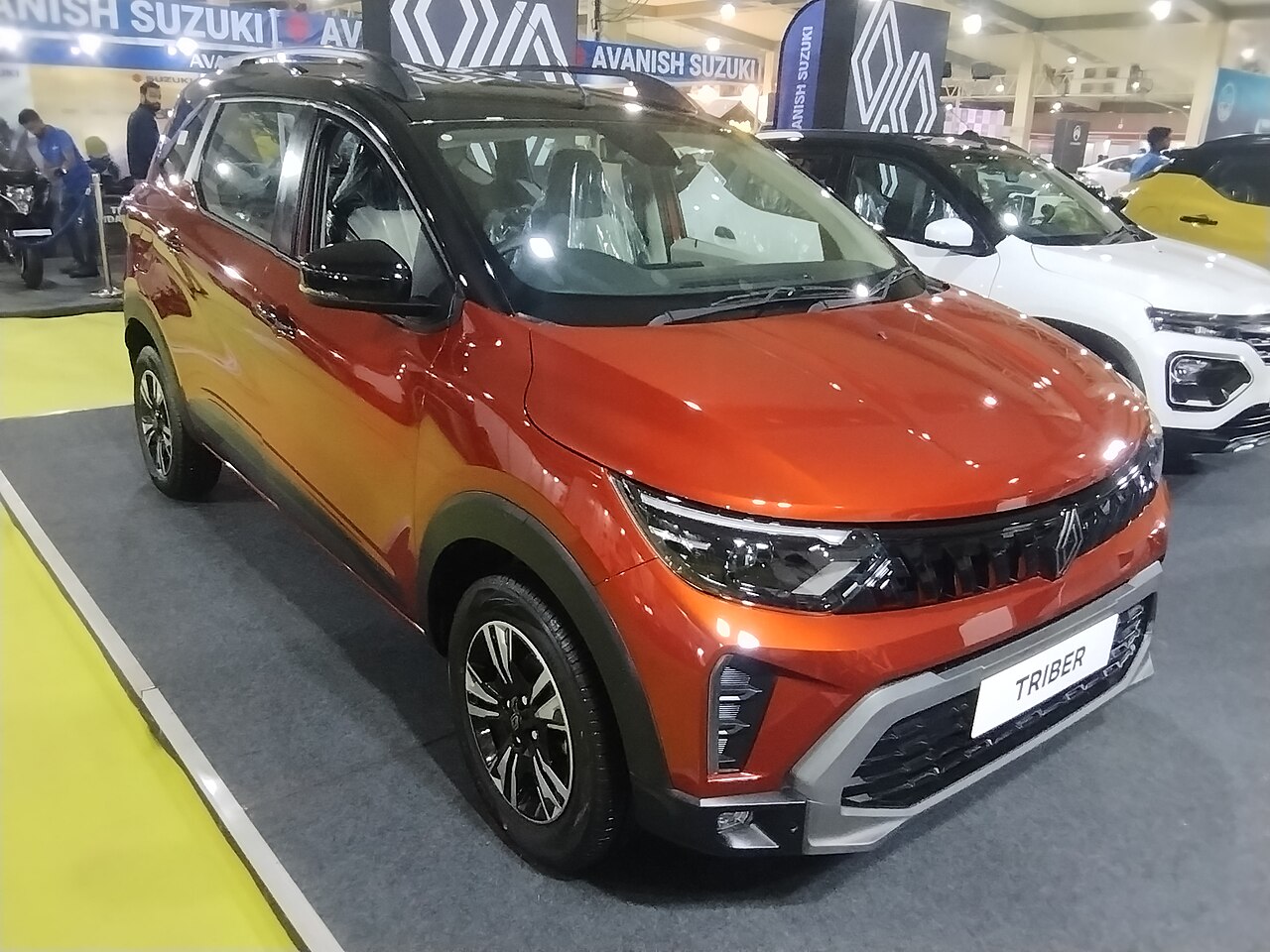
The Renault Triber Turbo starts at ₹7.85 lakh ex-showroom and finally gives this boxy 7-seater real shove: 100 PS and 180 Nm, up from 72 PS and 96 Nm in the standard car. But Renault still won’t sell you one with CNG or an automatic gearbox, and for most Indian buyers of a family MPV, that gap matters more than the extra power. Buy the mid-spec Techno Turbo, not the range-topping Emotion Turbo.
What’s Actually New Under the Skin
The Turbo swaps the old 1.0-litre naturally aspirated three-cylinder for a 1.0-litre TCe turbo-petrol making 100 PS at the same displacement, built on Renault’s new Group Entry Platform (RGEP). It is offered on three of the Triber’s eight variants: Evolution Turbo, Techno Turbo and Emotion Turbo, all with a 5-speed manual only. Autocar India’s review, published the day of launch, calls the engine genuinely punchy and praises composed road manners, but flags a notchy manual shift, light steering and more cabin noise than the outgoing car.
| Variant | Ex-showroom price | Step over previous | Engine |
| Evolution Turbo MT | ₹7.85 Lakh | +₹1.11 Lakh over Evolution Petrol MT (NA) | 100 PS / 180 Nm turbo |
| Techno Turbo MT | ₹8.54 Lakh | +₹69,000 over Evolution Turbo | 100 PS / 180 Nm turbo |
| Emotion Turbo MT | ₹8.99 Lakh | +₹46,000 over Techno Turbo | 100 PS / 180 Nm turbo |
Figures are Renault’s own ex-showroom prices and The Spec’d’s full Triber variant breakdown, which lists the turbo engine’s ₹1.11 lakh premium over the equivalent naturally aspirated manual trim.
Which Variant Is Actually Worth Buying
Skip the base Evolution Turbo: at this price point in a family MPV, you want the extra convenience kit, not just the engine. Buy the Techno Turbo. The jump to the range-topping Emotion Turbo costs ₹46,000 more for what Renault calls “top-spec convenience features” on the equivalent naturally aspirated trims, mainly a wireless charger and twin-zone vents. That is real money for features you will notice a handful of times a year, not every day in traffic.
At ₹8.99 lakh ex-showroom, the fully loaded Emotion Turbo lands within ₹9,000 of the entry-level Maruti Suzuki Ertiga, a car with a stronger brand, a bigger service network and a hybrid option further up its range. The Triber’s case stops being about outright value once you’re spending top-trim money.
Claimed Mileage vs What to Actually Expect
Renault’s ARAI-certified claim for the turbo manual is 21 kmpl, against 19.76 kmpl for the naturally aspirated manual, both figures confirmed on The Spec’d’s Triber mileage page. No outlet has run an instrumented real-world economy test on the Triber Turbo specifically yet. Autocar India’s review flags the general pattern instead: turbo-petrol engines lose fuel economy faster than naturally aspirated ones once you use the throttle, so expect a bigger gap from the claimed figure than the NA car shows, not a smaller one.
| ARAI claimed | Real-world | |
| Triber Turbo MT | 21 kmpl | No independent test published yet |
| Triber NA Petrol MT | 19.76 kmpl | No independent test published yet |
| Triber NA Petrol AMT (2020 car, different gearbox) | 18.29 kmpl | 13.6 kmpl, mixed city/highway (Rushlane test) |
That last row is the closest real-world reference anyone has published, and it’s for an older naturally aspirated automatic, not this turbo manual. Treat it as a sense of the typical claimed-to-real gap on this platform, not a number for the car you’d actually buy.
The CNG and Automatic Gap
This is the Triber Turbo’s real weak spot for Indian buyers. Renault has not launched a CNG version of the turbo engine, and there’s no automatic option either, only the 5-speed manual across all three turbo trims. Reports on the timing for a turbo-CVT and turbo-CNG version conflict: some point to Diwali 2026, others to 2027, so treat either date as unconfirmed until Renault says so directly. If daily running cost or city traffic driving without a clutch matters to you more than outright pace, the naturally aspirated Emotion Petrol AMT, The Spec’d’s listed best-value pick across the whole lineup, stays the better buy until Renault fills that gap.
What It Actually Costs on the Road
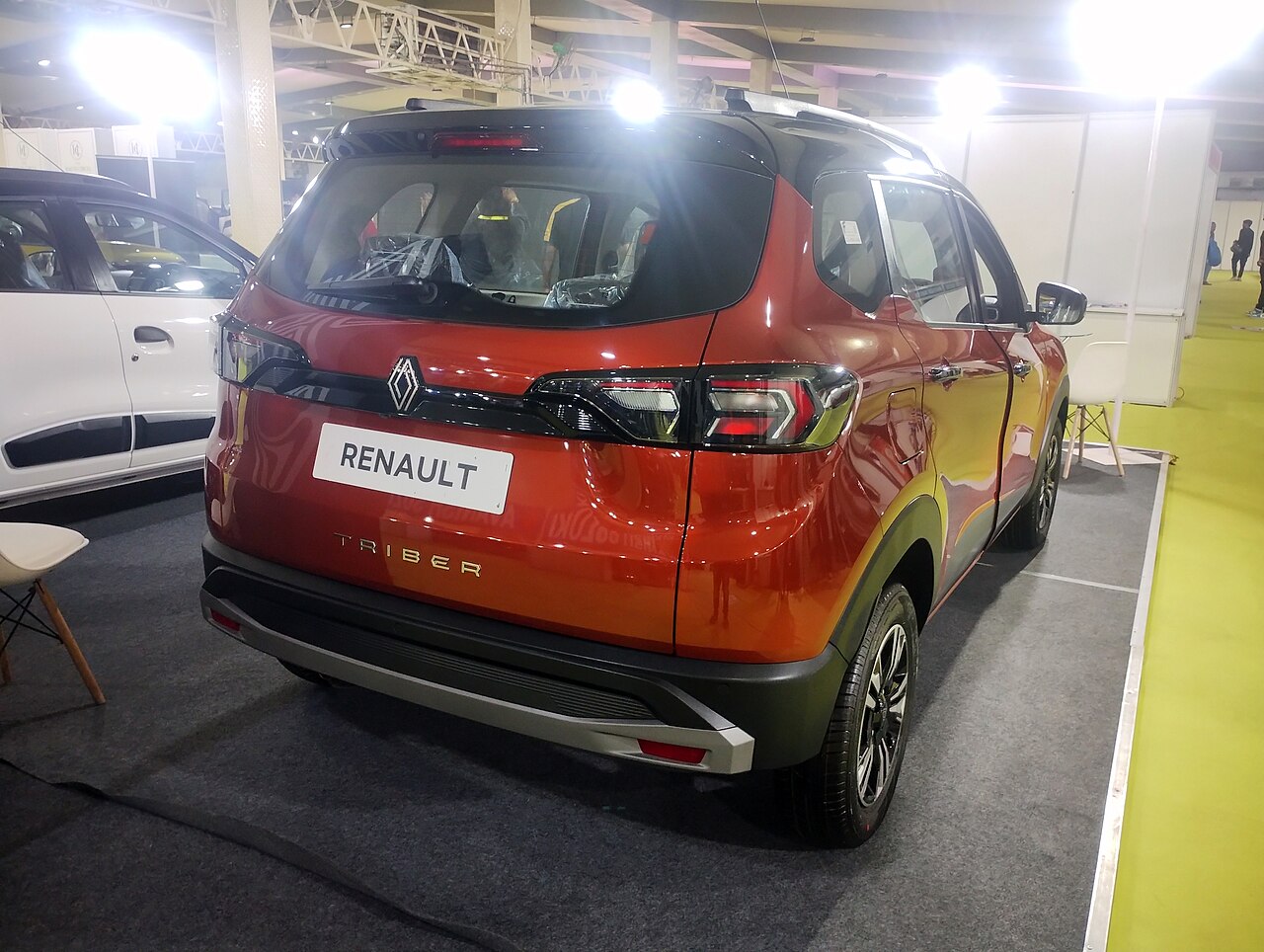
On The Spec’d’s own city price pages, the Techno Turbo works out to ₹9.87 lakh on-road in Mumbai against an ₹8.54 lakh ex-showroom price, once Maharashtra’s 11% road tax, insurance and FASTag are added. The base Triber (any variant) is cheapest in Puducherry and New Delhi, about ₹41,000 less on-road than the same car in Mumbai, almost entirely down to road tax. On a 5-year loan at 20% down, the EMI calculator puts the base Triber at ₹11,325 a month on Mumbai’s on-road price; a Techno Turbo buyer should budget roughly ₹16,500 a month on the same terms.
Safety and Practicality
All three turbo trims carry 6 airbags and the Triber’s 21-item safety list as standard, a genuinely strong showing at this price. The catch: Global NCAP’s 4-star adult rating dates to 2021, under the agency’s older, less demanding protocol, on a test car with only 2 airbags, not the 6 now fitted. With the third row folded, boot space grows to a useful 625 litres, among the largest in the sub-4-metre segment, though with all 7 seats up that drops to a tight 84 litres, barely enough for soft bags.
Is the Renault Triber Turbo worth buying over the naturally aspirated version?
Only if you regularly carry a full load or drive on the highway, where the extra 84 Nm of torque is most noticeable. For mostly city use, the naturally aspirated Emotion Petrol AMT costs less, comes with an automatic gearbox the turbo doesn’t offer, and claims similar real-world efficiency.
Does the Renault Triber Turbo come with CNG?
No. Renault launched the turbo-petrol engine without a CNG option. Reports on when a turbo-CNG variant might arrive conflict between late 2026 and 2027, so there’s no confirmed date yet.
What is the on-road price of the Renault Triber Turbo?
The Evolution Turbo starts around ₹9.08 lakh on-road in Mumbai, and the Techno Turbo this review recommends comes to about ₹9.87 lakh on-road in the same city, per The Spec’d’s city price pages. Your state’s road tax will move that figure up or down.