































A draft rule now open for public comment would put a communication chip in every new two-wheeler, car and truck sold in India. Here’s what it actually does, when it kicks in, and what it will cost you.
The Ministry of Road Transport and Highways has drafted an amendment to the Central Motor Vehicles Rules that would make Vehicle-to-Vehicle, or V2V, communication mandatory on every new L, M and N category vehicle sold in India from October 1, 2028. That covers every two-wheeler, car, bus and truck.
Automakers who want to offer it earlier, voluntarily, have to comply with the new AIS-230 standard from October 1, 2027. The tech lets vehicles broadcast their speed, position and braking to each other in real time, so the vehicle two cars ahead can warn you before you can even see it.

What Is V2V Communication, In Plain English?
Think of it as a WhatsApp group for vehicles that only talks about danger. A small radio unit, an On-Board Unit or OBU, sits in every equipped vehicle and constantly broadcasts its speed, direction, position and braking to every other equipped vehicle nearby. Your car does not need to see the truck jackknifed around the blind corner ahead; if that truck is broadcasting, your dashboard already knows.
The technology is C-V2X, Cellular Vehicle-to-Everything. It runs on a dedicated slice of spectrum, 5.875 GHz to 5.925 GHz, exempted from licensing by the Department of Telecommunications on June 10, 2026, specifically to clear this path. India is choosing C-V2X over the older Wi-Fi based DSRC standard that the US and Europe tried for two decades without it ever scaling, per Business Standard’s reporting on the draft.
When Does This Actually Become Mandatory?
The rule is still a draft, open for 30 days of public consultation before MoRTH finalises it. Here is the timeline as proposed right now.
| Date | What happens |
| June 10, 2026 | DoT exempts the 5.875 to 5.925 GHz band from licensing for V2V use |
| August 2026 | MoRTH issues the draft amendment to the Central Motor Vehicles Rules, 1989, opening 30 days of public comment |
| October 1, 2027 | Any automaker offering V2V voluntarily must comply with the new AIS-230 standard |
| October 1, 2028 | V2V fitment becomes mandatory on all new L, M and N category vehicles |
What Will It Actually Warn You About in Traffic?
AIS-230 defines a specific set of safety alerts rather than a vague promise of “connected car tech”. The four named in the draft are Emergency Brake Alert, Forward Collision Warning, Wrong-way Driving Alert and Emergency Vehicle Alert.
On an Indian highway, that last one matters more than it sounds: an ambulance broadcasting its position could warn cars to clear a lane before the siren is even audible over traffic. Wrong-way alerts are aimed squarely at India’s specific and dangerous habit of driving against traffic on divided highways to save a U-turn.
Union Minister Nitin Gadkari has described the goal as letting vehicles “talk to each other like pilots,” comparing V2V to the collision-avoidance systems aircraft already use to coordinate in shared airspace.

Will This Make Your Next Car or Bike More Expensive?
Almost certainly, though the draft notification itself does not fix a cost. Earlier industry estimates reported around Gadkari’s original 2026 announcement pegged the OBU hardware at roughly ₹5,000 to ₹7,000 per vehicle, a figure repeated in coverage from India.com and MotorBeam but absent from the actual draft.
That cost has to land somewhere, and on a ₹60,000 entry-level scooter it is a far bigger percentage hit than on a ₹15 lakh SUV. No independent cost-benefit study weighing that against accident reduction has been made public alongside the draft.
| Confirmed in the draft notification | Not yet confirmed, treat as estimate |
| Standard: AIS-230, using C-V2X over 5.875 to 5.925 GHz | Per-vehicle cost: ₹5,000 to ₹7,000, an earlier industry estimate, not a government figure |
| Categories covered: L (two-wheelers), M (cars, buses), N (trucks) | Retrofit plan for the roughly 30 crore-plus vehicles already registered in India |
| Four defined alerts: Emergency Brake, Forward Collision, Wrong-way, Emergency Vehicle | Whether the final rule changes after the 30-day consultation window closes |
The Catch Nobody’s Talking About
V2V only works between two vehicles that both have it. A 2028 mandate on new vehicles does nothing for the used Alto or the ten-year-old Activa doing the school run next to it, and India replaces its fleet slowly.
This system stays close to useless in mixed traffic for years after 2028, until enough new vehicles carry it for the average car to actually have one nearby to talk to. Business Standard’s reporting notes C-V2X and its predecessor DSRC have existed for roughly two decades globally without meaningful real-world adoption, precisely because of this chicken-and-egg problem.
Where This Fits Into the Safety Tech You Can Already Buy
V2V is designed to complement ADAS (Advanced Driver Assistance Systems: camera-and-radar-based features like automatic braking and lane warnings), not replace it. The pattern of who actually gets new safety tech in India is already visible in showrooms today.
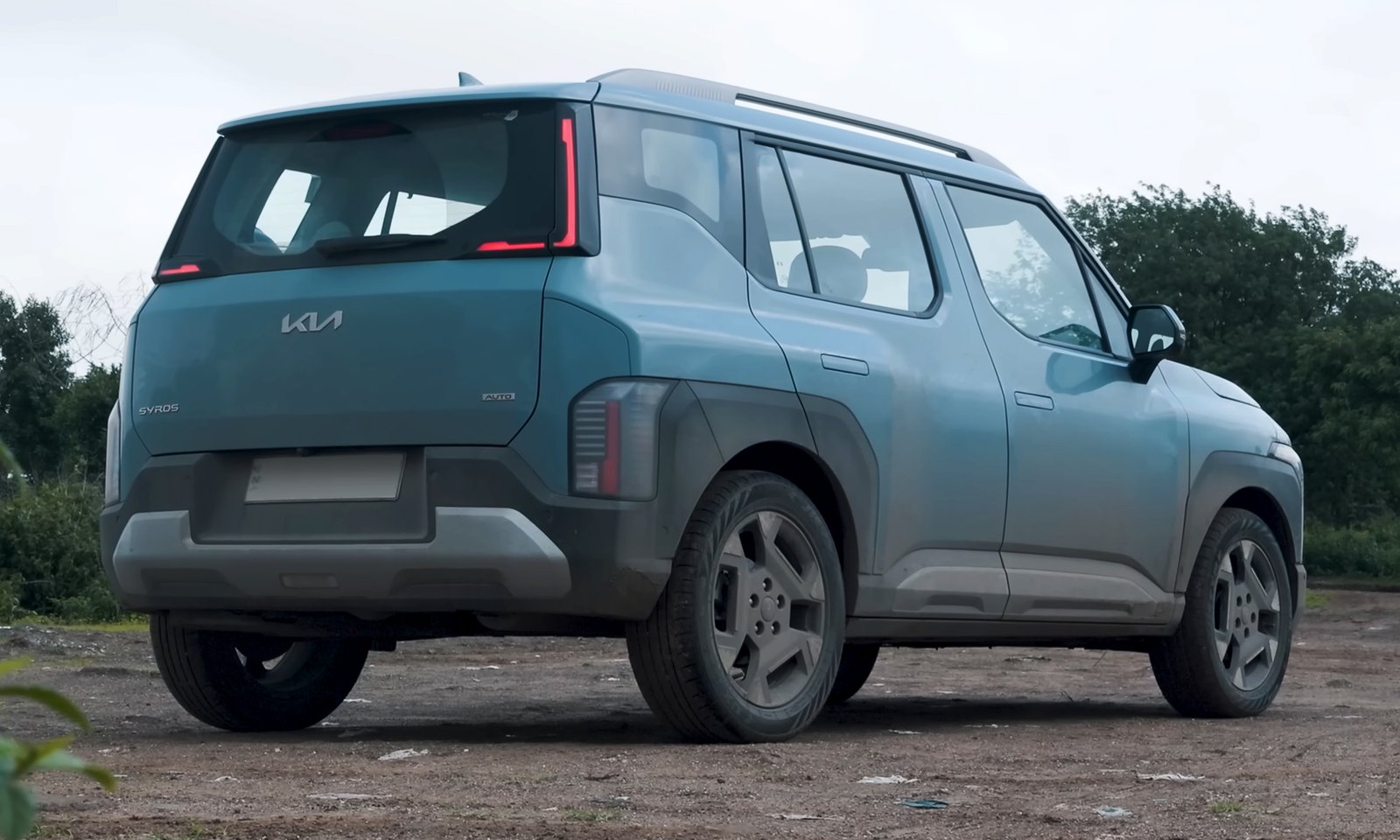
The Mahindra Scorpio-N facelift starts at ₹13.69 lakh but keeps ADAS locked to its ₹21.35 lakh top trim, and the Kia Syros dropped ADAS from its lineup entirely in 2026. Expect V2V hardware to follow the same trim-gating logic once it lands. Compare how these two handle safety-feature tiering on the Spec’d Compare tool.
Frequently Asked Questions
Does my current car or bike need to be fitted with V2V?
No. The mandate as drafted applies only to newly manufactured vehicles from October 1, 2028. Nothing in the draft notification requires retrofitting vehicles already on the road.
Is V2V the same as ADAS?
No. ADAS uses a vehicle’s own cameras and radar to see its immediate surroundings. V2V is a radio link that lets vehicles share data directly, including things your own sensors cannot see, like a vehicle stopped around a blind corner. The two are meant to work together, not replace each other.
Will V2V make new vehicles more expensive in India?
Almost certainly some amount, though the draft notification does not fix a price. Earlier industry estimates around Gadkari’s original 2026 announcement put OBU hardware at roughly ₹5,000 to ₹7,000 per vehicle, but treat that as an estimate, not a confirmed cost.