






















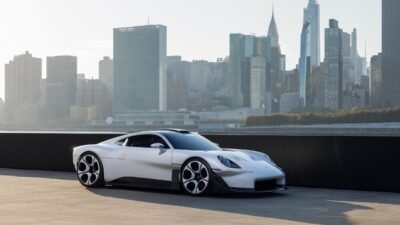
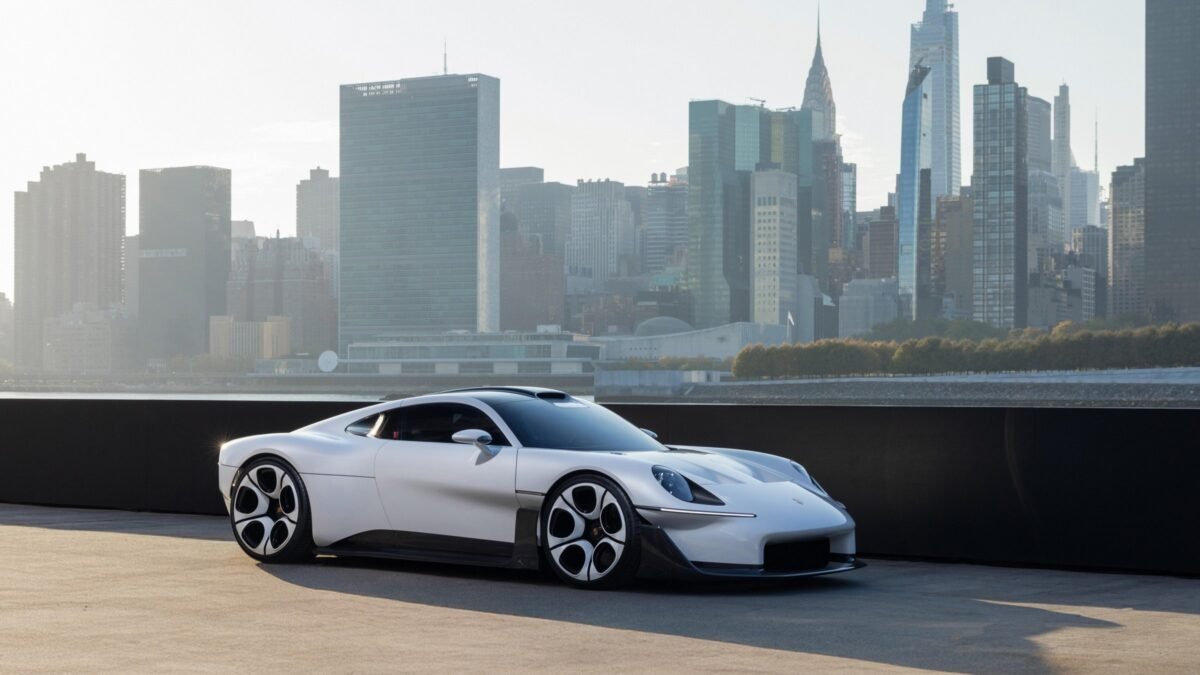
Porsche just confirmed its first new supercar platform since the 918 Spyder died in 2015, and the biggest news isn’t the car itself. It’s what Porsche refused to put in it. At a reveal on a pier in Queens, New York, on 15 October, the 911 maker showed the Mission S concept and confirmed it as the first car on a permanent, mid-engined super sports car platform that will sit above the 911 in the lineup. Porsche also confirmed the car will run on petrol or a hybrid system, not a battery alone, a deliberate reversal after its electric-only “Mission” concepts cost the company dearly.
That matters more than it sounds. Porsche’s last three halo projects under the Mission name were the Mission E, which became the electric Taycan, and the Mission X, an electric hypercar concept from 2023 that was quietly shelved and never approved for production. The Mission S breaks that pattern on purpose, and it arrives at a moment when Porsche can least afford to get its next flagship wrong.
What Porsche actually showed in Queens
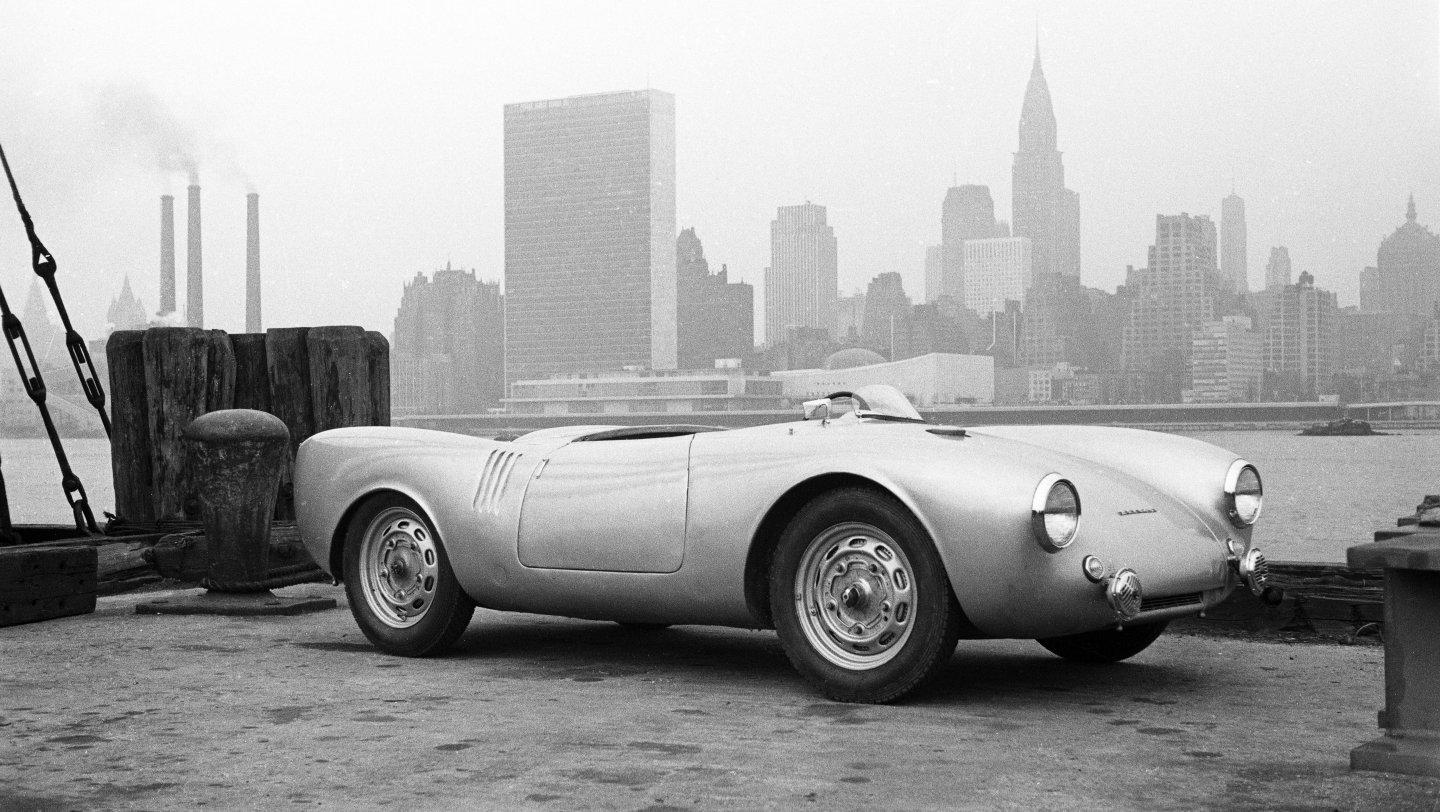
The location wasn’t random. Porsche staged the reveal at the same Hunters Point South pier in Queens where its 550 Spyder was photographed against the Manhattan skyline in 1953, a car that helped build Porsche’s reputation in America. The company is leaning hard on that symbolism: the Mission S is pitched as a tribute to “the vision of Ferry Porsche,” the man who built the original 356.
The reveal sits inside a bigger strategy Porsche calls Sportwagenschmiede ’35, roughly “sports car forge,” which the company laid out at its Capital Markets Day in Weissach, Germany. Michael Leiters, Chairman of Porsche AG’s Executive Board, was blunt about what the brand is correcting course on: “A Porsche must be recognisable as a Porsche at first glance.” He also stressed the Mission S is meant to be a permanent addition to the lineup, not a one-off hypercar like the Carrera GT or 918 Spyder before it.
A 911 nose, a GT1 face, a 959 roofline
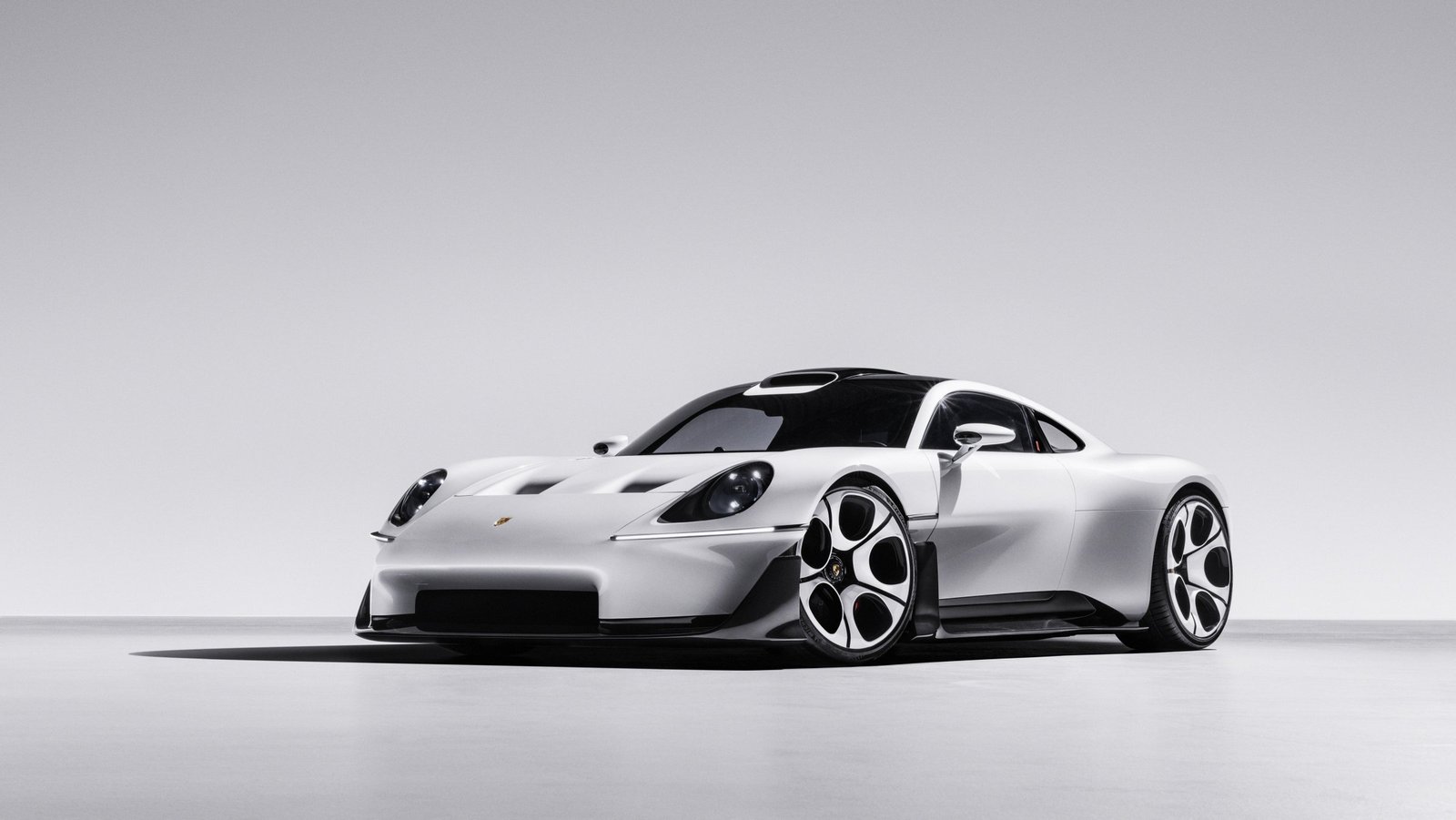
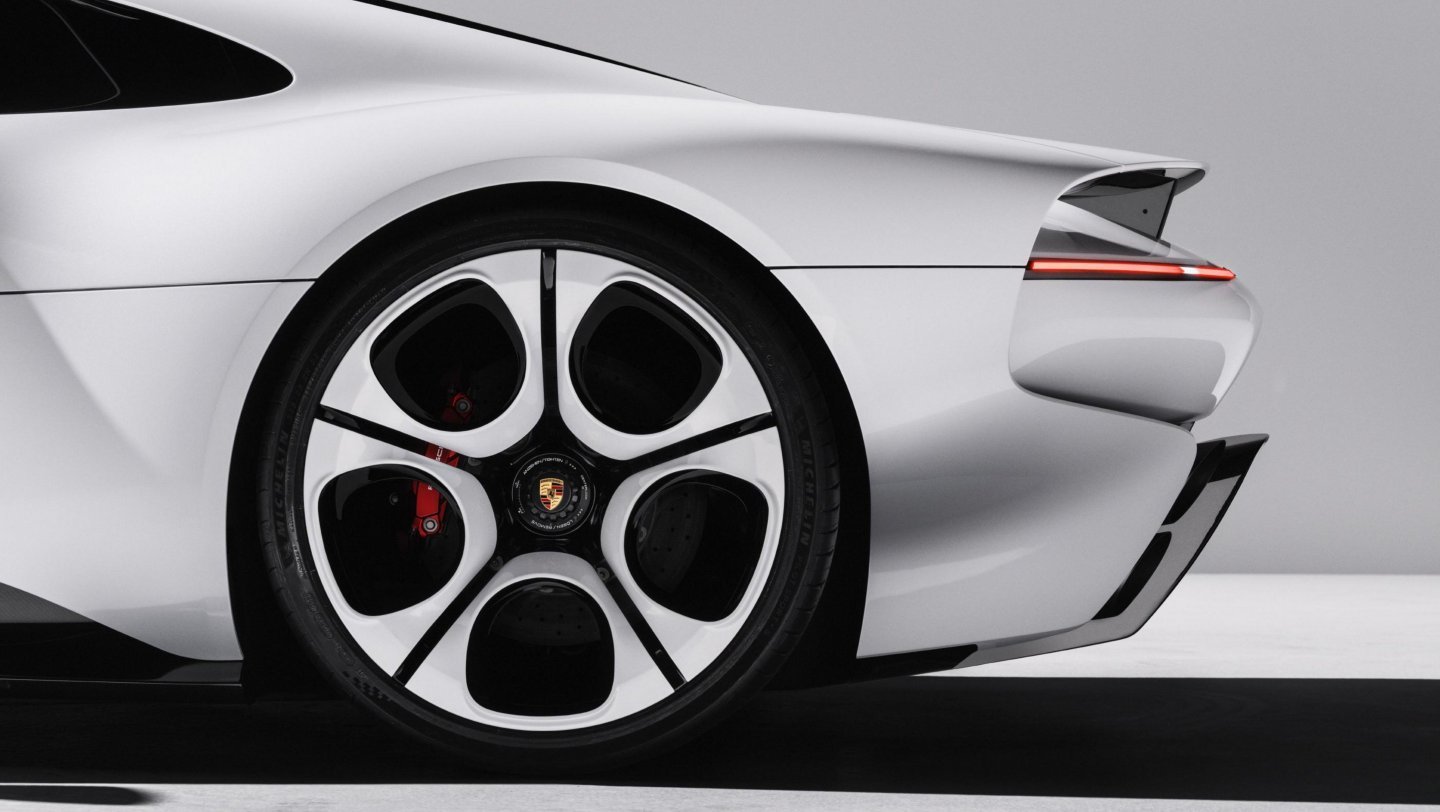
Porsche’s design team built the Mission S as a greatest-hits of its own back catalogue rather than a clean-sheet shape. The round headlights and fender lines come from the 911. The flat front end and the car-in-car rear deck design borrow from the GT1, Porsche’s 1990s Le Mans racer. The sloping roofline nods to the 959, Porsche’s 1980s supercar, and the wheels rework the dial pattern from the 928’s rims into a lighter, 21-inch front and 22-inch rear staggered set. A roof-mounted air scoop, inspired by the engine-cooling fan on the 917 race car, runs the length of the roof to feed the engine behind the cabin.
Tobias Sühlmann, Porsche’s Vice President of Style, called it “a fundamental strategic direction that we will soon be translating into our future product portfolio,” meaning the design language here is a preview of where the rest of the range is headed, not a one-off show car flourish. The paint and trim choices reinforce that: Firn White Metallic, Light Red Metallic and Black Chrome are all lifted from Porsche Motorsport’s racing liveries rather than its road-car palette.
No center screen, just a phone on MagSafe
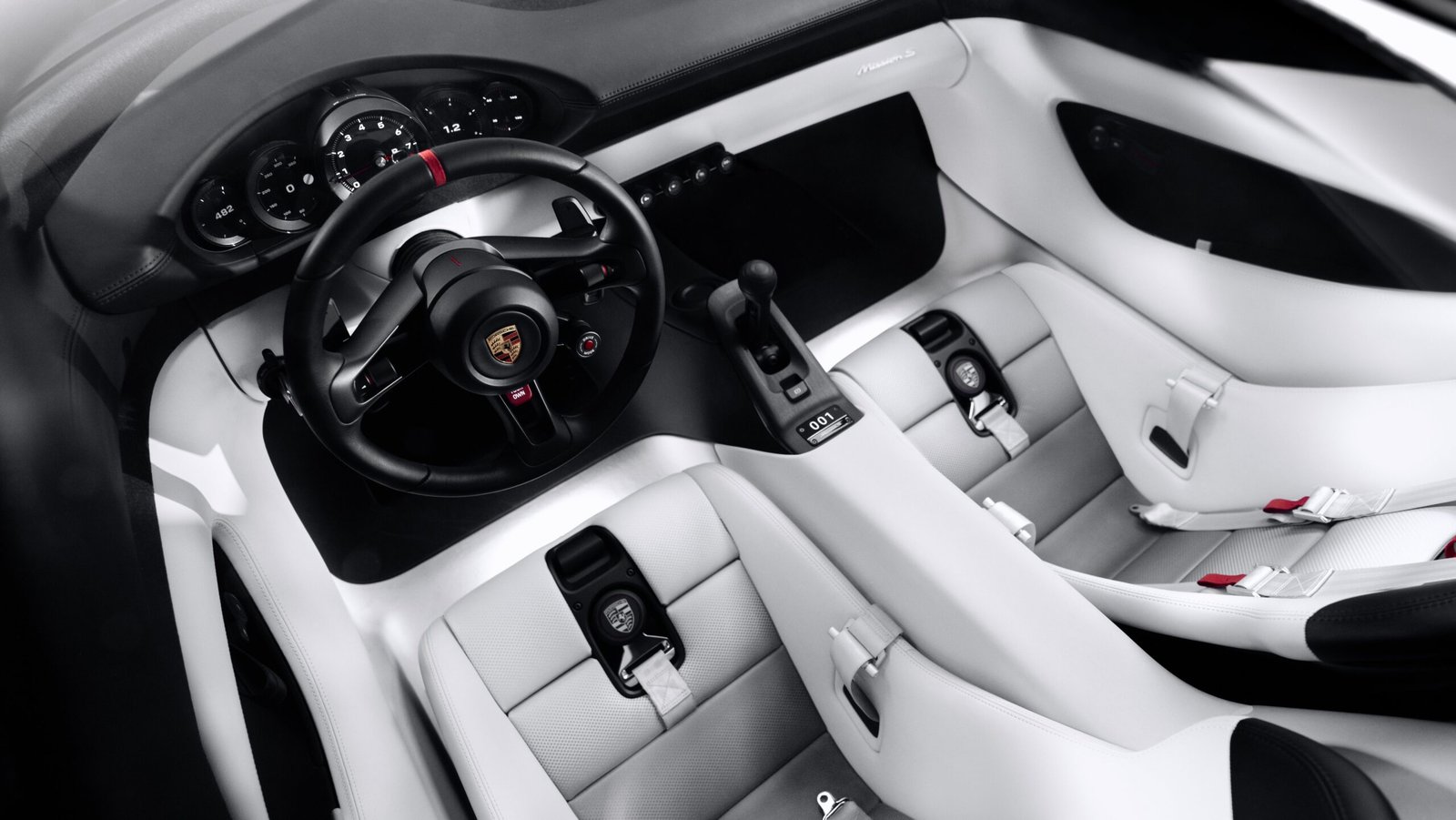
Inside, Porsche went the opposite direction of almost every new car launched this decade. There is no fixed center touchscreen and no passenger display. Instead, a retractable mount with Apple’s MagSafe magnetic system holds the driver’s own phone, which handles navigation and media. The dashboard carries five round analogue-style instruments behind the wheel, including a central rev counter with a real needle, and the display cluster physically moves closer to the driver depending on which drive mode is selected. The My Porsche smartphone app lets an owner swap in gauge designs inspired by older Porsches. The cabin shape itself borrows from the 550 Spyder and the 356, with two lines running through the dash and doors that lower the driver’s seating position.
Why this, and why now
Context makes this reveal bigger than a concept car unveiling. Porsche’s costly bet on going electric first had already forced a €10 billion write-down that gutted parent Volkswagen Group’s 2026 profit guidance down to just 1%. The all-electric Mission X hypercar, teased hard in 2023 as a Nürburgring record-breaker, never got the production green light. Pulling the next flagship back toward combustion and hybrid power, at a brand event specifically built around heritage and the words “authentic, consequent, timeless,” reads as Porsche publicly admitting its electric-first instincts cost it more than it gained.
“A Porsche must be recognisable as a Porsche at first glance.”
Michael Leiters, Chairman of the Executive Board, Porsche AG
It also fills a real gap in Porsche’s own lineup. Since the 918 Spyder went out of production in 2015, Porsche hasn’t sold a true flagship hypercar, leaving the 911 Turbo S and GT3 RS as the fastest things in Porsche showrooms while Ferrari, McLaren and Lamborghini kept releasing halo cars. The Mission S is Porsche’s answer, and confirming it as a permanent, non-electric nameplate rather than a single limited run is the part that should matter most to anyone who actually wants to buy one eventually.
What’s still unknown
Porsche has not released an engine output figure, a 0-100 km/h time, a price, dimensions or a production date for the Mission S. Leaked teaser footage, not confirmed by Porsche, showed an instrument cluster with an 8,000 rpm redline, oil pressure and temperature gauges, and a speed reading of 251 km/h in sixth gear, which points toward a high-revving combustion engine rather than a turbocharged, low-rev unit. Some outlets expect a naturally aspirated flat-eight; none of that is official yet. Porsche has only confirmed the platform supports both pure combustion and hybrid versions, built for what the company calls “the highest level of engineering excellence and maximum flexibility.”
There’s no India news here yet either, and Porsche hasn’t said a word about where the Mission S will be sold once it reaches production. But it’s worth noting that Porsche India already retails the standard 911 range, and a handful of 918 Spyders found their way into Indian driveways during that car’s run despite no official local launch. If the Mission S reaches series production the way Leiters has promised, it’s a reasonable bet it eventually shows up here too, just don’t expect that call anytime soon.