




























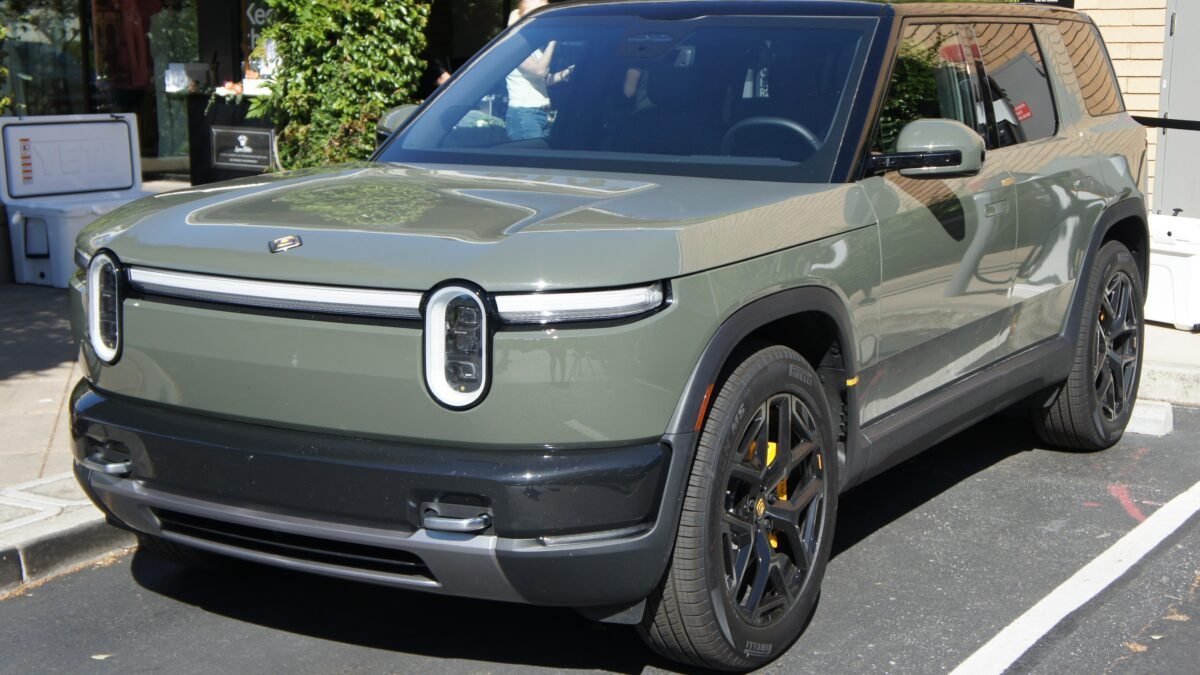
Rivian has spent five years building six figure electric trucks and SUVs for a small, loyal fan base. That changes now. The company’s new R2 is the electric SUV built to actually sell in volume, and the first proper reviews from testers who’ve driven real production intent versions are finally out. The verdict matters beyond America too: it shows whether Rivian’s tech, the same torque vectoring and camera based software it’s refined for years, actually scales down to a mainstream price.
Rivian doesn’t sell in India and has no announced plans to. Think of this as a look at where global EV tech is headed, not a car you’ll see in an Indian showroom soon.
What You Get, and What It Costs
The R2 rides on an 87.9 kWh battery pack, rolled out in stages: the quicker, pricier versions arrive first, with the cheapest one following over the next year and a half.
| Trim | Motor Setup | Power | 0 to 60 mph | Range | Price |
| R2 Performance | Dual motor, AWD | 656 hp | 3.6 sec | ~330 miles (531 km) | $57,990 |
| R2 Premium | Dual motor, AWD | 450 hp | 4.6 sec | ~330 miles (531 km) | $53,990 |
| R2 Standard | Single motor, RWD | 350 hp | Not yet rated | ~275 to 300 miles (est.) | From $45,000 |
That base Standard trim and its $45,000 price are numbers Rivian has confirmed, but it doesn’t reach customers until late 2027, so treat its exact range and 0 to 60 figures as provisional for now.

First Drive: How It Actually Behaves
This is the part that matters for anyone burned by a car that photographs well but drives like a compromise. Testers who took the R2 on road routes and a dedicated off road course came away impressed by its torque vectoring, a system that sends power independently to each wheel, letting the SUV claw over loose ground with more composure than its size suggests. Paired with generous suspension travel (how far each wheel can move to soak up bumps), the R2 handles a real off road track without feeling like it’s cosplaying as an adventure vehicle.
Braking, steering feel, and the off road torque vectoring system all worked convincingly on Rivian’s own test routes, proof that the smaller, cheaper R2 hasn’t inherited a watered down version of what makes the R1S good.
The Tech Bit: Cameras, Radar, and a Frunk
The R2 carries 11 cameras adding up to 65 megapixels of coverage plus five radar units, all feeding Rivian’s driver assistance software, essentially the car watching the road from every angle and reacting faster than a human could in some situations. Inside, a large center touchscreen carried over from the R1S and R1T runs climate, navigation, and vehicle settings from one place. And yes, there’s a front trunk, or “frunk,” the extra storage you get under the hood on an EV since there’s no engine taking up that space.

Why This Review Matters, Even in India
Rivian has staked its survival on the R2 shipping in volume at a price that competes with the Tesla Model Y, not luxury SUVs. Positive, hands on reviews landing now is a big deal for the company, and for the case that EV makers can build genuinely good electric SUVs without a six figure price tag. None of that changes what’s parked in an Indian dealership tomorrow, but it’s a preview of the camera heavy, software defined SUV coming for every market eventually, India included.
Verdict
The R2 isn’t perfect: the cheapest, most India relevant version in spirit, the sub $50,000 Standard, is still over a year away, and its full independent numbers are still pending. But the versions testers have actually driven back up Rivian’s biggest claim, that the tech from its expensive trucks scales down without losing what made it good. For a company that badly needed a mainstream hit, that’s exactly the review it needed.


