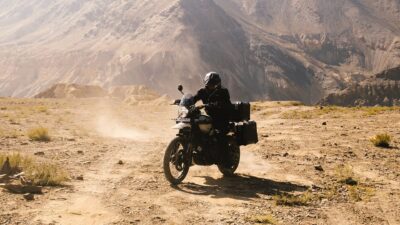
































Royal Enfield’s cheaper Himalayan skips the 450’s radial tyre and TFT screen, but the trade-offs are honest ones, not cut corners.
The Royal Enfield Himalayan 440 costs ₹2.29 lakh ex-showroom, undercuts the Himalayan 450 by roughly ₹79,000, and the honest verdict is this: it is the better bike for weekend trips and daily commuting, and the wrong one if you already know you want radial tyres and a TFT screen for serious highway touring. There is exactly one variant. Royal Enfield did not build a cheaper trim of the 450, it built a genuinely different, simpler motorcycle around an old idea.
Royal Enfield launched the 440 on September 4, 2026 at its first-ever “Himalayan Basecamp” event in Ladakh, echoing where the original 2016 Himalayan 411 made its name. As one overseas outlet reported, the 440 takes the 443cc engine from the Scram 440 and wraps it in bodywork close to the old 411’s round-headlamp look, not the 450’s more modern styling. It is not a stripped-down 450, it is a distinct product one rung below it.
Himalayan 440 vs Himalayan 450: What ₹79,000 Actually Buys You
Both share adventure-touring ergonomics and a 21-inch front wheel, but the engineering underneath differs enough to matter on a real trip.
| Spec | Himalayan 440 | Himalayan 450 |
| Ex-showroom price | ₹2.29 lakh | ₹3.08 lakh |
| Engine | 443cc, air/oil-cooled | 452cc, liquid-cooled |
| Power / torque | 25.4 bhp / 34 Nm | 40 bhp / 40 Nm |
| Frame | Half-duplex split-cradle | Twin-spar |
| Rear tyre | 120-section, bias-ply | 140-section, radial |
| Fuel tank | 15 litres | 17 litres |
| Kerb weight | 199 kg | 196 kg |
| Ground clearance | 220mm | 230mm |
| Display | Digital-analogue, Tripper Pod | 4-inch TFT, riding modes |

The 450’s extra ₹79,000 buys a different chassis and a wider, radial rear tyre, not just badges. Radial construction runs cooler and holds its shape better at sustained highway speed than the 440’s bias-ply tyre, a difference that shows up on a five-hour NH1 stretch to Leh, not in a parking lot.
Claimed vs Real: What the Mileage Numbers Actually Mean
Royal Enfield has not published a certified ARAI fuel efficiency figure for the 440 on its own India spec sheet at launch. Dealers and Indian listings currently peg the claimed figure near 30 kmpl, a number to treat as a rough guide until Royal Enfield confirms it directly.
| Figure | Number | Source |
| Claimed ARAI mileage | ~30 kmpl | Indian listings, unconfirmed on RE’s own spec sheet |
| Owner-reported mileage | ~32 kmpl | Indian listings user-submitted mileage data |
| Fuel tank range at claimed figure | ~450 km | Calculated from the 15-litre tank |
No independent instrumented highway mileage test has been published yet, since the bike is barely a week old. If real-world highway efficiency matters to your decision, wait a few weeks for a proper road test before booking.
One Variant, Three Colours: Why There Is No “Base” Trim
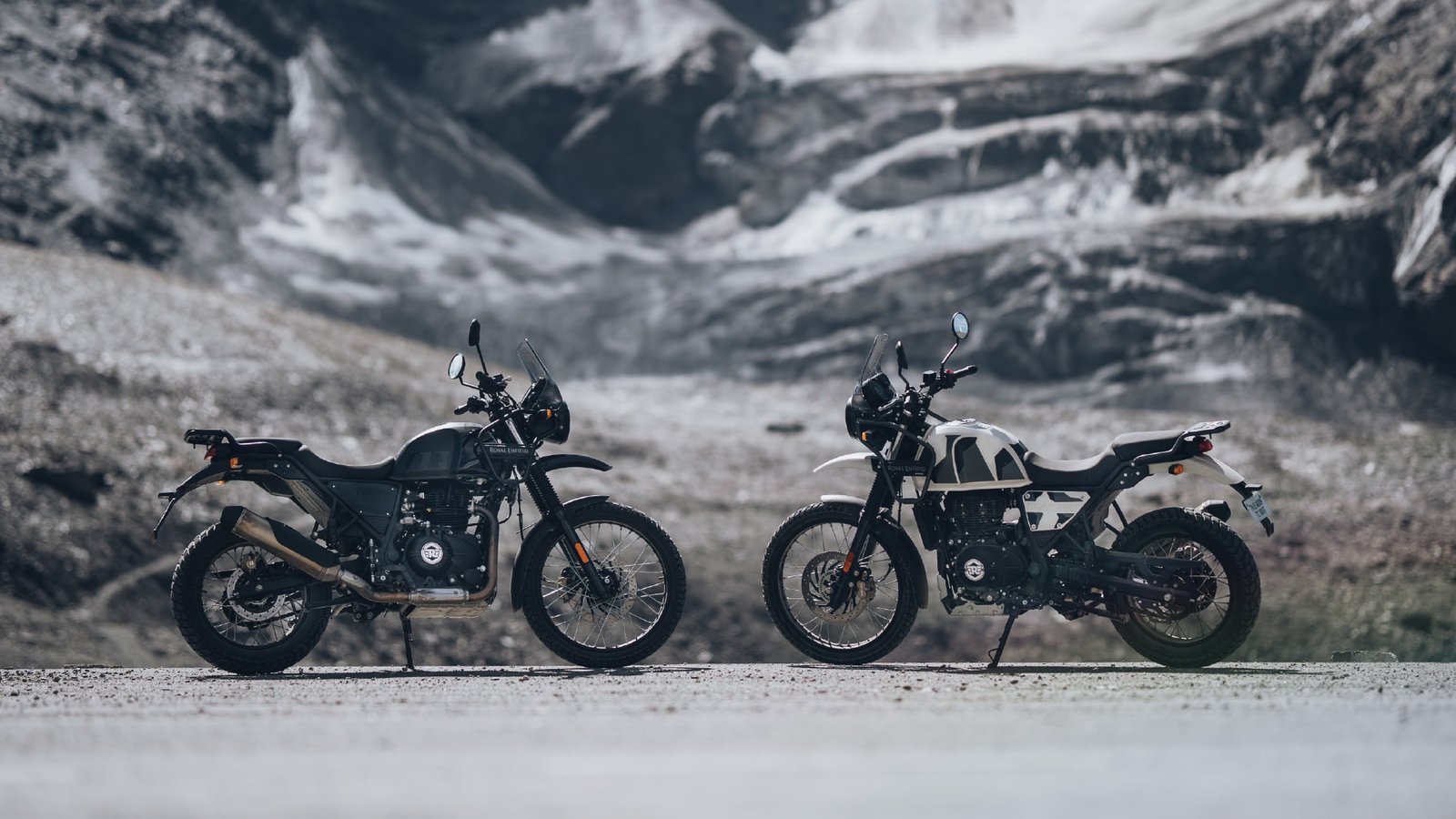
Every Himalayan 440 costs the same ₹2.29 lakh in Mustang Brown, Sela Black or Nelong White. That is unusual for Royal Enfield, which typically stacks two or three trims on its bigger bikes. Here, the decision is about which motorcycle you want, not which features you can afford.
One Indian outlet’s listing puts the on-road price in Delhi near ₹2.50 lakh once RTO and insurance are added, with EMI plans quoted from around ₹3,540 a month. Actual on-road cost will shift by a few thousand rupees depending on your state’s RTO rate, so treat that as a starting estimate. Run your own numbers on the Himalayan 440 EMI calculator before you book.
The Tripper Pod: What Changed From the Old 411
The 440 keeps the digital-analogue cluster and Tripper Pod navigation display that debuted on the 450, running Google Maps turn-by-turn through Royal Enfield’s app, a real upgrade over the original 411, which had none.
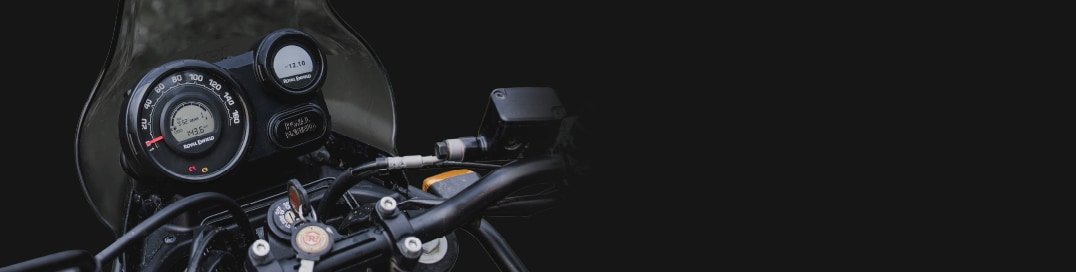
Missing compared with the 450: smartphone connectivity, switchgear media controls, and selectable riding modes, since there is no ride-by-wire throttle. USB Type-C charging, an LED headlight, dual-channel switchable rear ABS and new ByBre brakes are standard, along with side-stand engine cut-off.
Same Engine as the Scram 440, Different Job
The 443cc single making 25.4 bhp at 6,250rpm and 34 Nm at 4,000rpm is not new, it is the same air/oil-cooled unit sold in the Scram 440, now doing adventure-touring duty instead of urban scrambler duty, a sensible reuse of an engine already built and serviced at scale for two years.

It also means the performance ceiling is known: this motor was never tuned for 40 bhp figures, and will not out-drag a Himalayan 450 on a highway on-ramp. Based on how the same engine behaves in the Scram 440, expect usable low-end torque that is easy to ride in traffic and on loose dirt without constant gear-shuffling.
The Himalayan 440 is not a cut-price 450. It is Royal Enfield selling you the simpler bike on purpose, and the trade-offs are honest ones: a narrower bias-ply tyre, a smaller tank, and no touchscreen, in exchange for ₹79,000 back in your pocket.
Who Should Actually Buy the 440 Over the 450
Buy the Himalayan 440 for weekend trips, occasional touring and daily commuting, where simplicity and lower running costs matter more than outright ability. If fully-loaded highway touring to Leh-Ladakh or Spiti every year is the actual plan, the ₹79,000 step up to the Himalayan 450 buys a wider radial tyre, a bigger tank and a chassis built for that job. Use the 440 vs 450 comparison tool to line up every spec before deciding.
This review is distinct from The Spec’d’s launch coverage from September 5, which covered the announcement itself. Price and specs have not changed since.
Is the Royal Enfield Himalayan 440 worth buying over the Himalayan 450?
If your riding is mostly city commuting, weekend trips and light touring, yes, the 440 covers that at ₹79,000 less. If you regularly ride fully loaded on the highway or plan serious mountain touring, the 450’s wider radial tyre and bigger tank are worth the extra cost.
What is the real-world mileage of the Himalayan 440?
Royal Enfield has not published a certified ARAI figure yet. Owner-submitted data on Indian listings currently averages around 32 kmpl, and no independent highway mileage test has been published by a major outlet at the time of writing.
Does the Himalayan 440 come in multiple variants?
No. There is a single variant priced at ₹2.29 lakh ex-showroom across all three launch colours, Mustang Brown, Sela Black and Nelong White, with no price difference between them.