



























Citroën just showed the world what a €15,000 (roughly ₹15.2 lakh at direct conversion, before any India duties) electric car can look like, and it is wearing the most famous badge in French motoring history. At the 2026 Paris Motor Show, the brand pulled the cover off the 2 CV Concept: a compact, canvas-roofed, fully electric reinvention of the car that put postwar France on wheels. A production version is confirmed for 2028, built at Stellantis’s Pomigliano plant in Italy, and Citroën’s own target is a starting price under €15,000 before incentives.
That number is the whole story. Electric cars in Europe have spent the last few years getting more expensive, not less, even as cheap Chinese EVs flood the entry-level segment. Citroën is betting that a European-built, radically simplified EV, carrying 76 years of brand recognition, can undercut that trend instead of chasing it.
What was actually shown
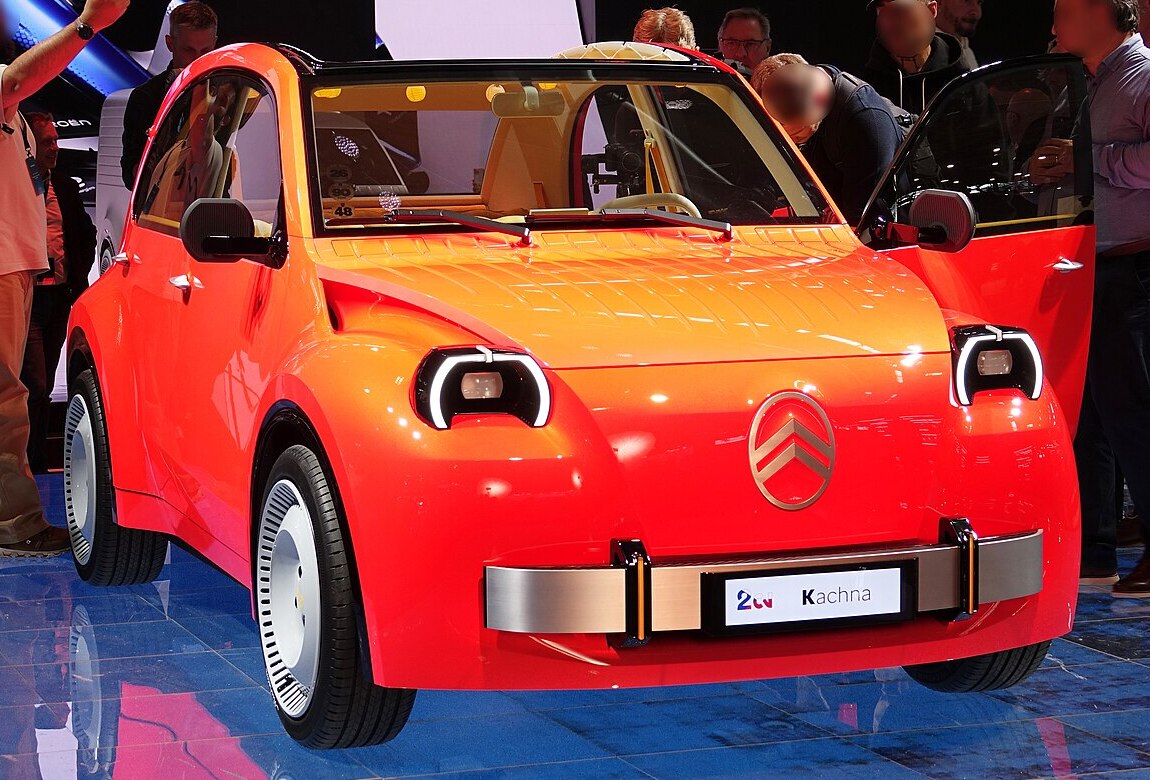
The concept measures 3.76 metres long, about 20 cm shorter than the current Citroën C3, and Citroën is targeting a kerb weight of close to one tonne, roughly half what a comparable e-C3 or Honda e weighs. That weight target matters more than it sounds: every kilogram saved is a kilogram of battery, motor and crash structure the company doesn’t have to pay for, which is exactly how you get to €15,000 on an EV.
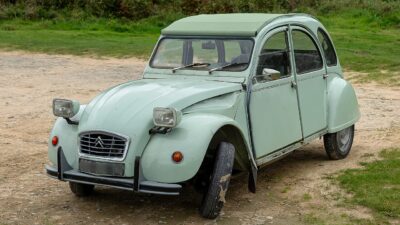
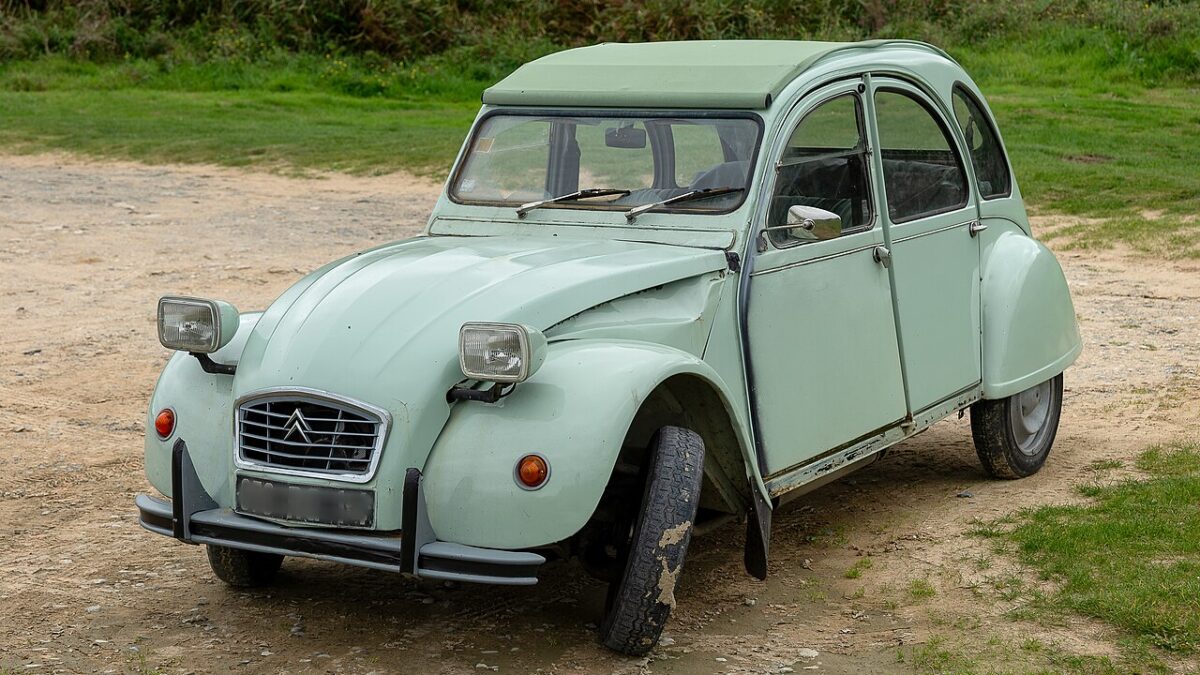
The design leans hard on nostalgia without pretending to be a retro pastiche. There’s a ribbed bonnet, round bug-eye headlights mounted on the fenders, a wide track, and most strikingly, a manual roll-back fabric roof, a direct callback to the original 2CV’s party trick of folding its entire roof back like an umbrella. Inside, Citroën’s engineers have gone further than most concept cars dare: flat glass and flat steel panels to cut tooling costs, bumpers designed to pop off and be replaced cheaply after a low-speed knock, a tailgate moulded in colour so it skips the paint shop entirely, and a 3D-printed storage basket worked into the dashboard as a nod to the original car’s removable wicker hamper.
What Citroën hasn’t said yet matters too: battery size, motor output and range are all undisclosed. Some early reports point to a battery pack in the same ballpark as the current e-C3’s 30 kWh lithium-iron-phosphate unit, but that’s an informed guess from journalists who’ve seen the car up close, not a confirmed Citroën figure, so treat it as a placeholder until the brand says otherwise closer to 2028.
Why a legacy European brand is chasing a budget EV right now
This isn’t happening in a vacuum. Chinese manufacturers have been landing EVs in Europe at prices legacy brands can’t match while still making money, and Brussels has responded by drafting a new vehicle category, informally called the “E-Car” or M1E class, for small, light, European-built electric cars under roughly 4.2 metres. The idea is to relax some of the heavier safety and driver-assistance mandates that currently apply to every EV sold in the bloc, in exchange for keeping production and jobs in Europe. Citroën has said the 2 CV Concept is designed to comply with this upcoming rulebook, which is also why features like advanced driver-assist systems are conspicuously absent from the pitch. It’s less a design choice and more a regulatory bet.
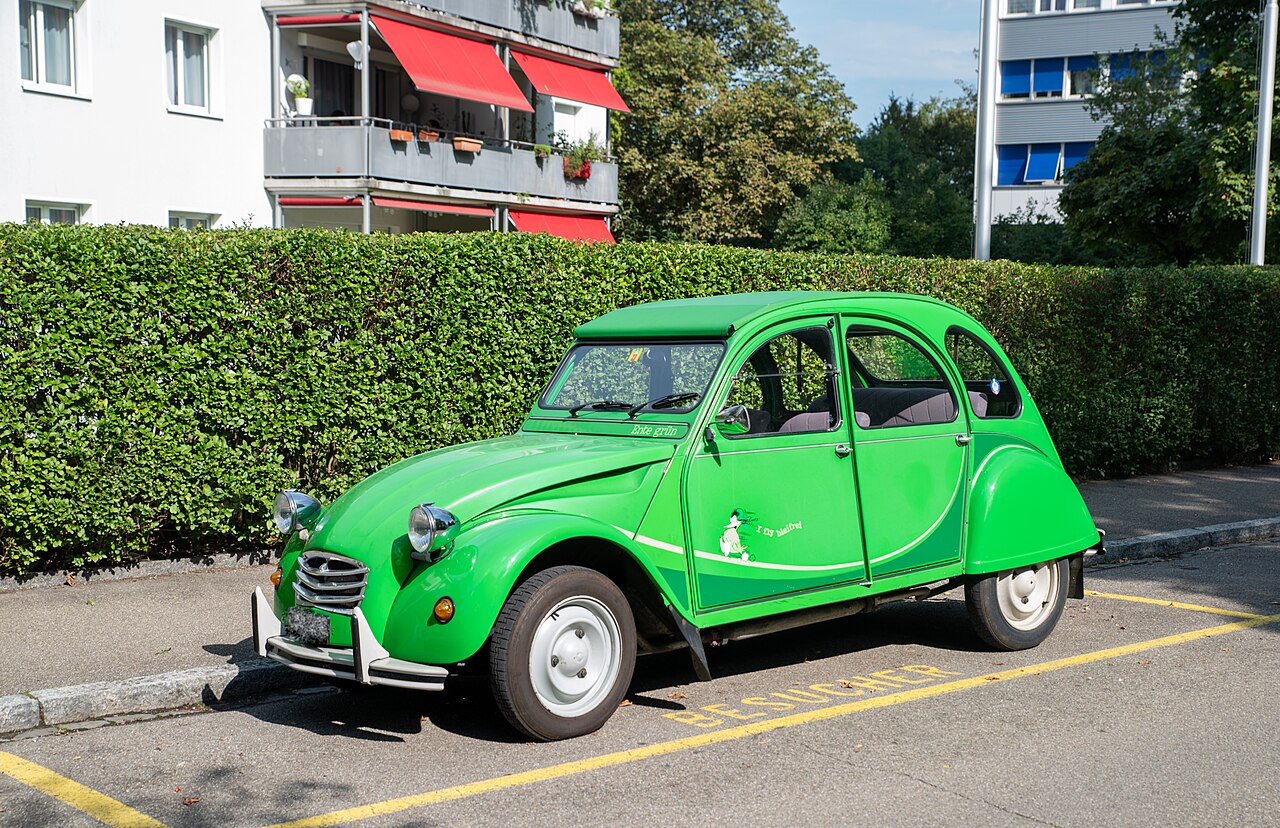
Renault, Fiat and others are watching the same pressure. Renault has publicly pushed back, asking the EU to simply freeze rules for existing small cars rather than invent a whole new category. Citroën, by contrast, is leaning all the way in, and the 2 CV name is doing a lot of marketing work here: the original sold more than 3.8 million units between 1948 and 1990 and is arguably the most recognisable Citroën ever built, which buys the new car a level of goodwill no all-new nameplate could.
| Confirmed | 3.76 m length concept, under-1-tonne weight target, fully electric, production in 2028 at Pomigliano, Italy, target price under €15,000 before incentives |
| Not yet confirmed | Battery capacity, motor output, range, final production design, exact trim and feature list |
| Positioning | Sits between the Ami quadricycle and the e-C3 in Citroën’s range |
Where this leaves the rest of the market
If Citroën actually hits €15,000 at launch, it undercuts almost every electric car currently sold in Western Europe, including Renault’s own Twingo EV and Dacia’s Spring, both of which are themselves built around the same affordability brief. It also puts direct pressure on Chinese entrants like BYD’s Dolphin Surf and whatever Leapmotor and Stellantis’s own joint venture bring next, since the 2 CV would be assembled inside the EU and dodge the tariff exposure those imports carry. The real test isn’t the concept, it’s whether Citroën can hold that price for three years while battery costs and regulations keep shifting under it. Concept-to-production EV pricing has a well-earned reputation for creeping upward, and €15,000 today could easily mean €17,000 or €18,000 by 2028.
A genuinely sub-€15,000 European EV would be the biggest affordability story the segment has had in years. Whether Citroën can still call it that in 2028 is the number actually worth watching.
Does any of this touch India?
Not directly, and it’s worth being upfront about that rather than stretching for a connection. Citroën hasn’t signalled any plan to bring the 2 CV revival to India, where the brand’s budget-EV push currently runs through the e-C3 instead. What’s genuinely relevant to Indian buyers is the broader trend: global automakers are now openly competing on how cheap they can make a “real” EV, which is the same pressure that’s been pushing prices down across India’s own electric car lineup over the last year. The playbook Citroën is testing in Europe, radical weight-cutting instead of just a smaller battery, is one Indian brands will likely borrow from eventually.
For now, the 2 CV Concept is a statement of intent more than a buyable car. The real verdict won’t arrive until 2028, when Citroën either delivers a genuinely affordable EV built on nostalgia and discipline, or joins the long list of concepts that priced themselves out of their own promise on the way to production.