


























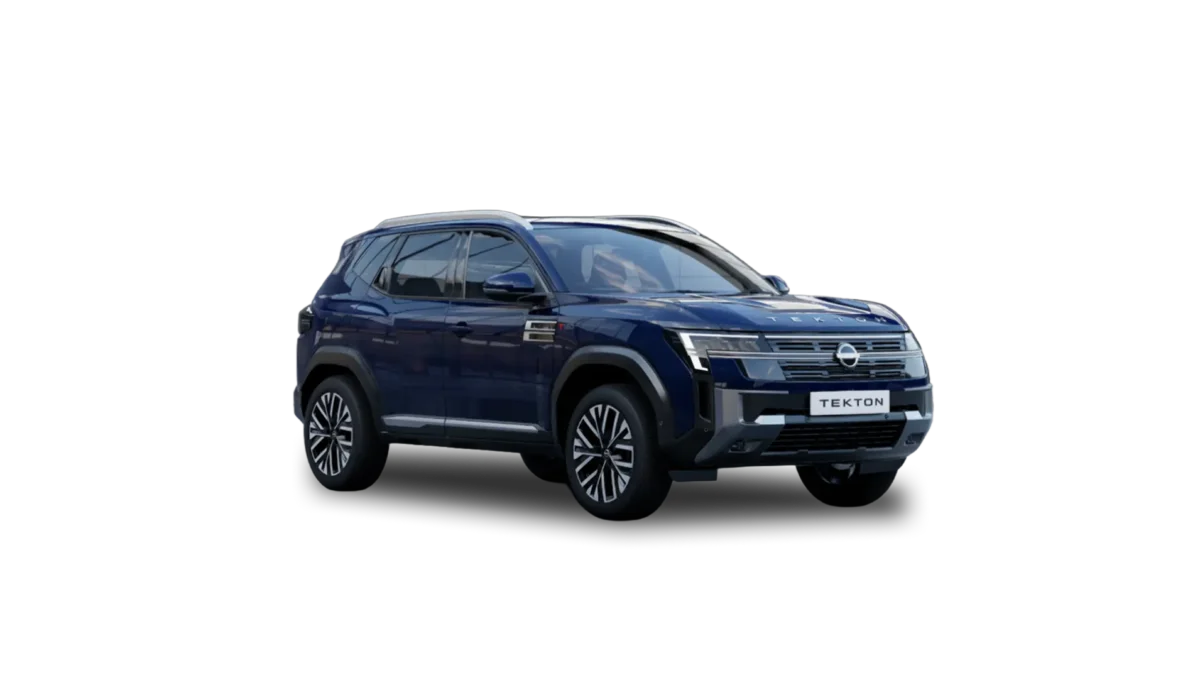
If you’re shopping for a midsize SUV in India right now, you already know the Hyundai Creta and Kia Seltos own this segment. Between them, they’ve been the default answer in the ₹10-20 Lakh SUV bracket for years. Nissan wants a piece of that pie, and its answer is the all-new Tekton, a C-SUV built at its Chennai plant that undercuts both rivals at launch while going turbo-only across its entire engine lineup. We covered the Tekton’s India launch a couple of weeks ago. Now that the dust has settled, here’s how it actually stacks up against the two cars it’s built to fight.
The Price Gap
Money talks first, and the Tekton wins this round on paper. Nissan’s own pricing puts the base T160 manual variant at ₹10.49 Lakh, with the more powerful T280 range starting at ₹14.99 Lakh. That undercuts the Creta, which starts at ₹10,90,700, and the Seltos, which starts even higher at ₹10,99,900 for its base HTE trim, according to Hyundai and Kia’s own official pricing pages.
| Model | Starting Price (ex-showroom) |
| Nissan Tekton | ₹10.49 Lakh |
| Hyundai Creta | ₹10,90,700 |
| Kia Seltos | ₹10,99,900 |
That’s roughly ₹40,000 to ₹50,000 of headroom for Nissan to play with at the entry level, enough to make budget-conscious buyers stop and cross-shop before they sign anything.
Turbo Only, No Compromises
Here’s where things get interesting. Both the Creta and the Seltos still sell you a naturally aspirated engine at the base level, meaning the engine relies on plain air intake with no forced boost. Nissan skipped that entirely. Every single Tekton, from the entry-level Visia to the range-topping Tekna Plus, comes with a turbocharged engine, which uses a small turbine to force extra air into the engine so it makes more power without needing a bigger, thirstier motor. You get a choice of the Turbo T160 or the more potent Turbo T280, which makes up to 163 PS of power and 280 Nm of torque, a genuinely strong number for this segment. The top-spec T280 can be paired with a 6-speed wet-clutch DCT, a dual-clutch automatic gearbox that swaps gears almost instantly for quicker, smoother shifts. Creta buyers get a turbo-petrol option too, but only on select trims, alongside naturally aspirated petrol and diesel choices paired with manual, IVT, or torque-converter automatic gearboxes.
What Else You Get
Nissan is also leaning hard on tech and practicality to justify the cross-shop. The Tekton comes with Google built-in, which lets you use Google Maps, Google Assistant, and the Google Play Store directly through the car’s own touchscreen instead of mirroring your phone every time. Nissan also claims a class-leading 700 litres of boot space, a genuinely useful number if you’re the kind of family that road-trips with everything but the kitchen sink.
On price and raw power figures, the Tekton has done its homework. Whether that’s enough to pull buyers away from two nameplates with over a decade of trust behind them is the real test, and only showroom footfall will answer that one.
The Creta and Seltos aren’t going anywhere, and both still offer a wider spread of engine and trim choices for buyers who want naturally aspirated simplicity or diesel efficiency. But if you’re shopping this segment on price and power alone, Nissan has just handed you a very compelling reason to test drive something other than the usual suspects.


