



















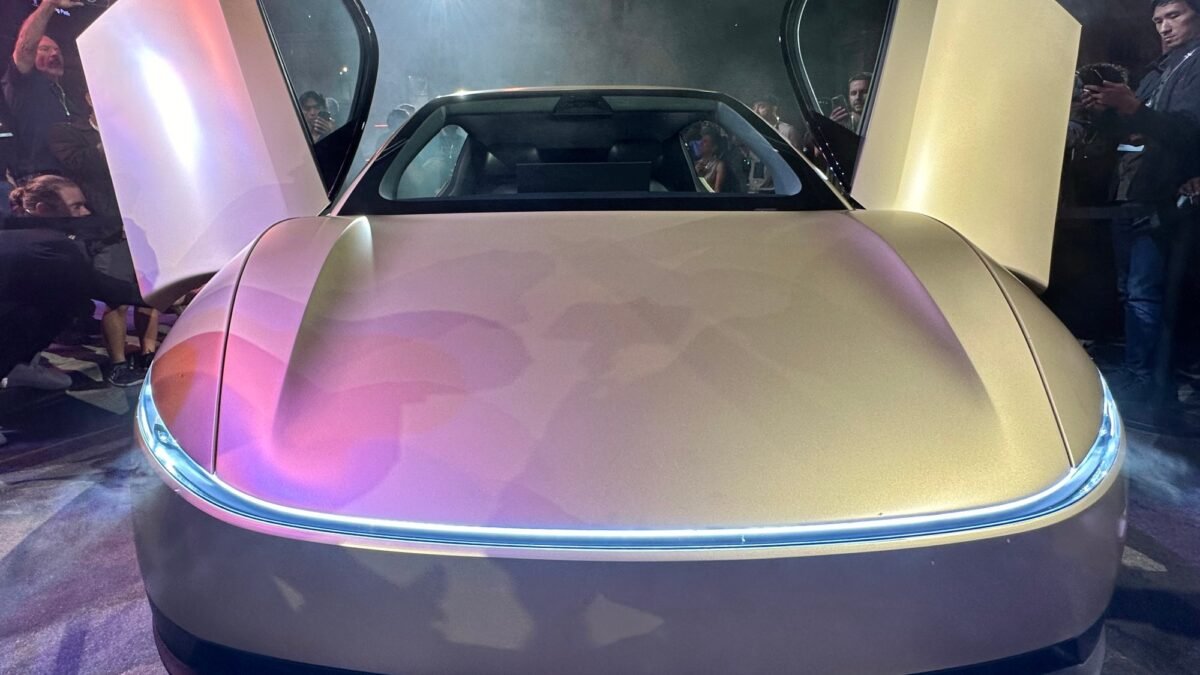
Tesla’s Q3 2026 numbers landed on October 21, and the headline figure says a lot about where the company actually is right now: profit down 43%, even as revenue stayed flat and margins quietly got better. That combination, shrinking profit but improving margins, tells you Tesla is spending hard on the next phase of the business (robots, robotaxis, AI chips) while the car business itself treads water.
Here’s why that matters beyond Tesla’s own balance sheet: this is the company every other automaker is copying, software subscriptions, over-the-air updates, direct sales, and now a driverless ride-hailing fleet. When its numbers wobble, it says something about how hard that playbook actually is to pull off at scale.
The numbers, straight up
Revenue came in at $28.05 billion for the quarter, almost exactly flat year on year and in line with what Wall Street expected. But net profit, the actual money left over after costs, fell 43% to $787 million, pushing earnings per share (the profit split across every share of Tesla stock) down to $0.22 on a GAAP basis, Tesla’s standard accounting measure, from $0.39 a year ago. On a non-GAAP basis, where Tesla strips out certain one-off costs to show a cleaner trend, earnings per share came in at $0.48, beating the $0.45 analysts expected but still down from $0.50 a year earlier.
Operating income, profit from the core business before interest and tax, dropped 56% to $718 million, giving an operating margin of just 2.6%, down from 5.8% a year ago. Tesla spent $2.76 billion on R&D, up 69%, and more than doubled capital spending to $4.73 billion building new factories and AI compute. Free cash flow fell to $1.53 billion from $3.99 billion a year earlier.
The one genuinely good sign here: gross margin, the slice of every sales dollar left after direct costs, rose to 19.6%, up from 18.0% a year ago and a big jump from 16.8% last quarter, which Tesla credited to lower tariff costs and better cost control. Automotive revenue was $20.6 billion, down 3%, as regulatory credit income (money other automakers pay Tesla to offset their own emissions rules) collapsed 73% to $113 million from $417 million. Services revenue, Supercharging, insurance and software, rose 33% to $4.6 billion with a record gross profit of $734 million, quietly becoming Tesla’s most dependable earner.
Vehicle deliveries for the quarter were 486,532, down 2.1% year on year, with Tesla pointing to battery cell availability as the real constraint on building more cars, not demand.
Where all that R&D money is actually going
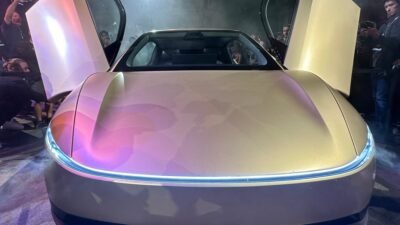
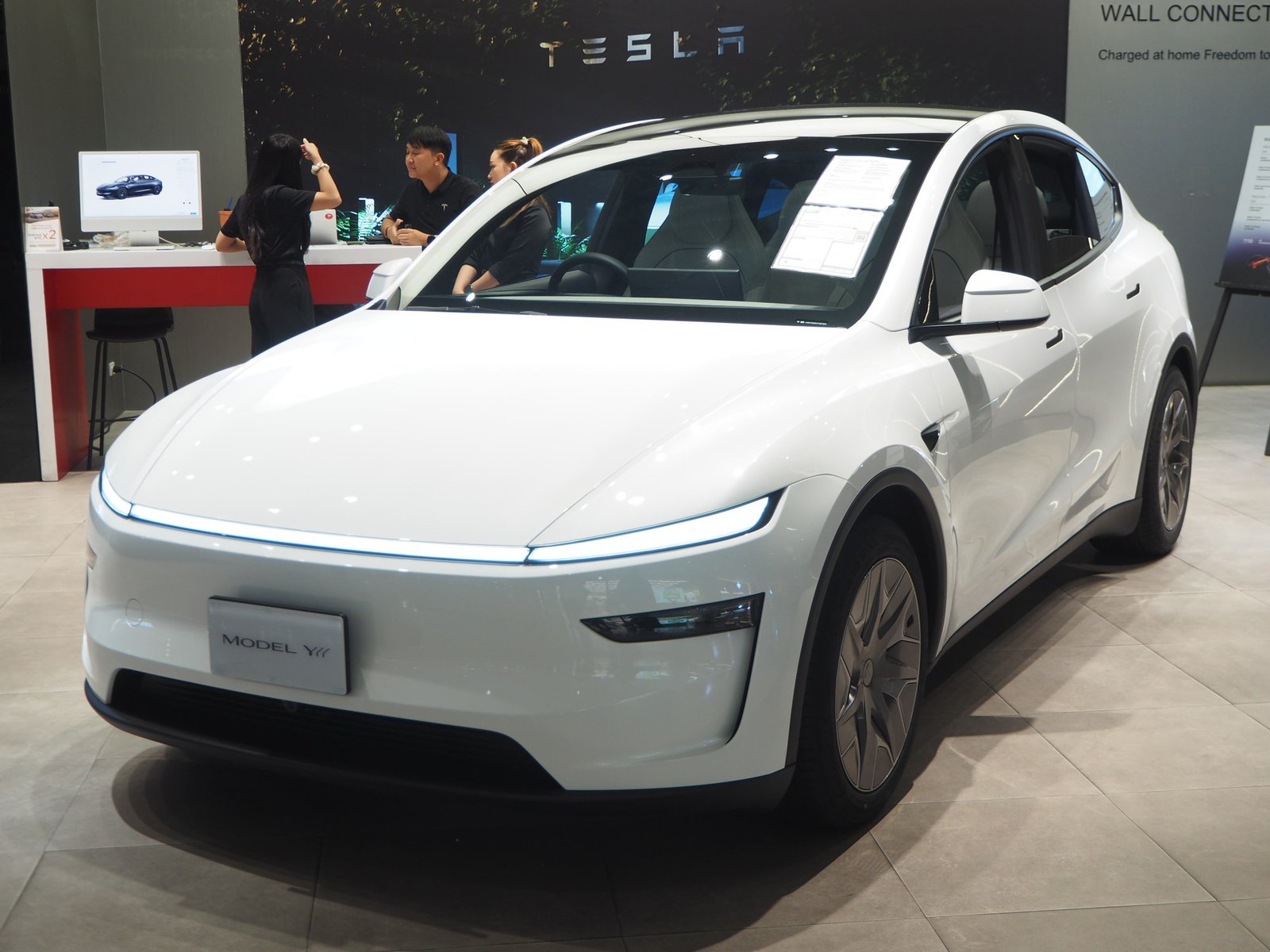
The more interesting story for where Tesla is headed sits outside the income statement. The company’s driverless Robotaxi service, running in Austin on a modified Model Y and the steering-wheel-less Cybercab, crossed nearly 2 million cumulative unsupervised miles by the end of the quarter, about a month after the Cybercab itself joined the fleet on September 3. Active subscriptions to Tesla’s Full Self-Driving software, FSD, a driver-assistance system that still requires supervision on regular cars, rose 67% year on year to 1.74 million, and Tesla says it’s now fitted to more than 75% of new cars delivered in North America.
On the earnings call, Tesla executives were asked directly whether ordinary buyers would eventually be able to own a Cybercab, the same way they can buy a Model Y today. Elon Musk said the plan is for the “vast majority” of the fleet to stay Tesla-owned and run purely as a paid ride service, not sold the way a Model 3 or Model Y is. Every Cybercab built at the Texas factory right now goes straight into Tesla’s own fleet. Engineering lead Lars Moravy said Tesla is still aiming to get the first customer-owned units out before the end of 2026, starting small, while AI chief Ashok Elluswamy said those customer cars would likely only start adding to the robotaxi network around the second quarter of 2027. Musk added that the robotaxi business itself won’t meaningfully move Tesla’s financial results until 2027.
That timeline matters because the US safety regulator NHTSA is still reviewing how Tesla certified the Cybercab for road use, an investigation Tesla has a deadline of October 30 to respond to. A vehicle running driverless rides for paying customers while its own safety certification is still under review is the kind of detail that could slow the 2027 plan down if the inquiry turns up something.
Tesla also used the call to point to its wider manufacturing push: its new Megafactory in Texas, aimed at the solar and battery storage business, has started production with a planned capacity of 50 gigawatt-hours a year, and Optimus, Tesla’s humanoid robot project, has moved onto high-volume production lines at the Fremont, California plant. None of this shows up as real revenue yet, but it explains why operating expenses jumped 39% this quarter even as the car business stayed roughly flat.
Where this leaves Tesla, and the one place it touches India
Put together, the picture is a company that is profitable but visibly less so, trading near-term margin for a bet on autonomy and robotics that won’t pay off for at least another year by its own executives’ timeline. That’s a very different story from the one BYD is telling right now, where cheaper EVs are simply outselling Tesla by volume. Tesla isn’t trying to win that fight anymore. It’s betting the next few years on software and service revenue, and on the robotaxi fleet eventually becoming the real profit engine.
For India, the direct read-through is thin, and it’s worth saying so plainly rather than forcing one. Tesla sells the Model Y here, priced from around ₹50.89 lakh ex-showroom after a cut earlier this year, built around hefty import duties rather than local production. None of the robotaxi, Cybercab or FSD news from this call has an India timeline attached, and no regulator here has been approached about driverless ride-hailing either. The roughly 342 units Tesla retailed in India last financial year, per FADA data, are a rounding error next to what its rivals move in a single month. Whatever Tesla becomes over the next two years, autonomy-led service company or still mostly a carmaker, that will be decided in Austin and Fremont long before it reaches an Indian showroom.
Tesla’s quarter is the story of a company spending like it’s building three businesses at once: cars, batteries and robots, while only the first one is reliably making money today.