


































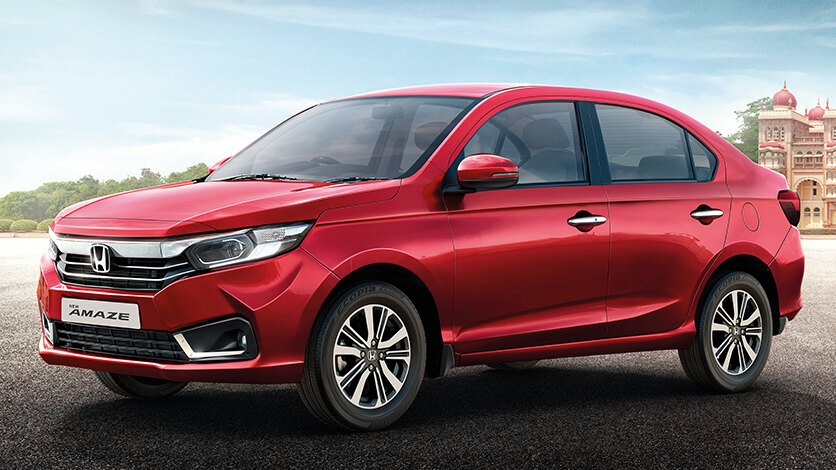
The Honda Amaze 2nd Gen’s CVT automatic costs ₹82,100 more than the manual on paper, and about ₹94,000 more once road tax and insurance are added in Mumbai. That alone makes it one of the priciest ways to skip a clutch pedal in a sub-₹8 lakh sedan. What nobody tells you buying one: the CVT also burns slightly more fuel than the manual. There is no odometer reading at which the automatic earns its premium back, because every kilometre you drive adds to the gap instead of closing it.
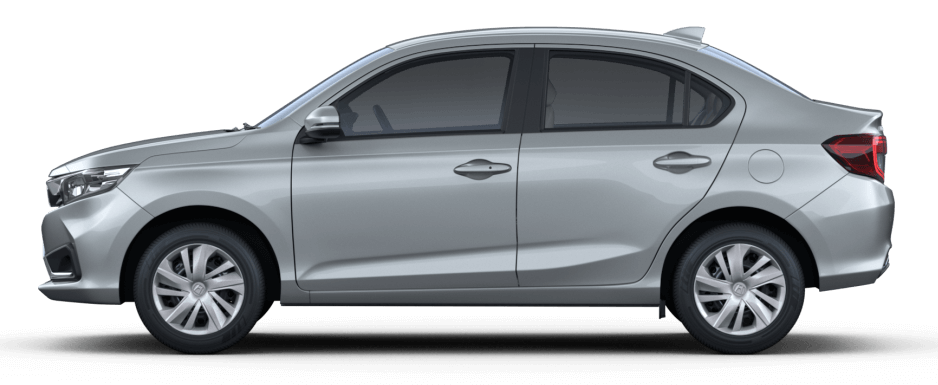
What the Honda Amaze CVT Actually Costs Over the Manual
The Honda Amaze 2nd Gen is sold in exactly two versions, S MT and S CVT, both with the same 1.2-litre petrol engine and the same features otherwise. The gap between them is purely the gearbox, and it is not small.
| Version | Ex-showroom | On-road, Mumbai |
| S MT (manual) | ₹6.98 Lakh | ₹8.14 Lakh |
| S CVT (automatic) | ₹7.8 Lakh | ₹9.08 Lakh |
| Difference | ₹82,100 | ₹94,000 |
On The Spec’d’s own on-road price page for Mumbai, the on-road gap is wider than the ex-showroom one because Maharashtra’s 11 percent road tax and the insurance premium both scale up with the higher price. Pick a different city and the rupee gap moves a little, but the CVT always costs more on the road than it does on the brochure.
Does the CVT Save You Anything on Fuel?
This is where most buyers assume an automatic claws back some of its price through efficiency. The Amaze CVT does not.
| Version | ARAI claimed mileage | Fuel for 1,000 km, Delhi |
| S MT (manual) | 18.6 kmpl | ₹5,490 |
| S CVT (automatic) | 18.3 kmpl | ₹5,580 |
These are The Spec’d’s own figures from the Amaze 2nd Gen’s mileage page, worked out at Delhi’s petrol price on the ARAI-claimed figure for each version. The CVT’s claimed mileage is 0.3 kmpl lower than the manual’s, which works out to ₹90 more for every 1,000 km driven. Drive it 1,00,000 km, about ten years of average Indian use, and that is roughly ₹9,000 extra in fuel on top of the ₹94,000 you already paid more on the road. The CVT does not just fail to pay back. On The Spec’d’s own numbers, it costs more at every single kilometre too.
There is no payback distance for this CVT. The manual is cheaper to buy and cheaper to run, full stop.
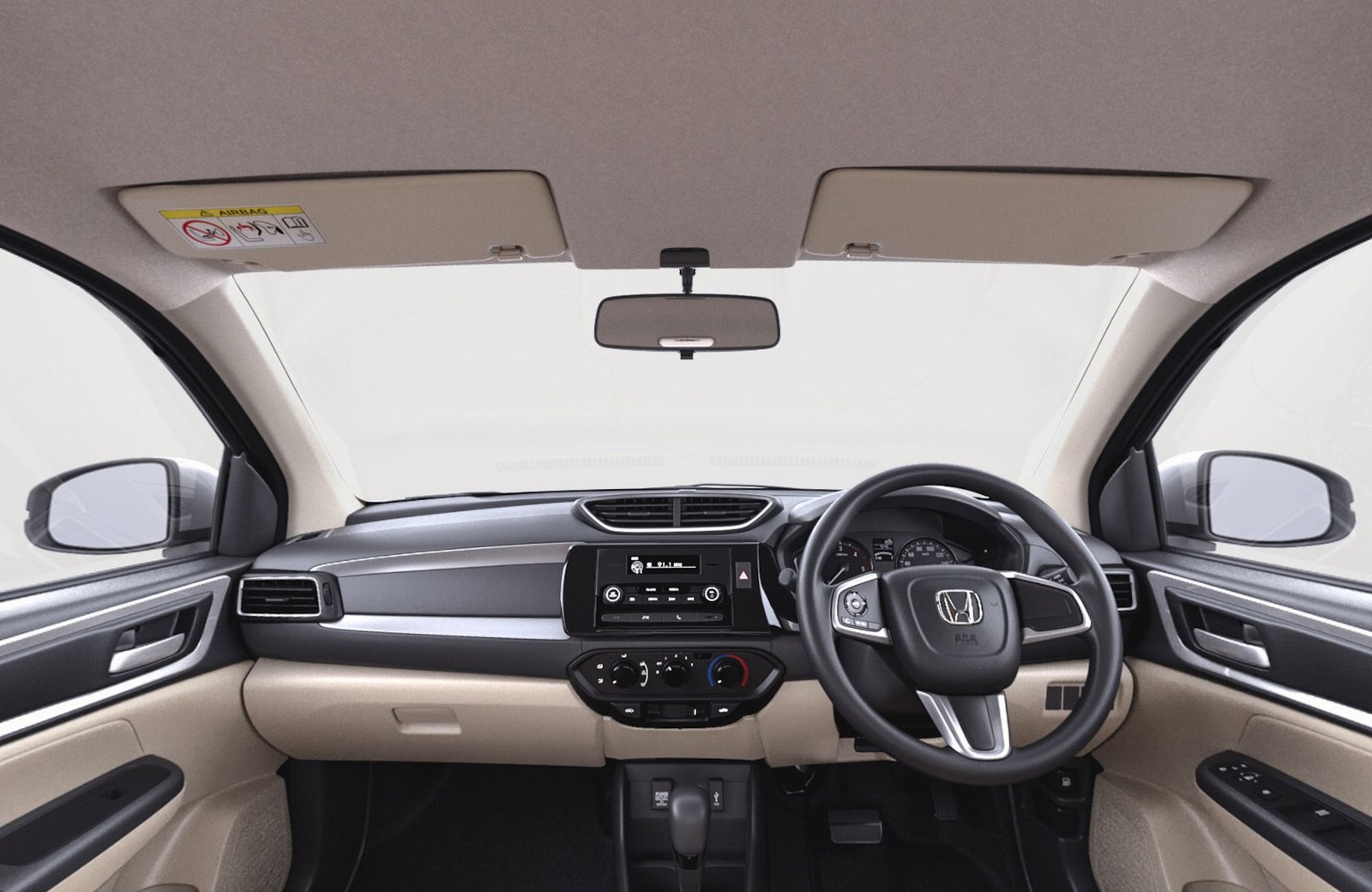
The Real Monthly Bill on an EMI
The Amaze 2nd Gen’s own page states the EMI for the S MT: about ₹13,674 a month on 20 percent down over 5 years at 9.5 percent interest, worked on its ₹8.14 Lakh on-road price in Mumbai. The site does not publish a separate EMI for the CVT, so applying the same loan terms to the CVT’s own ₹9.08 Lakh Mumbai on-road price (scaling the known EMI by the ratio of the two loan amounts) works out to about ₹15,250 a month, roughly ₹1,576 more than the manual every single month, on top of the extra fuel.
| On-road, Mumbai | EMI (20% down, 5 yrs, 9.5%) | |
| S MT | ₹8.14 Lakh | ₹13,674/month |
| S CVT | ₹9.08 Lakh | about ₹15,250/month* |
*The Spec’d’s own calculation, scaling the site’s published S MT EMI by the S CVT’s higher on-road price at the same loan terms.
Which Version Should You Actually Buy
Buy the S MT. It is the version The Spec’d’s own pricing page flags as the pick, and the numbers back it: lower purchase price, lower on-road price, lower EMI and lower running cost, with nothing given up except the clutch pedal. The one real case for the CVT is heavy, stop-start city traffic, where not working a clutch for an hour each way genuinely matters to some drivers. That convenience is real. It is just never going to show up on a running-cost spreadsheet, because the spreadsheet says the CVT loses money at every stage.
Indian resale data backs this up. One online used-car marketplace found that non-CVT Amazes vastly outnumbered CVT ones among secondhand cars sold in 2024, evidence that Indian buyers are already lukewarm on paying extra for the automatic, at purchase or at resale.
One thing applies to both versions equally and is worth knowing before you book either: the Amaze scored just 2 stars for adult occupants and 0 stars for children in its 2024 Global NCAP crash test, with 2 airbags as standard. Rivals like the Maruti Suzuki Dzire carry stronger safety kit at a similar price, so cross-shop before you decide the Amaze’s boot space and running costs are worth it. See them side by side, version for version.
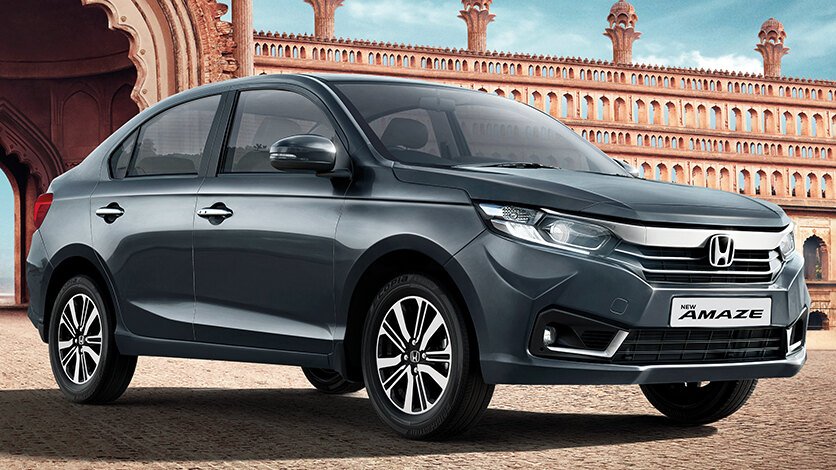
That said, at ₹7.8 Lakh ex-showroom it is still one of the more affordable automatic sedans on sale. If an automatic is non-negotiable, see every automatic car under ₹10 Lakh before you commit to this one.
Is the Honda Amaze CVT worth the extra money?
Not on the numbers. It costs ₹82,100 more ex-showroom, about ₹94,000 more on-road in Mumbai, and roughly ₹1,576 more a month on an EMI, while also using slightly more fuel than the manual. The only real reason to pick it is convenience in heavy traffic, not economy.
Does the Honda Amaze CVT give better mileage than the manual?
No. The CVT’s ARAI-claimed mileage is 18.3 kmpl against 18.6 kmpl for the manual, which costs about ₹90 more for every 1,000 km driven at Delhi fuel prices.
What is the on-road price of the Honda Amaze in Mumbai?
About ₹8.14 Lakh for the S MT and about ₹9.08 Lakh for the S CVT, on The Spec’d’s own estimate built from the ex-showroom price, Maharashtra’s road tax and typical insurance. Confirm the final figure with your dealer before booking.


