



























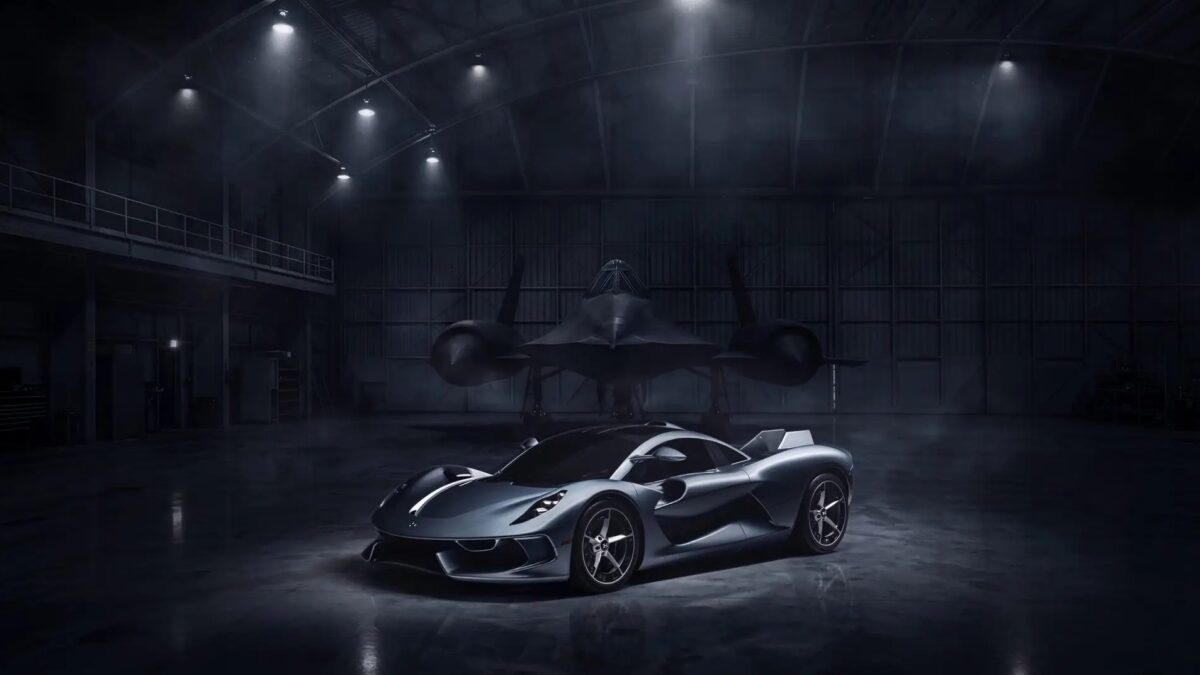
Hennessey just revealed a 71-unit, $2.5 million hypercar that deliberately has no turbos, no hybrid motors, and not a single digital screen. In a year when almost every new performance car is going electric or at least turbocharged, that’s the real headline.
Most hypercar reveals these days are a numbers game: more horsepower, more turbos, more batteries, more screens. Hennessey just walked in the opposite direction. On August 5, 2026, the Texas tuner-turned-manufacturer pulled the wraps off the Blackbird, a name and shape borrowed straight from the Lockheed SR-71 spy plane, and it’s built around one simple idea: give the driver back full control. No turbochargers, no electric assist, no automatic gearbox, no infotainment screen. Just a howling naturally aspirated V8 and a stick shift.
The numbers, for those who still want them
Under that long, low body sits a 6.2 litre naturally aspirated V8, co-developed with race engine specialist Ilmor, making somewhere between 800 and 850 horsepower (Hennessey hasn’t locked the final figure yet) and revving past 9,000 rpm, genuinely wild for an engine this big with no turbo to help it breathe. Power goes to the rear wheels only, through a proper six-speed gated manual gearbox, the kind with a metal gate you physically move the lever through, not a paddle in sight. Hennessey is targeting 0 to 60 mph in 2.5 seconds and a top speed of 220 mph, all from a carbon-fibre tub built to weigh under 1,360 kg dry.
| Engine | 6.2L naturally aspirated V8, 800 to 850 hp |
| Transmission | 6 speed manual, rear wheel drive |
| 0 to 60 mph | 2.5 seconds |
| Top speed | 220 mph (354 km/h) |
| Weight | Under 1,360 kg dry |
| Price | $2.5 million (roughly ₹23.8 crore before taxes) |
| Production | 71 units, deliveries from 2029 to 2030 |
Why going backwards is the whole point
The cabin is where the Blackbird makes its statement loudest. There’s no digital instrument cluster and no touchscreen anywhere in sight, just a huge analog tachometer front and centre, physical switches, exposed shift linkage, and an actual metal key to start it. You can still mirror your phone for navigation or music, but the car itself refuses to be a gadget.
“If anyone is really paying attention to the automotive world right now, there is an intense, burning desire to return to that material connection, that analog sensibility,” John Hennessey said while unveiling the car. “This is not a numbers car.”
That’s a pointed line at a time when nearly every rival hypercar is leaning on turbos, hybrid boost, or straight electric power to hit bigger numbers. Hennessey is betting that a growing set of buyers actually miss the friction: the mechanical noise, the manual clutch, the sense that the driver, not the software, is doing the work.
Who actually gets one, and when
Only 71 examples will be built, and Hennessey says more than two thirds are already spoken for well before the public debut at The Quail during Monterey Car Week on August 14. It sits above the brand’s existing Venom F5 hypercar in both price and intent, built more for long, comfortable drives (Hennessey claims it can comfortably cover 800-plus miles in a day, with room for two carry-on bags and, notably, four cup holders) than outright lap times. Customer deliveries won’t start until 2029 or 2030, after the Venom F5’s own production run wraps up.
Why it matters even if you’ll never own one
None of us are cross-shopping a $2.5 million manual hypercar, and that’s not really the point. Cars like the Blackbird set the tone at the very top of the industry, and right now that tone is a loud pushback against turbo everything and screen everything. India’s own performance car scene has already been drifting the same way, look at how much love manual gearboxes and naturally aspirated engines still get from enthusiasts here even as the mainstream market goes turbo-petrol and electric. The Blackbird is a reminder that even at the absolute top of the food chain, some manufacturers think the old-school driving experience is still worth building around.