




















Honda just gave its most important adventure motorcycle a full reset, and the headline act isn’t the engine. It’s radar. At EICMA 2026 in Milan, the industry’s biggest motorcycle show, Honda world-premiered the all-new CRF1150L Africa Twin series on November 3, and for the first time ever, a Honda motorcycle can watch the traffic around it and brake, slow down or hold a gap on its own.
This matters beyond the spec sheet. The Africa Twin is the bike that other adventure-tourers get measured against, and it sells in big numbers everywhere from Europe to India, where it has been a fixture of Honda’s BigWing showrooms since 2017. A full model change, not a colour update, is rare for this nameplate. The last one was in 2020.
A bigger engine and three different bikes, not one
The new twin-cylinder engine grows from 1,084cc to 1,131cc, with a higher compression ratio, a bigger bore and revised gear ratios. Honda quotes 87.5kW (about 119PS) at 7,500rpm and 119Nm of torque, a real step up on the outgoing engine’s roughly 102PS. For context, torque is the twisting force that gets a heavy, luggage-loaded adventure bike moving off the line and up a loose gravel incline without the engine running out of breath.
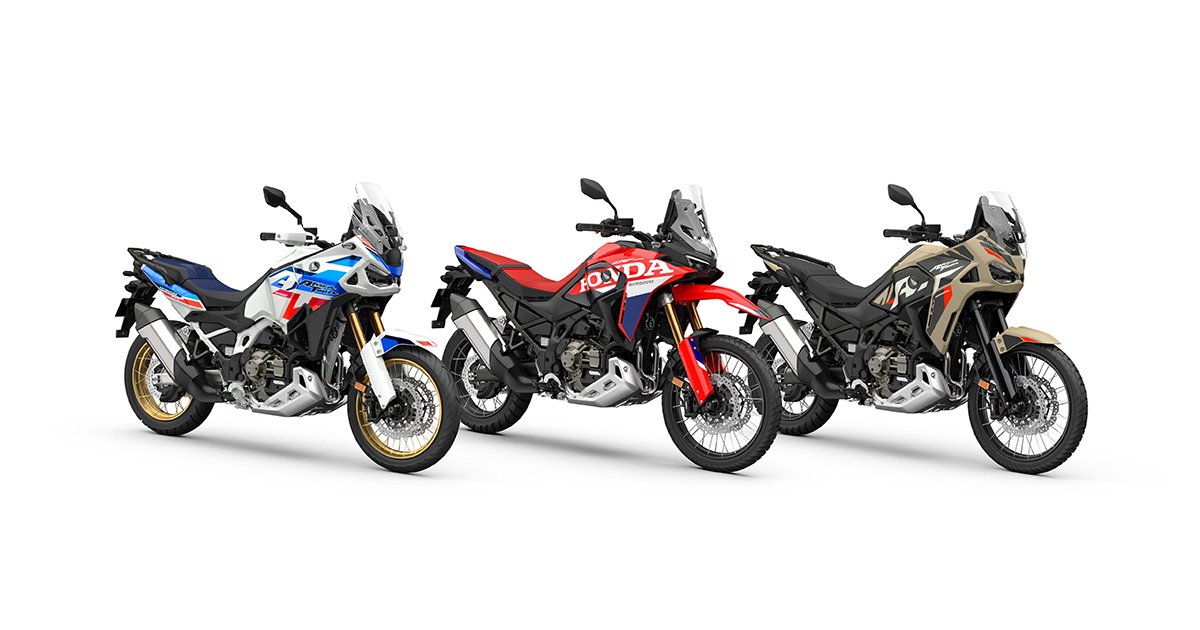
Honda is also splitting the range into three distinct bikes instead of two trims of the same bike:
- Africa Twin (standard): updated platform and dashboard, an electrically adjustable windscreen, and keyless Honda Smart Key.
- Africa Twin Adventure Sports: the long-distance tourer, with a bigger 24-litre fuel tank and a 19-inch front wheel for stability at speed.
- Africa Twin Enduro Sports: a genuinely new variant built for rough terrain, borrowing its front suspension and styling cues from Honda’s CRF450 RALLY off-road racer.
Honda SENSING RIDE: a first for the brand on two wheels
The real story is Honda SENSING RIDE, a new rider-assistance system that is, right now, exclusive to the Adventure Sports DCT variant. DCT is Honda’s Dual Clutch Transmission, an automatic gearbox option that shifts gears for the rider without a clutch lever. Pair the two, and the bike can do something no Honda motorcycle has done before.
SENSING RIDE uses millimetre-wave radar units mounted at the front and rear of the bike, the same basic technology that powers adaptive cruise control in modern cars, to constantly track the vehicles around it. On the move, it offers Adaptive Cruise Control that can slow the bike down in traffic and bring it to a full stop and pull away again (Stop & Go), a Group Ride Assist mode for riding in a pack, and Distance Assist to help hold a safe following gap. For safety, it adds Forward Collision Warning, Emergency Brake Assist, Blind Spot Information, and warnings for traffic approaching from behind. Combined with the automatic DCT gearbox, Honda’s pitch is less fatigue on long motorway stretches into a ride, where holding a constant throttle hand for hours is genuinely tiring.
Radar-based rider aids aren’t brand new to motorcycling as a category, other manufacturers have dabbled with adaptive cruise control on flagship tourers before. What makes this significant is that it is Honda’s first attempt at it, on a bike that sells in genuine volume rather than a low-volume flagship, which is usually how a new safety technology starts its journey down to more affordable motorcycles over the following years.
Lighter frame, smarter suspension, and recycled parts
Away from the electronics, Honda has fitted the Africa Twin and Adventure Sports with Showa EERA electronically controlled suspension running Honda’s Skyhook logic, which continuously adjusts how stiff or soft the suspension is to keep the bike settled over bumps, rather than making the rider stop and change a setting manually. The frame and swingarm are 1.4kg lighter than before, and a fuel sub-tank has been moved under the seat to lower the bike’s centre of gravity, which should make it feel less top-heavy when standing on the pegs off-road.
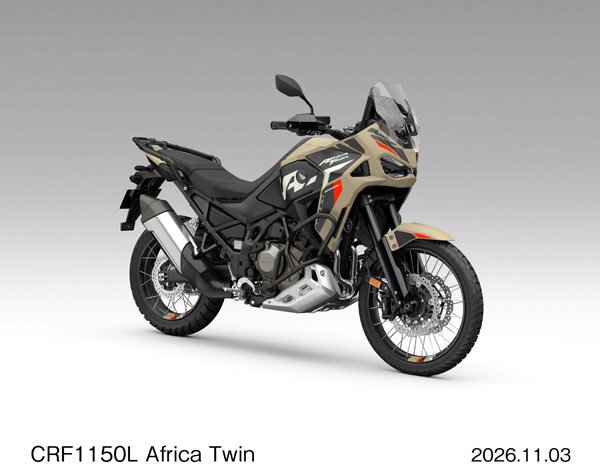
Honda has also leaned on recycled materials for this generation: the emblems and tail light use recycled acrylic, the upper body covers use chemically recycled nylon, and the windscreen is made from DURABIO, a plant-derived plastic. Honda says this is the first time it has used some of these materials on a motorcycle. None of it changes how the bike rides, but it is a sign of where motorcycle manufacturing is headed as emissions rules on materials and production tighten globally, not just on tailpipes.
What it means for India, and what’s still missing
Honda’s press release carries no pricing, no confirmed on-sale date, and no market list, which is normal for a same-day EICMA reveal. Full pricing typically follows over the following weeks as individual Honda regions announce their own line-ups.
There’s a genuine India angle here, though. The outgoing Africa Twin has been sold in India since 2017 through Honda’s BigWing Topline network, priced well into seven figures on-road, and every meaningful update to this nameplate has eventually made it here. Honda hasn’t confirmed an India launch for the CRF1150L yet, so treat any timeline as a guess, but given the pattern, an India debut sometime in 2027 would be in line with how this bike has always reached the country.
The verdict without having ridden it: this is the biggest technical leap the Africa Twin has taken since Honda brought it back in 2016, and SENSING RIDE is the detail worth watching, not because this exact system will define the segment, but because it signals Honda is finally bringing car-grade rider assistance to a bike people actually buy in volume.
EICMA 2026’s press days run November 3-4, with the show open to the public from November 5 to 8, and Honda wasn’t alone in using the stage for a major reveal today. Expect more of this story, real-world photos, confirmed trim-by-trim pricing for Europe and other markets, and eventually an India timeline, to fill in over the coming weeks. For now, the Africa Twin has grown up, and it’s watching the road the way a car does. Riders shopping this class of motorcycle can compare it against the rest of Honda’s adventure bike line-up as more details land.