




























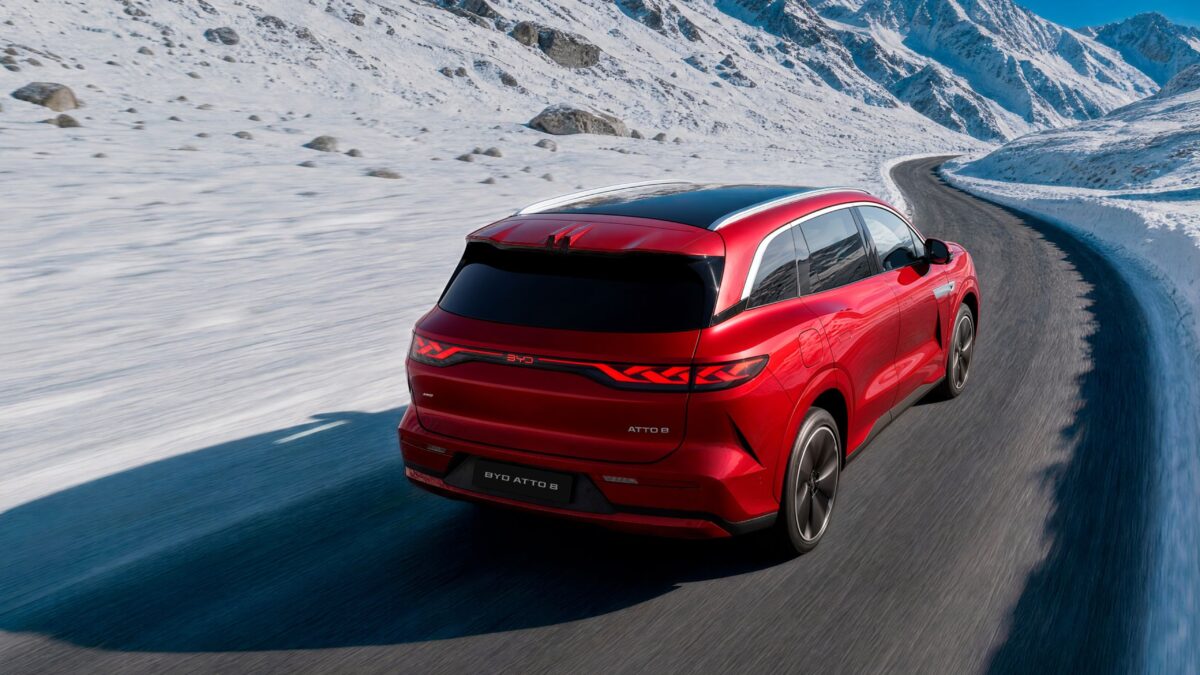
BYD’s new flagship SUV just posted a charging number no rival EV can touch, and the reveal doubles as a reminder of exactly why Indian buyers won’t be seeing one soon.
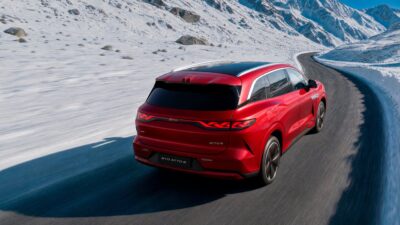
BYD rolled a seven-seat SUV onto the stage at this week’s Paris Motor Show and did something that made the rest of the hall go quiet for a second. The new Atto 8 can charge its battery from 10 percent to 97 percent in nine minutes. That’s faster than most people spend queuing for a coffee, and it’s the fastest charging number any production EV has claimed so far.
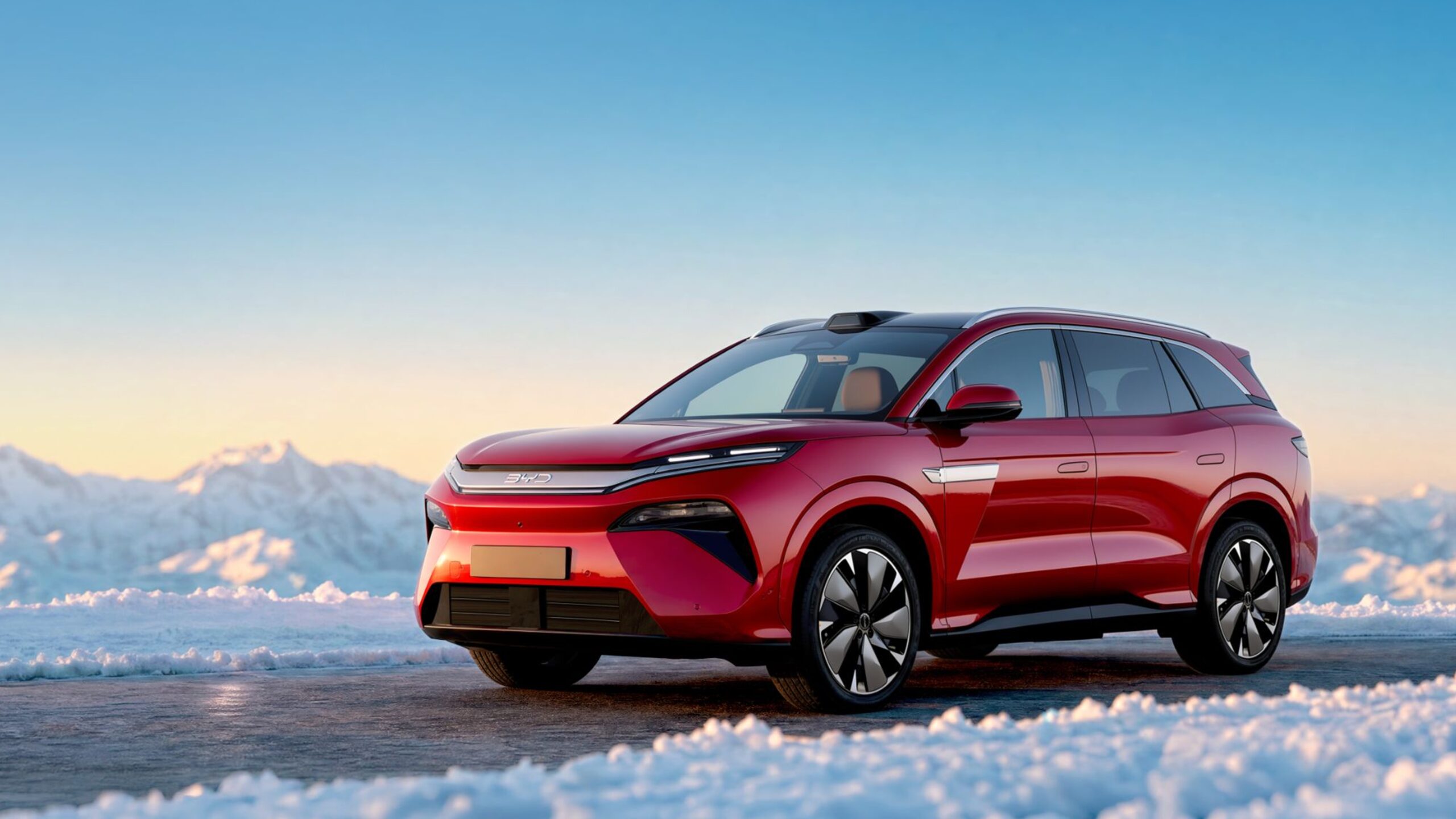
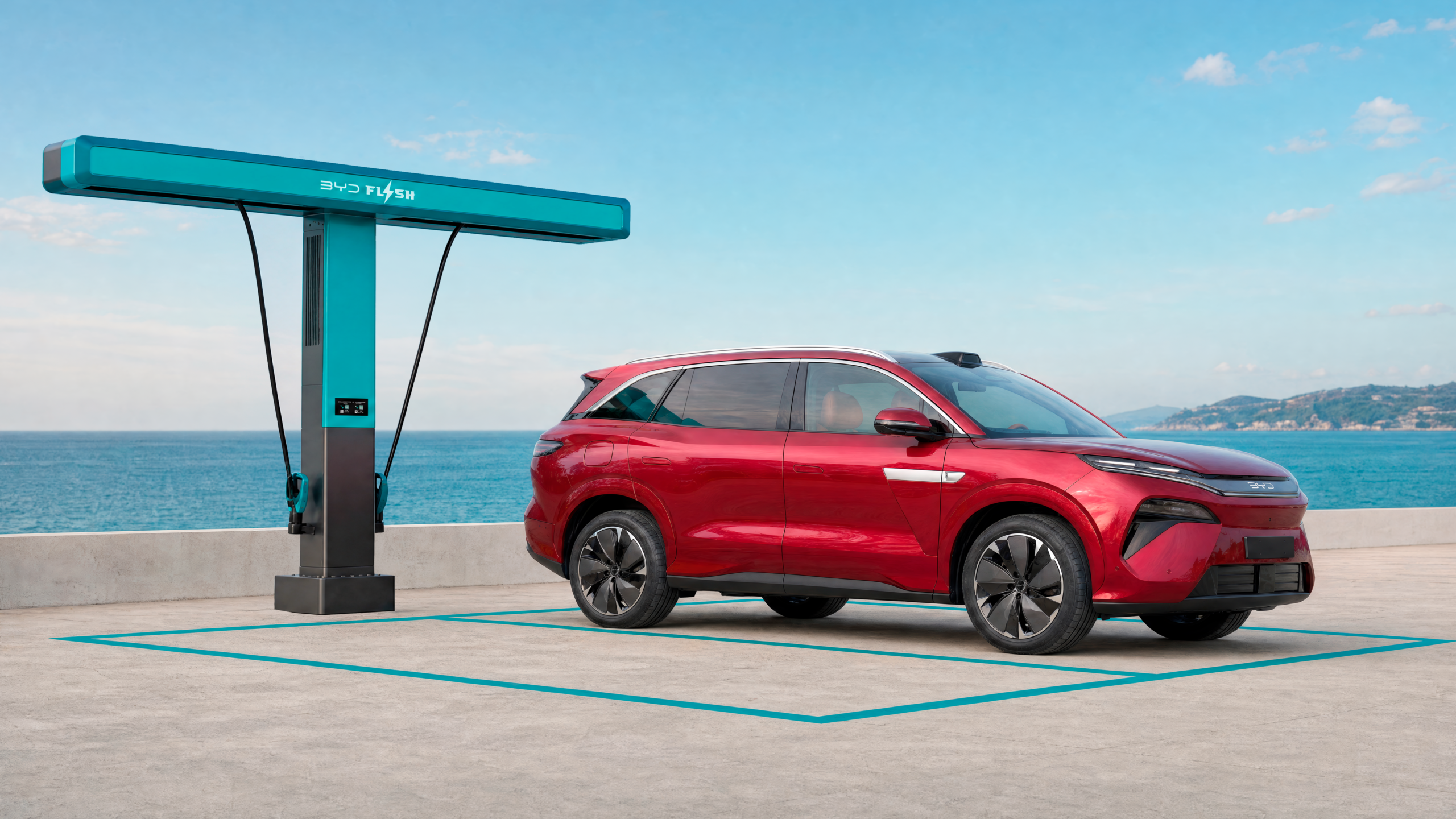
This isn’t a concept or a lab demo. BYD showed the finished car, confirmed European dealer sales for the first quarter of 2027, and backed the claim with its own FLASH Charging network, which it’s already building out. We covered the UK rollout of that same 1,500kW charging hardware back in August, and the Atto 8 is the first car actually designed to use all of it.
What Makes 9-Minute Charging Possible
Here’s the plain English version. An EV’s battery is measured in kilowatt-hours (kWh), basically how big its fuel tank is. The Atto 8 carries a 115kWh pack, BYD’s second-generation Blade Battery, big enough for an SUV this size. How fast you can refill that tank depends on the charger’s power, measured in kilowatts (kW): a typical fast charger in India tops out around 50-60kW, Europe’s best public chargers reach 350-400kW, but BYD’s own FLASH chargers can push out up to 1,500kW to a single car. That’s the real unlock: the battery chemistry can accept that much power without overheating, and the charger can actually deliver it.
BYD says the Atto 8 goes from 10 to 70 percent charge in five minutes, and from 10 to 97 percent in nine minutes. In seriously cold weather, as low as minus 30 degrees Celsius, that stretches to about 12 minutes for the same 97 percent. BYD is promising 3,000 of these FLASH chargers across Europe by the end of 2027, so owners can actually use the speed and not just see it on a spec sheet.
| Spec | Design (RWD) | Excellence (AWD) |
| Battery | 115kWh Blade Battery | 115kWh Blade Battery |
| Range (WLTP) | 653km | 602km |
| Power | 340kW / 462PS | 570kW / 775PS |
| Torque | 365Nm | 775Nm |
| 0-100kmh | 8.0 seconds | 4.6 seconds |
| Seats | 7 | 7 |
Why BYD Is in Such a Hurry
The timing isn’t an accident. BYD outsold Tesla globally by roughly 276,000 EVs in the third quarter of 2026, a gap that’s nearly quadrupled over the past year. Charging speed is now one of the last places BYD can visibly beat Tesla and everyone else on a single spec, rather than just on price. A seven-seat family SUV that charges faster than it takes to cook instant noodles is a genuinely strong argument in European showrooms, where range anxiety, not price, is still the biggest reason buyers hesitate on EVs.
It also puts pressure back on the charging networks themselves. Europe’s public fast chargers currently top out around 350-400kW under the CCS2 standard, well short of what the Atto 8 can actually accept. Until BYD’s own 1,500kW network is built out, most owners will charge at a fraction of that nine-minute claim in real life. That gap between lab numbers and everyday charging is worth remembering before anyone takes nine minutes as gospel.
Inside the Cabin
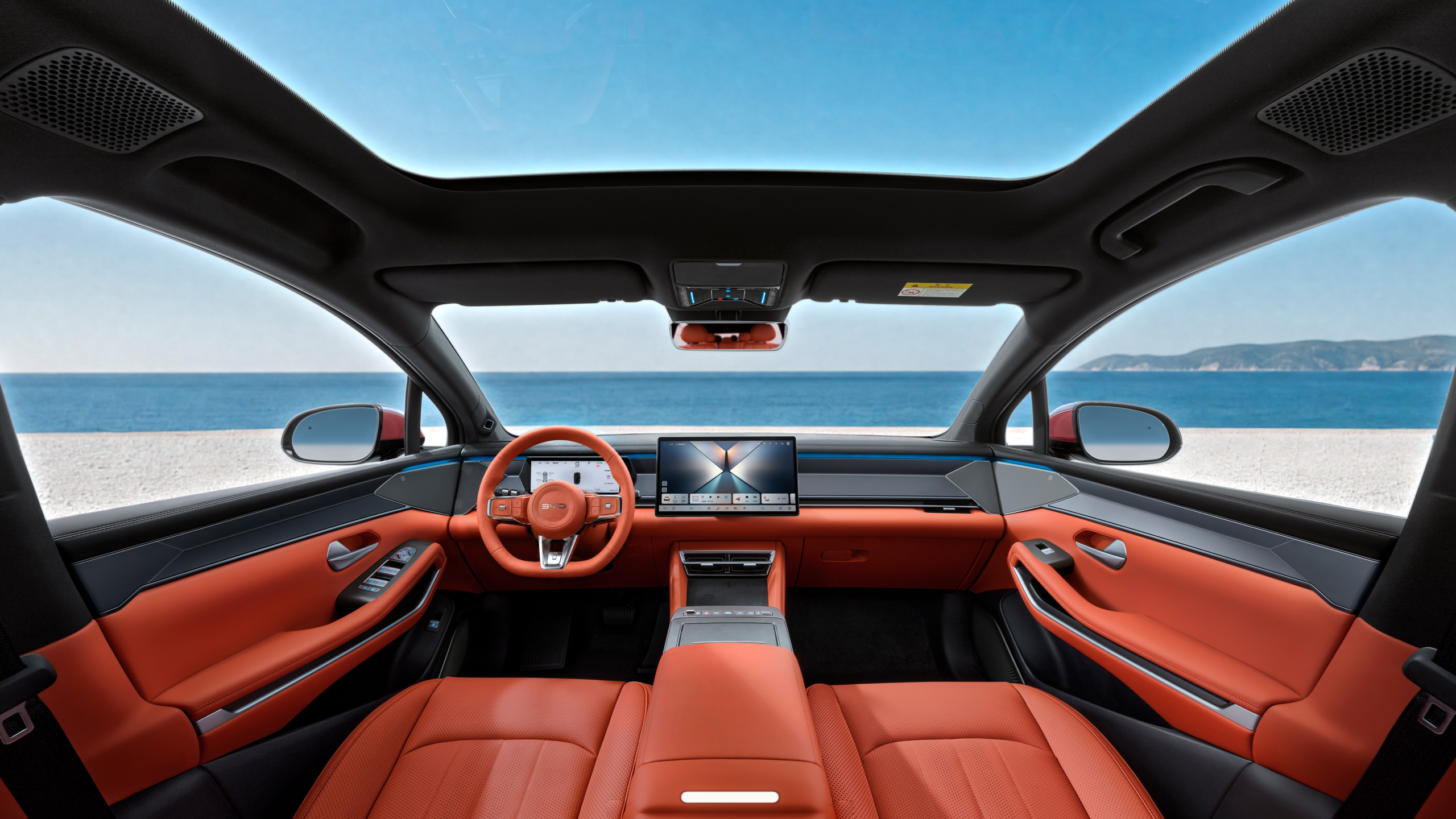
Beyond the charging story, the Atto 8 is a proper flagship. It’s 5,040mm long, seats seven across three rows, and still has a 136-litre front boot under the bonnet for charging cables. The RWD Design version makes 462PS and does 0-100kmh in a brisk 8 seconds, while the twin-motor Excellence AWD jumps to 775PS and 4.6 seconds, numbers that would have been hot-hatch territory a decade ago, now sitting in a three-row family SUV. Inside, there’s a 15.6-inch central touchscreen, a 26-inch head-up display, and a glass roof stretching nearly 2.4 square metres.
Does Any of This Reach India?
Short answer: not any time soon. BYD currently sells in India on an import-only basis, after the government rejected the company’s ₹8,300 crore (about $1 billion) proposal to build a local factory, citing national security concerns. Fully built imports attract duties of 70-100 percent, and India caps imports of any single model at 2,500 units a year, which is why BYD’s India volumes stayed under 6,000 cars last year despite real demand. A seven-seat flagship SUV with a battery this large would land in India, if it ever does, priced well into luxury territory, and the FLASH chargers that make the nine-minute claim real don’t exist here either. Buyers who want a fast-charging EV in India today are better off checking what’s already on sale here, or BYD’s existing India lineup, none of which charges anywhere close to this fast.
The Atto 8 isn’t a car Indian buyers can shop for, but the charging number behind it is the one every other automaker, and every charging network operator, will be measured against for the next year.
BYD hasn’t announced pricing yet; that’s expected closer to the Q1 2027 European launch. What’s already locked in is the number that matters: nine minutes, 10 to 97 percent, on a car you can actually buy. Whether BYD’s charging network grows fast enough to back that claim up everywhere is the part still worth watching.